Small Manufacturing Profitability Calculator
Business Parameters
Analysis Results
The Reality of High-Paying Small Manufacturing
When you ask what the highest-paid small business is, you are really asking which small-scale operations generate the most net profit with the least friction. In manufacturing business ideas, the creation of physical goods from raw materials on a small scale, the answer isn't always about volume. It is about margin and scarcity. A large clothing brand might sell millions of units, but a small boutique manufacturer producing custom medical devices or specialized industrial components often makes more money per unit.
In 2026, the landscape has shifted. Automation costs have dropped, allowing smaller players to compete with giants. However, the biggest profits still come from solving specific, painful problems for other businesses (B2B) rather than trying to catch the attention of casual consumers (B2C). If you want to build a small business that pays well, you need to look at sectors where the barrier to entry is technical knowledge, not just capital.
Why Niche Manufacturing Wins Over General Production
General manufacturing, like making standard plastic bottles or basic furniture, is a race to the bottom. Margins are thin, and competition is fierce. The highest-paid small businesses avoid this by operating in niches. These are areas where demand is steady, customers are less price-sensitive, and competitors are few because the work requires specific skills or certifications.
Consider the difference between selling generic phone cases and manufacturing custom enclosures for ruggedized outdoor electronics. The latter requires understanding materials science, thermal dynamics, and precision molding. You charge more because you save the client time and liability. This principle applies across all high-value manufacturing sectors. Your goal is to become the only logical choice for a specific need.
Top High-Margin Manufacturing Sectors for Small Players
Not all industries offer the same potential. Based on current market trends and profitability data, here are the sectors where small manufacturers thrive.
| Sector | Barrier to Entry | Avg. Gross Margin | Key Advantage |
|---|---|---|---|
| Medical Device Components | High (Regulatory) | 40-60% | Recurring contracts, low churn |
| Custom CNC Machining | Medium (Equipment) | 30-50% | High precision, immediate need |
| Specialty Food Processing | Medium (Certification) | 25-40% | Brand loyalty, premium pricing |
| Eco-Friendly Packaging | Low-Medium | 20-35% | Growing regulatory pressure |
| 3D Printed Prototypes | Low (Tech Access) | 50-70% | Speed, design freedom |
Medical Device Components: The Gold Standard
If reliability and high income are your top priorities, look at medical device components, small parts used in surgical tools, diagnostic equipment, and patient monitoring systems. This sector is regulated by bodies like the FDA in the US or equivalent agencies globally. This regulation acts as a moat. Fewer people can enter the market, which keeps prices high.
You don't need to invent a new heart valve. You can manufacture the screws, housings, or sensor mounts that go into these devices. Companies like Medtronic or Johnson & Johnson prefer working with agile small suppliers who can produce small batches quickly. Once you pass their quality audits, you often secure multi-year contracts. The pay is excellent because the stakes are high; if your part fails, lives are at risk. Therefore, they pay for certainty.

Custom CNC Machining and Precision Parts
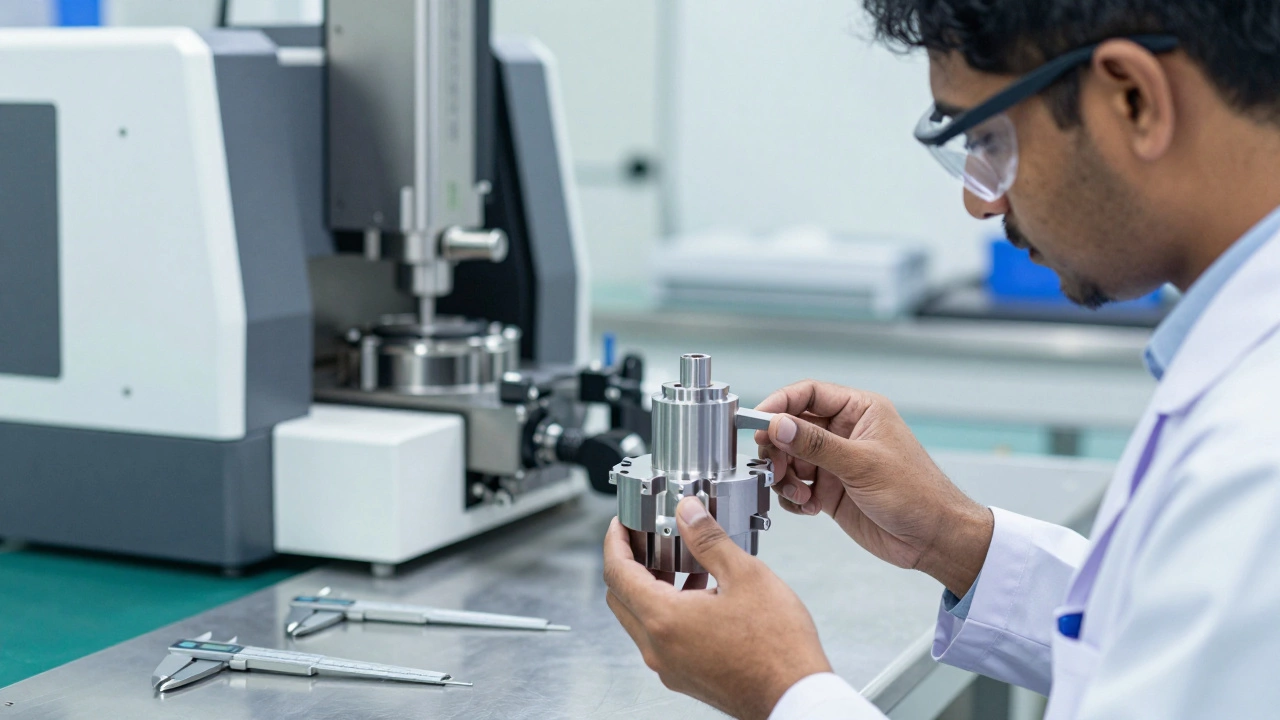
CNC machining, computer-controlled cutting of metal or plastic blocks to create precise parts remains a backbone of modern manufacturing. While large factories handle mass production, small shops excel at prototyping and low-volume runs. Aerospace, defense, and automotive companies constantly need custom brackets, gears, and fittings.
The key here is speed and precision. If you can turn around a complex titanium part in 24 hours instead of two weeks, clients will pay a premium. Invest in reliable machinery and skilled operators. The margins are healthy because you are selling expertise and time, not just raw material. This is a classic example of a small business scaling through skill rather than size.
Specialty Food Processing and Private Labeling
Food manufacturing offers a different path. Instead of competing with global giants on commodity items like flour or sugar, focus on specialty food processing, creating niche food products such as organic sauces, gluten-free snacks, or functional beverages. Think artisanal hot sauce, keto-friendly bars, or plant-based meat alternatives.
The trend toward health-conscious eating continues to grow. Consumers are willing to pay more for clean labels and unique flavors. You can also offer private label services to local grocery chains or online subscription boxes. They bring the marketing; you bring the product. This model reduces your customer acquisition cost significantly. Just ensure you have proper food safety certifications, as trust is everything in this industry.
Eco-Friendly Packaging Solutions
Regulations are tightening on single-use plastics worldwide. This creates a massive opportunity for eco-friendly packaging, sustainable container solutions made from biodegradable or recycled materials. Small manufacturers can produce molded fiber trays, compostable cutlery, or reusable glass containers.
Brands are under pressure to reduce their carbon footprint. They need partners who can supply sustainable options without breaking the bank. If you can source local biomass waste (like agricultural residue) and turn it into packaging, you lower your material costs and appeal to environmentally conscious buyers. This sector combines social impact with strong financial returns.

3D Printing and Rapid Prototyping Services
Technology has democratized manufacturing. 3D printing, additive manufacturing process that builds objects layer by layer from digital models allows you to start with relatively low capital. Offer rapid prototyping services to engineers, architects, and product designers. They need to test physical forms before committing to expensive tooling.
The value proposition is speed. You can print a prototype overnight. Charge for convenience and iteration speed. As technology advances, materials like carbon-fiber-infused polymers and metals allow you to move beyond prototypes to end-use parts. This flexibility lets you pivot quickly based on market demand.
Calculating Your True Profit Potential
Revenue is vanity; profit is sanity. Many beginners fall in love with big sales numbers while ignoring overhead. To determine if a business idea is truly "highest paid," calculate your gross margin. Subtract the cost of materials, labor, and machine depreciation from the selling price. Then, subtract fixed costs like rent, insurance, and software subscriptions.
Aim for a gross margin of at least 30%. Below that, you are vulnerable to slight increases in material costs or minor delays. Above 50%, you have room to invest in growth and absorb shocks. Use this formula to evaluate every opportunity. If the math doesn't work on paper, it won't work in reality.
Risks and How to Mitigate Them
No business is risk-free. In manufacturing, common pitfalls include inventory buildup, equipment failure, and supply chain disruptions. Mitigate these by keeping inventory lean. Produce only what you have orders for, or maintain minimal safety stock. Regularly maintain your machines to avoid costly downtime. Diversify your supplier base so one disruption doesn't halt your entire operation.
Also, beware of becoming too dependent on a single client. If one company accounts for more than 30% of your revenue, you are exposed. Actively seek new customers to balance your portfolio. This strategy ensures stability even if one relationship ends.
Next Steps for Aspiring Manufacturers
Start by identifying a problem you can solve physically. Talk to potential customers before buying any equipment. Ask them what frustrates them about their current suppliers. Is it speed? Quality? Communication? Build your business around fixing those issues. Validate your idea with a minimum viable product. Test it in the real world. Gather feedback. Iterate. Then scale.
The highest-paid small businesses are not accidents. They are built on deep understanding of a niche, relentless focus on quality, and smart financial management. Choose your sector wisely, execute flawlessly, and watch your profits grow.
What is the most profitable small manufacturing business?
Medical device components and custom CNC machining often yield the highest profits due to high barriers to entry and recurring B2B contracts. These sectors command gross margins of 40-60% because clients prioritize reliability over price.
How much capital do I need to start a small manufacturing business?
Capital requirements vary widely. 3D printing services can start under $10,000, while CNC machining may require $50,000-$100,000 for reliable equipment. Medical device manufacturing needs significant investment in compliance and testing, potentially exceeding $200,000 initially.
Is food processing a good small business idea?
Yes, especially in niche markets like organic, gluten-free, or functional foods. Margins are typically 25-40%. Success depends on strong branding, strict adherence to food safety regulations, and effective distribution channels.
What are the biggest risks in small manufacturing?
Key risks include equipment failure, supply chain disruptions, and over-reliance on a single customer. Mitigate these through regular maintenance, diversified suppliers, and actively expanding your client base to ensure no single account exceeds 30% of revenue.
How do I find customers for my manufactured parts?
Focus on B2B outreach. Attend industry trade shows, list your capabilities on procurement platforms, and network with engineering firms. Highlight your speed, precision, and reliability. Case studies and testimonials build trust faster than general advertising.