Textile Business Startup Cost Estimator
Select your preferred business model and operational scale to generate a financial estimate tailored to the Indian market.
Estimated Total Investment
Cost Breakdown
-
Machinery & Equipment₹0Looms, sewing machines, or IT infrastructure
-
Space & Infrastructure₹0Rent deposit, renovation, utilities setup
-
Raw Material Inventory₹0Initial stock of fabric, yarn, or chemicals
-
Compliance & Licensing₹0Udyam, GST, IEC, Factory License fees
-
Working Capital (3 Months)₹0Salaries, electricity, marketing buffer
Expert Insight
Loading recommendation...
India is not just a consumer of textiles; it is one of the world's largest producers. From the intricate handlooms of Varanasi to the high-speed power looms of Tirupur, the sector contributes significantly to the national economy. But if you are looking to enter this market in 2026, you need more than just passion for fabric. You need a clear roadmap that navigates regulations, supply chains, and fierce competition.
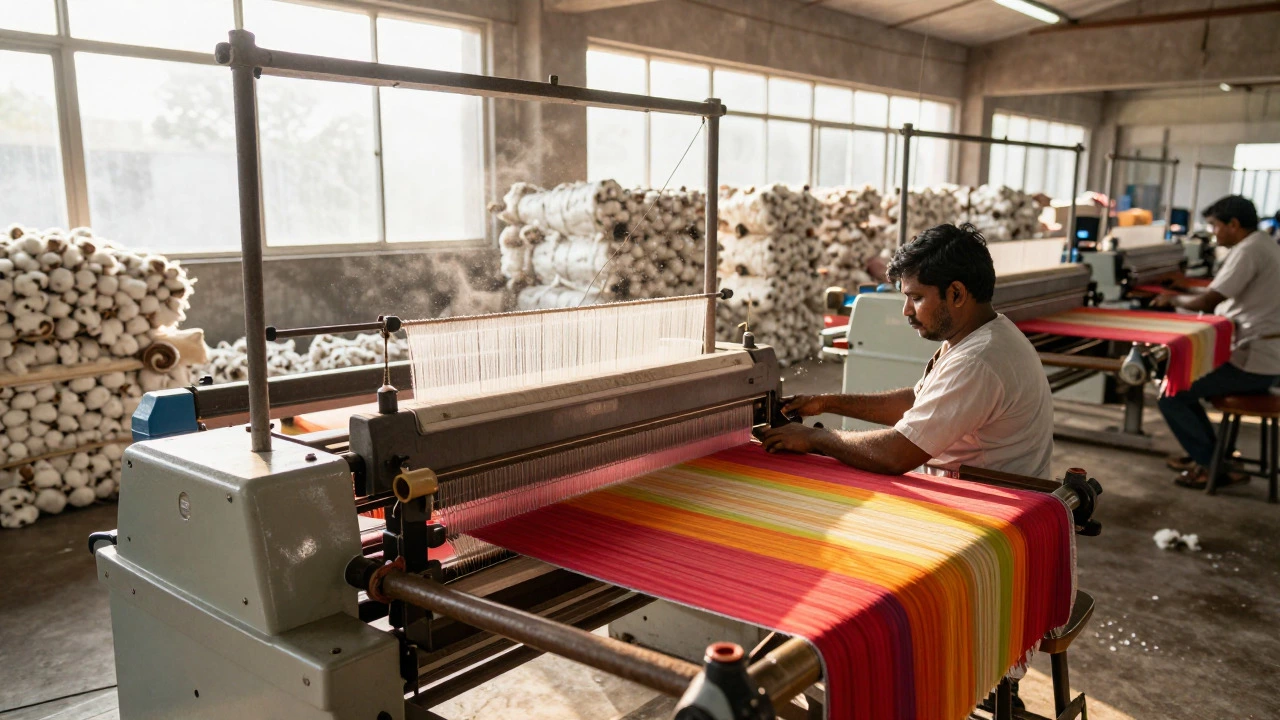
Starting a textile business is a venture involving the production, processing, or trading of fabrics and garments. In India, this industry is unique because it blends ancient traditional techniques with modern automated machinery. Whether you want to manufacture yarn, weave cloth, dye fabrics, or export finished garments, the entry barriers vary wildly depending on your chosen niche. This guide breaks down exactly how to launch your operation legally, financially, and operationally.
1. Choose Your Niche in the Value Chain
The textile industry is vast. Trying to do everything at once is a recipe for failure. You must pick a specific segment of the value chain to start. Most successful startups begin at one end and expand later.
- Fiber Processing: Converting raw cotton, wool, or synthetic fibers into yarn. This requires heavy machinery and significant capital.
- Weaving/Knitting: Turning yarn into fabric. Power looms are common here. Tirupur in Tamil Nadu is famous for knitwear, while Ludhiana dominates hosiery.
- Processing (Dyeing & Printing): Adding color and patterns to grey fabric. This segment faces strict environmental regulations due to water usage and chemical discharge.
- Garments & Apparel: Cutting and sewing fabric into final products like shirts, pants, or uniforms. This has lower initial capital requirements compared to weaving.
- Trading & Export: Sourcing from manufacturers and selling to retailers or international buyers. This requires strong logistics networks but minimal factory overhead.
If you are a beginner with limited capital, starting with garment manufacturing or trading is often the safest bet. If you have access to industrial land and higher investment, setting up a weaving unit offers better long-term margins.
2. Legal Registrations and Compliance
India has simplified many business registrations through digital platforms, but compliance remains critical. Ignoring these steps can lead to heavy fines or shutdowns later.
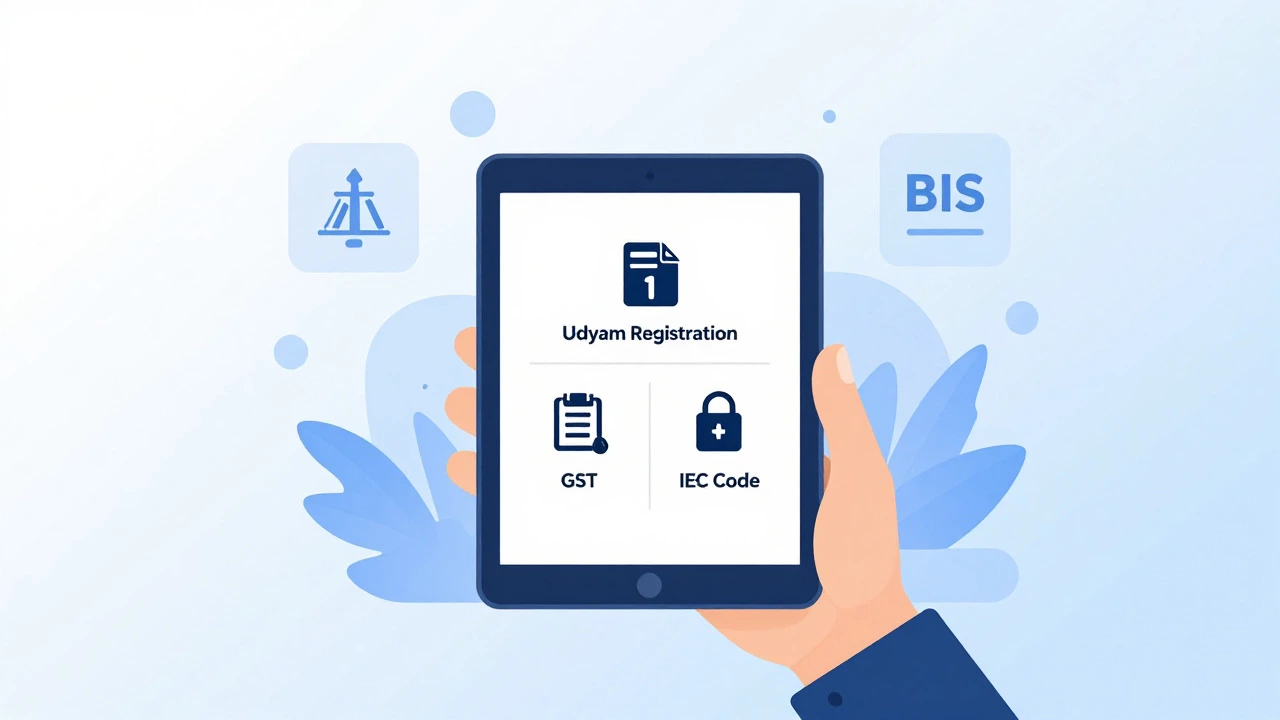
| Registration Type | Purpose | Authority |
|---|---|---|
| Udyam Registration | Identifies your business as an MSME (Micro, Small, or Medium Enterprise). Provides access to government subsidies and loans. | Ministry of Commerce & Industry |
| GST Registration | Required for collecting and paying Goods and Services Tax. Mandatory if turnover exceeds ₹20 lakhs (₹10 lakhs in special category states). | Central Board of Indirect Taxes |
| IEC Code | Importer Exporter Code. Essential if you plan to buy raw materials from abroad or sell finished goods internationally. | Directorate General of Foreign Trade (DGFT) |
| Factory License | Required if you employ 10+ workers with power or 20+ without power. Ensures safety and labor law compliance. | State Labour Department |
| BIS Certification | Bureau of Indian Standards certification. Mandatory for certain products like bedsheets, towels, and school uniforms. | Bureau of Indian Standards |
Do not skip the Udyam Registration. As an MSME, you become eligible for priority sector lending from banks and various state-specific subsidies on machinery purchase. The process is entirely online and free of cost.
3. Location Strategy: Where to Set Up?
Your location dictates your costs, talent pool, and logistics efficiency. India has established textile clusters that offer economies of scale. Setting up within these clusters gives you access to skilled labor, spare parts vendors, and raw material suppliers all in one place.
Consider these major hubs:
- Tirupur (Tamil Nadu): Known as the "Knitwear Capital of India." Ideal for t-shirts, socks, and innerwear. Excellent infrastructure for exports.
- Ludhiana (Punjab): The hub for woolen garments, hosiery, and cycles. Strong winter wear market.
- Surat (Gujarat): Dominates the synthetic fabric market, particularly polyester and silk. Great for low-cost, high-volume production.
- Coimbatore (Tamil Nadu): A center for textile machinery manufacturing and cotton processing.
- Varanasi (Uttar Pradesh): Famous for handloom silk and Banarasi sarees. Best for luxury and traditional segments.
If you choose a location outside these clusters, factor in higher logistics costs for transporting raw materials and finished goods. Also, check local electricity tariffs, as power consumption is a major operational expense in textile manufacturing.
4. Machinery and Technology Setup
The choice between manual, semi-automatic, and fully automatic machinery depends on your budget and target market. In 2026, automation is no longer optional for competitive pricing in mass markets.
For a small-scale garment unit, you might start with industrial sewing machines, cutting tables, and steam irons. Brands like Juki, Brother, and Pegasus are standard. For weaving, you will need power looms. Modern electronic dobby looms allow for complex pattern weaving with less waste.
Invest in quality control equipment early. Moisture content testers, fabric strength testers, and color matching booths prevent costly rejections from buyers. Many first-time entrepreneurs cut corners here, only to lose their first big order due to inconsistent fabric quality.
Also, consider energy-efficient motors. Electricity can account for 15-20% of your operating costs. Government schemes under the Pradhan Mantri Mudra Yojana often provide loans specifically for purchasing energy-efficient machinery.
5. Sourcing Raw Materials
Your profit margin is largely determined by your raw material costs. Cotton prices fluctuate based on global demand and domestic harvest conditions. Establish relationships with multiple suppliers to mitigate risk.
Key raw materials include:
- Cotton Bales: Sourced directly from farmers via cooperatives or from large traders in Nagpur or Mumbai.
- Synthetic Fibers: Polyester and nylon are sourced from petrochemical plants in Gujarat and Maharashtra.
- Dyes and Chemicals: Available from specialized chemical markets in Vapi (Gujarat) and Hyderabad. Ensure they meet eco-friendly standards if exporting to Europe or the US.
Negotiate payment terms carefully. Cash flow is the lifeblood of a textile business. Try to secure credit periods of 30-60 days from suppliers while maintaining shorter payment cycles with your customers.
6. Marketing and Sales Channels
Producing good fabric is half the battle; selling it is the other half. In the digital age, your sales strategy must be hybrid.
B2B Sales: Approach retail brands, hotel chains (for linens), and corporate clients (for uniforms). Attend trade fairs like ITMA India or Texworld India to network with buyers. Build a professional catalog with technical specifications of your fabrics.
E-commerce: Platforms like Amazon Business, IndiaMART, and TradeIndia are crucial for visibility. List your products with high-quality images and detailed descriptions. For direct-to-consumer brands, Shopify or WooCommerce stores allow you to build your own brand identity.
Export Markets: If you have the IEC code, explore markets in the Middle East, Africa, and Southeast Asia. These regions have growing demand for affordable Indian textiles. Use DGFT’s export promotion councils to find verified buyer leads.

7. Financial Planning and Funding
Textile businesses require working capital for inventory and payroll before revenue comes in. Create a detailed financial projection covering the first 12 months.
Include these costs in your budget:
- Machinery installation and maintenance
- Rent for factory space
- Raw material inventory (at least 3 months' worth)
- Salaries for skilled technicians and laborers
- Utilities (electricity and water)
- Marketing and website development
Funding options include:
- Mudra Loans: Shishu (up to ₹50,000), Kishore (₹50,000 to ₹5 lakh), and Tarun (₹5 lakh to ₹10 lakh) categories.
- MSME Collateral-Free Loans: Credit Guarantee Fund Scheme for Micro and Small Enterprises (CGTMSE) allows loans up to ₹2 crore without collateral.
- Angel Investors: For innovative textile tech startups, such as sustainable fabric innovations or AI-driven design tools.
Keep your personal and business finances separate from day one. Use accounting software like Tally or Zoho Books to track expenses and GST filings accurately.
8. Environmental Sustainability
In 2026, sustainability is not just a buzzword; it is a market requirement. Global buyers increasingly demand eco-friendly practices. Implementing green initiatives can open doors to premium markets.
Focus on water recycling systems if you are in dyeing or printing. Install effluent treatment plants (ETP) to comply with Central Pollution Control Board (CPCB) norms. Use organic cotton or recycled polyester where possible. Certifications like OEKO-TEX or GOTS (Global Organic Textile Standard) add significant value to your products and justify higher price points.
Consumers are becoming more conscious of the environmental impact of fast fashion. Positioning your brand as sustainable can differentiate you from competitors who rely solely on low prices.
9. Scaling and Future Growth
Once your operations are stable, look for ways to scale. This could mean expanding your product line, increasing production capacity, or entering new geographic markets.
Consider vertical integration. If you start with garment making, you might later invest in knitting units to control fabric quality and costs. Alternatively, focus on horizontal scaling by adding more production lines to handle larger orders.
Stay updated with industry trends. The rise of smart textiles, wearable technology, and biodegradable fabrics presents new opportunities. Continuous learning and adaptation are key to long-term success in the dynamic textile industry.
What is the minimum investment required to start a small textile business in India?
The investment varies widely based on the niche. A small garment stitching unit can start with ₹5-10 lakhs for basic machinery and workspace. A weaving unit with power looms may require ₹50 lakhs to ₹1 crore or more, including land, building, and advanced machinery. Trading businesses have lower capital requirements, primarily needing funds for inventory and marketing.
Is the textile business profitable in India?
Yes, the textile industry is highly profitable due to strong domestic and international demand. Margins depend on efficiency, scale, and value addition. Garment manufacturing typically sees net margins of 10-15%, while specialized segments like technical textiles or organic fabrics can yield higher returns. However, profitability requires strict cost control and consistent quality.
Which government schemes support textile startups in India?
Key schemes include the PMEGP (Prime Minister's Employment Generation Programme) for employment generation, CLCSS (Credit Linked Capital Subsidy Scheme) for technology upgradation, and PLI (Production Linked Incentive) Scheme for large-scale manufacturers. MSME registration also provides access to subsidized loans and tax benefits.
Do I need a license to start a textile trading business?
You need a Shop and Establishment Act registration, GST registration, and Udyam registration. If you plan to import or export, an IEC code is mandatory. Unlike manufacturing, trading does not require a Factory License unless you have a large warehouse with many employees subject to labor laws.
What are the biggest challenges in the Indian textile industry?
Major challenges include fragmented supply chains, high power costs, outdated machinery in small units, and intense competition from countries like Bangladesh and Vietnam. Additionally, complying with environmental regulations and managing skilled labor shortages can be difficult for new entrants.