Manufacturing Reshoring Cost Calculator
Compare the cost difference between manufacturing in the US versus offshore. Based on the article, companies are finding that domestic production can be more cost-effective than offshore manufacturing due to rising logistics costs, tariffs, and supply chain vulnerabilities.
People keep saying manufacturing in the US is dead. You hear it in the news, on social media, in political speeches. Factories shut down. Jobs vanish. The American dream, they say, is now made overseas. But if you look closer-at the data, the policies, the real-world factories still humming-you’ll see something very different. Manufacturing isn’t dying. It’s changing. And the government is betting big on that change.
Manufacturing Isn’t Gone-It’s Smarter
It’s true that the number of factory workers has dropped since the 1970s. Back then, over 19 million Americans worked in manufacturing. Today, it’s around 13 million. That sounds like a collapse. But here’s what most people miss: output is up. The US makes more goods today than ever before. In 2025, American manufacturers produced $7.8 trillion worth of goods. That’s 50% more than in 2000, even with fewer workers.
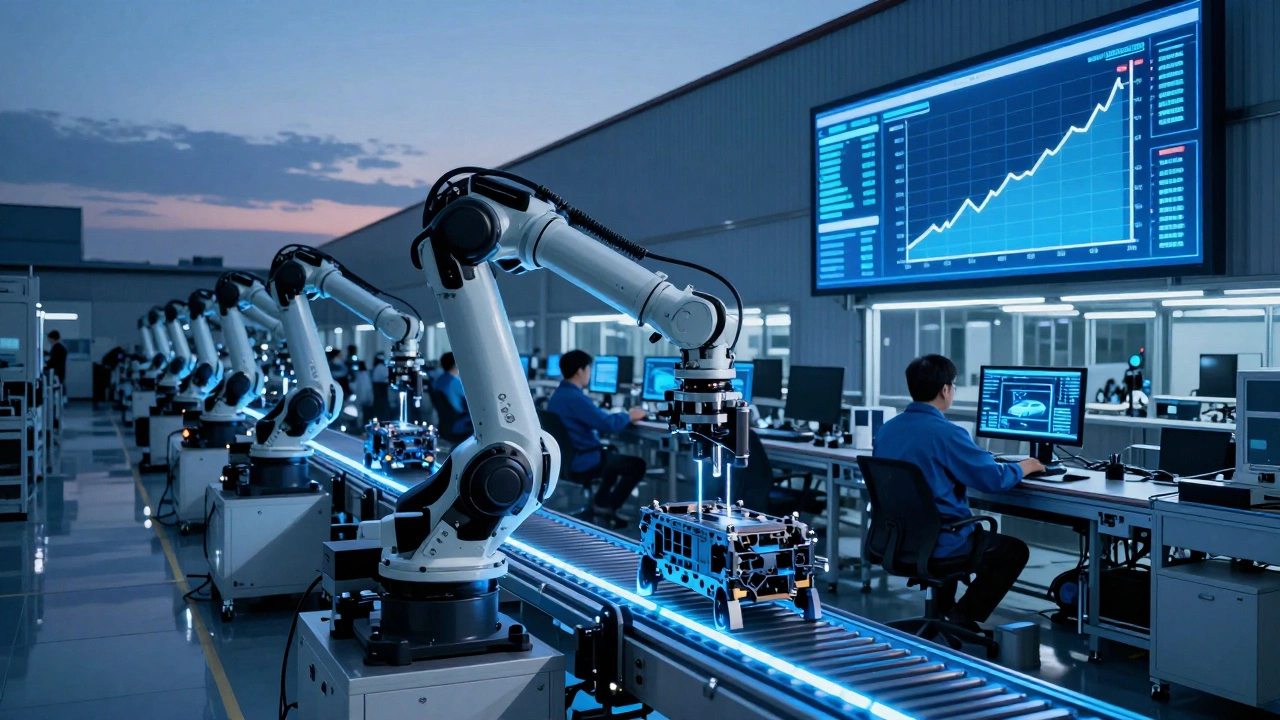
Why? Automation. Robotics. AI-driven quality control. A single factory in Ohio now produces 40% more car parts than it did in 2010, but with 60% fewer people. That’s not a failure-it’s progress. The jobs that remain pay more. The average manufacturing wage in 2025 was $28.50 an hour, over 20% higher than the national average. These aren’t low-skill jobs anymore. They’re tech jobs with hard hats.
The Government Didn’t Just Watch-It Acted
The idea that the US just let manufacturing fade away is a myth. Starting in 2021, the federal government launched a series of targeted programs to rebuild industrial capacity. The CHIPS and Science Act poured $52 billion into semiconductor production. The Inflation Reduction Act added $30 billion in tax credits for clean energy manufacturing. And the bipartisan Infrastructure Law included $10 billion to modernize old factories and train workers in advanced manufacturing.
These aren’t vague promises. They’re real money with real results. In 2024, over 120 new manufacturing facilities broke ground across 37 states. Most of them were in places people wrote off: rural Ohio, small-town Alabama, former steel towns in Pennsylvania. A battery plant in Georgia? Built with $1.2 billion in federal incentives. A microchip factory in Arizona? Funded by a mix of federal grants and state tax breaks. These aren’t just factories-they’re economic anchors.
It’s Not Just Big Companies Anymore
When you think of manufacturing, you picture giant plants with smokestacks. But today’s revival is being led by small and mid-sized firms. The number of US-based manufacturers with under 500 employees grew by 8% between 2021 and 2025. Why? Because the government made it easier for them to compete.
The Manufacturing Extension Partnership (a nationwide network of nonprofit centers funded by the National Institute of Standards and Technology) helped over 3,200 small manufacturers adopt digital tools like 3D printing and predictive maintenance. One company in Wisconsin, with just 18 workers, used MEP funding to automate its packaging line. Output jumped 45%. They hired six new technicians. That’s the kind of story you won’t hear on the evening news.
Supply Chains Are Coming Home
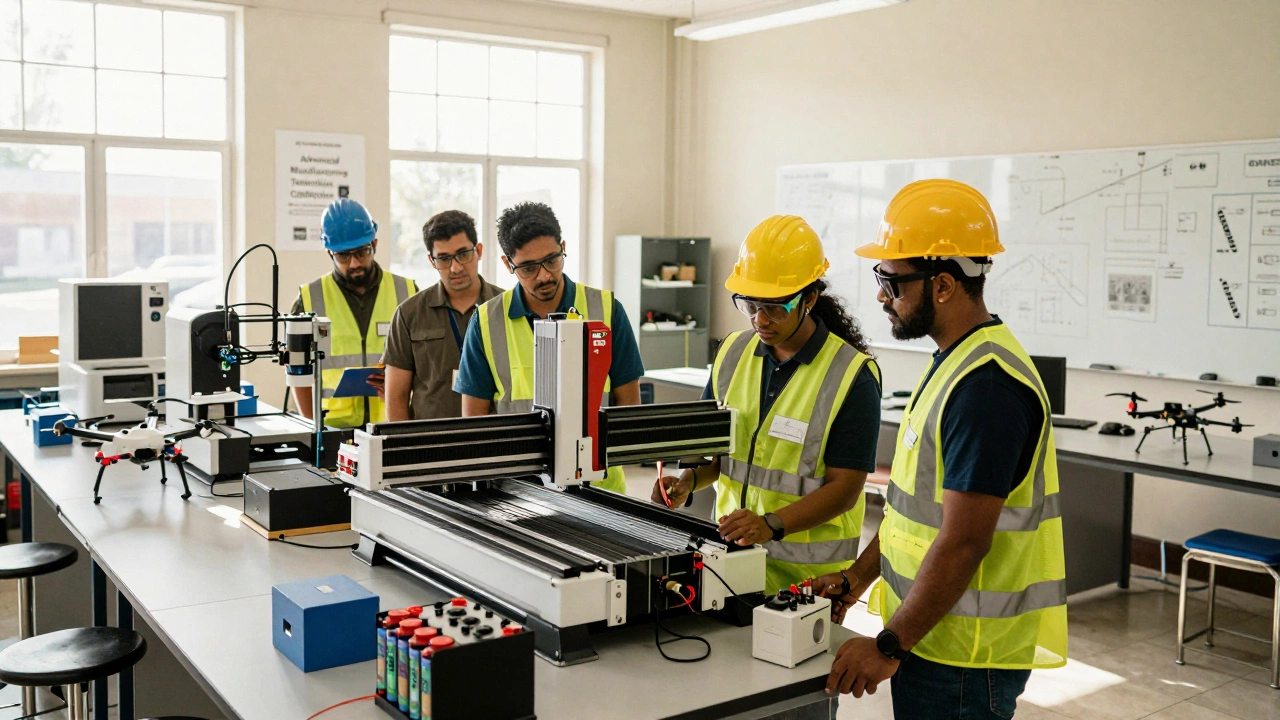
The pandemic showed how fragile global supply chains really are. When masks and ventilators vanished from shelves, the US didn’t just complain-it rebuilt. The government created the Reshoring Initiative (a public-private program that tracks and incentivizes the return of production to the US). Since 2022, over 1,100 companies have moved production back from China, Mexico, and Vietnam.
It’s not just about politics. It’s about cost. Shipping delays, tariffs, and labor shortages overseas have made offshore production more expensive than ever. In 2025, the total cost to produce a smartphone in China was 12% higher than producing it in Indiana, thanks to logistics and compliance. Companies like Apple, Intel, and even small medical device makers are shifting production back. They’re not doing it because they love America. They’re doing it because it makes financial sense.
Workers Are Being Rewired, Not Replaced
One of the biggest myths is that robots are stealing jobs. The truth? They’re creating new ones. The Advanced Manufacturing Technician (a new certification program funded by the Department of Labor and offered in 42 states) trains workers in robotics, CNC machining, and industrial IoT. Graduates earn $65,000 on average in their first year-no college degree required.
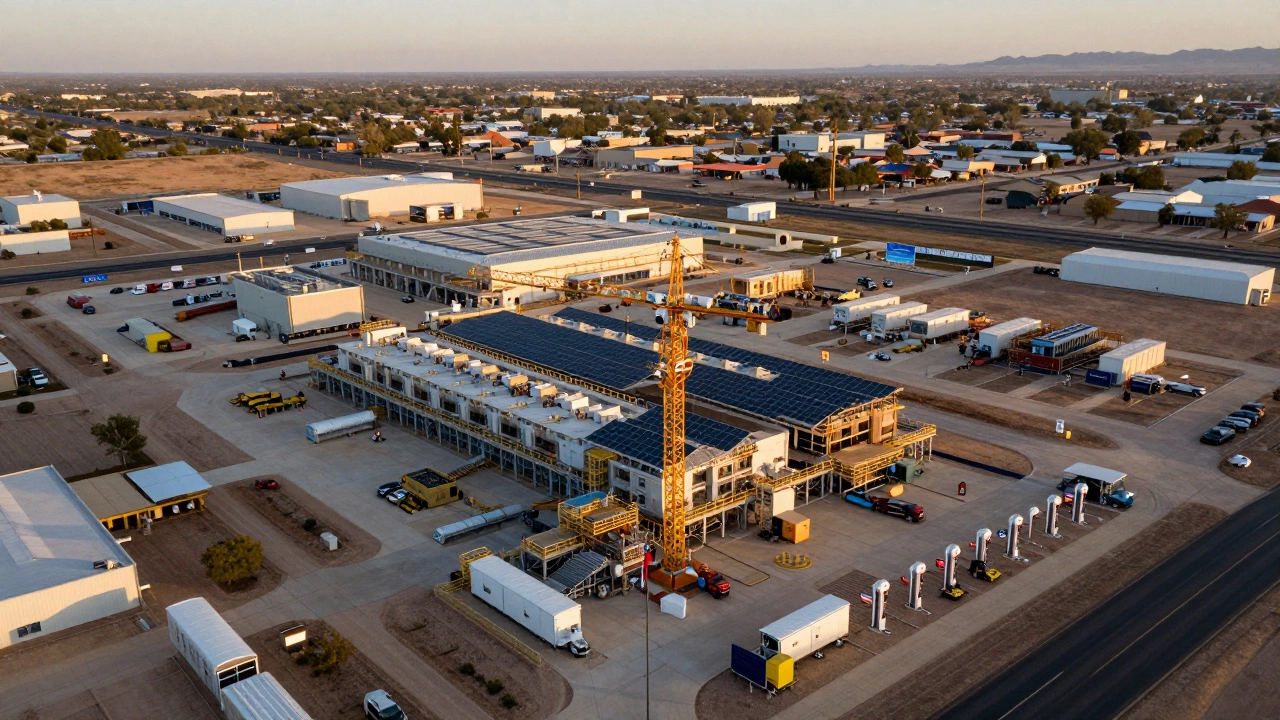
Community colleges across the country have partnered with manufacturers to build classroom-lab hybrids. In Michigan, a single community college trained 1,700 people in 2024 for roles at new battery and drone factories. These aren’t temporary programs. They’re permanent pipelines. The US now has over 200 registered apprenticeships in advanced manufacturing, up from just 37 in 2019.
The Real Challenge: Keeping Up
Is manufacturing dying? No. But is it safe? Not yet. The biggest threat isn’t foreign competition-it’s complacency. Other countries are moving faster. Germany is investing in hydrogen-powered factories. South Korea is leading in semiconductor materials. China still produces more goods than the US, even if its growth has slowed.
The US government’s programs are strong, but they’re still being tested. The CHIPS Act funding is only fully allocated through 2027. What happens after? Will state governments keep funding workforce training? Will supply chain incentives stay in place? Right now, the momentum is real. But momentum doesn’t last without policy continuity.
What’s Next? The Data Doesn’t Lie
Here’s what’s happening right now:
- Over 70% of US manufacturers plan to increase automation by 2027.
- More than 60% of new factory investments are in clean tech-solar panels, wind turbines, lithium batteries.
- Export of US-made machinery hit $310 billion in 2025, the highest ever.
- Over 400,000 new manufacturing jobs were added between 2021 and 2025, mostly in skilled technical roles.
This isn’t nostalgia. It’s innovation. The factories of the 1980s are gone. But the factories of 2026? They’re powered by software, run by technicians, and built to last.
Is manufacturing really coming back in the US?
Yes, but not in the way people imagine. Factory jobs aren’t returning to their 1970s levels. Instead, the sector is growing smarter and more efficient. Output is at record highs, new factories are opening across the country, and government programs are helping small businesses adopt advanced tech. It’s not a return to the past-it’s a leap into the future.
What government programs are helping manufacturing?
Three major programs are driving the revival: the CHIPS and Science Act, which funds semiconductor production; the Inflation Reduction Act, which offers tax credits for clean energy manufacturing; and the Manufacturing Extension Partnership (MEP), which helps small factories adopt automation. Combined, these programs have spurred over $100 billion in private investment since 2021.
Are manufacturing jobs good jobs now?
Absolutely. The average manufacturing wage in 2025 was $28.50 per hour, and skilled roles like robotics technicians and CNC programmers earn $60,000-$85,000 annually. Many of these jobs don’t require a four-year degree-just training from a community college or apprenticeship program. They’re stable, well-paying, and in high demand.
Why are companies bringing production back to the US?
It’s economics, not patriotism. Shipping delays, rising labor costs overseas, and new tariffs have made offshore production more expensive. In 2025, producing a medical device in Indiana cost 9% less than in Vietnam. Companies are also responding to customer demand for faster delivery and higher quality control. Reshoring isn’t a trend-it’s a smart business decision.
What’s the biggest threat to US manufacturing right now?
The biggest threat isn’t China or automation-it’s policy uncertainty. Most government incentives expire between 2027 and 2030. If funding for workforce training, R&D, and infrastructure isn’t renewed, growth could stall. States and local governments need to step up, and businesses need to keep investing in their workers. Momentum is here. But it won’t last without follow-through.
The US didn’t lose manufacturing. It upgraded it. The machines are faster. The workers are better trained. The policies are aligned. The factories are open. The question isn’t whether manufacturing is dying-it’s whether you’re ready to work in the new version of it.