The Reality of High-Profit Manufacturing
Forget the old idea that manufacturing is just about giant factories and assembly lines. In 2026, the most profitable ventures aren't necessarily the biggest ones; they're the ones solving specific, urgent problems with smart technology. If you're looking for the "gold mine," you won't find it in mass-producing generic plastic goods. The real money is moving toward sustainability, specialized health tech, and localized production.
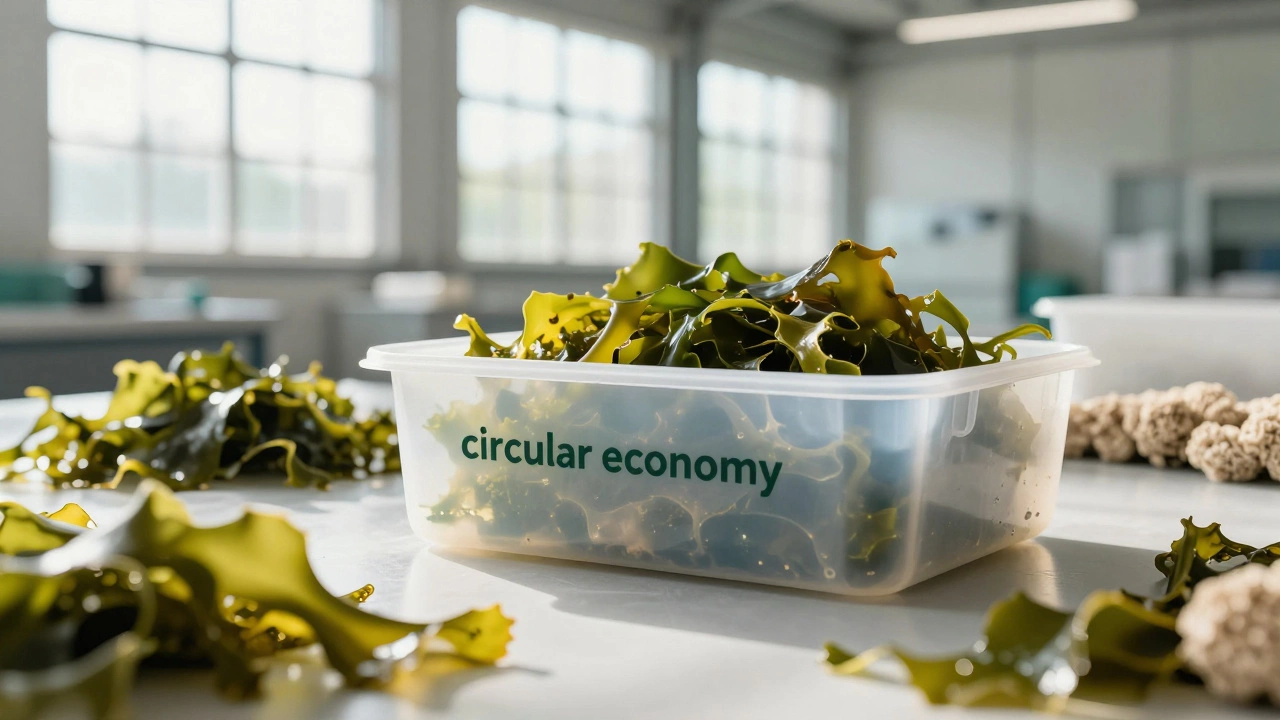
To make a killing right now, you need to look at where consumer demand hits a wall of supply shortage. We're seeing a massive shift toward "circular economies"-where waste from one process becomes the raw material for another. If you can build a business that turns trash into high-value products, your margins will be significantly higher than a traditional factory because your raw material costs are nearly zero.
Quick Takeaways for 2026:
- Circular Economy: Upcycling industrial waste into consumer goods.
- Additive Manufacturing: Using 3D printing for medical or aerospace parts.
- Agri-Tech: Precision-engineered hydroponic and vertical farming hardware.
- Bio-Materials: Creating plastic alternatives from mycelium or seaweed.
Sustainable Material Production
The world is desperate to move away from petroleum-based plastics. This is where Biodegradable Polymers is a class of plastics derived from biological sources, such as corn starch or lactic acid, designed to decompose naturally comes in. Businesses focusing on these materials are seeing explosive growth because governments are banning single-use plastics globally.
Imagine starting a plant that produces packaging made from seaweed. Unlike traditional plastic, which takes centuries to break down, seaweed packaging dissolves in weeks. Because the raw material-seaweed-grows rapidly and requires no fresh water or fertilizer, the overhead is low compared to the high price companies are willing to pay to hit their ESG (Environmental, Social, and Governance) targets.
If you want to enter this space, don't just make a "green" product. Focus on a specific niche, like compostable electronics casings or medical-grade bio-plastics. The more specialized the application, the higher the price point you can command.
Precision Medical Device Manufacturing
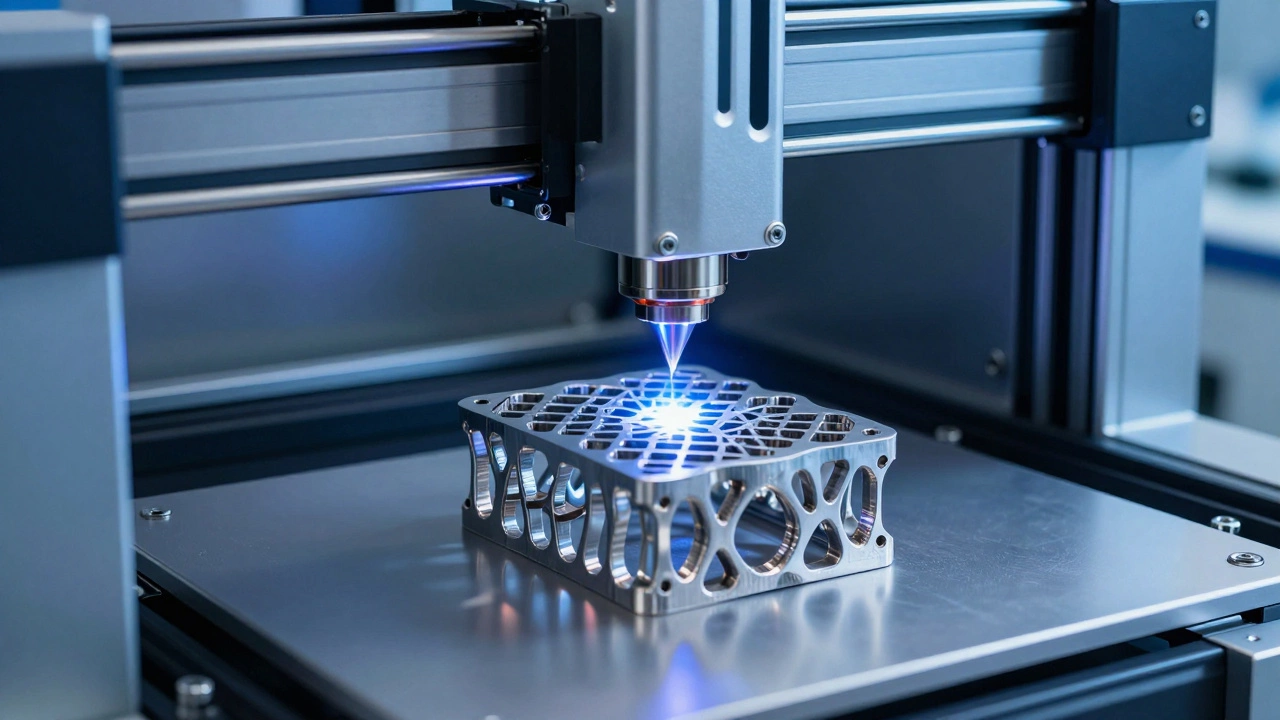
Healthcare is always a high-margin sector, but the real profit right now is in Additive Manufacturing, commonly known as 3D Printing. We've moved past printing plastic trinkets; we're now printing titanium bone scaffolds and custom dental implants.
Why is this so profitable? Because it's personalized. A generic hip replacement is a commodity, but a 3D-printed implant mapped exactly to a patient's CT scan is a premium service. You aren't selling a piece of metal; you're selling a surgical outcome. This shift from "product" to "solution" allows you to charge a significant premium.
| Feature | Mass Production (Traditional) | Precision Manufacturing (Additive) |
|---|---|---|
| Initial Investment | Very High (Heavy Machinery) | Moderate (Industrial 3D Printers) |
| Waste Level | High (Subtractive) | Minimal (Additive) |
| Price Elasticity | Low (Price wars) | High (Value-based pricing) |
| Market Entry | Slow (Long setup) | Fast (Rapid prototyping) |
Automated Agri-Tech Hardware
Food security is a global priority. The most profitable manufacturing startups in this space aren't growing the food-they're building the systems that allow others to grow it. We're talking about Hydroponics, which is a method of growing plants without soil, using mineral nutrient solutions in a water solvent.
Specifically, there is a massive gap in the market for automated vertical farming modules. These are plug-and-play systems for urban warehouses. If you can manufacture a modular system that integrates sensors, automated LED lighting, and nutrient delivery, you can sell these to city developers and grocery chains who want to reduce their supply chain costs.
The key here is the "Razor and Blade" business model. Sell the hardware (the vertical farm) at a fair price, but sell the proprietary nutrient mixes and seed pods on a recurring subscription. This turns a one-time manufacturing sale into a predictable monthly revenue stream, which is exactly what investors love.
Specialized Electronic Components for EVs
The transition to electric vehicles (EVs) is still in high gear. However, the biggest profits aren't in making the cars-that requires billions in capital. The real money is in the components. Specifically, Silicon Carbide (SiC) Semiconductors are wide-bandgap semiconductor materials that allow power electronics to operate at much higher voltages and temperatures than standard silicon.
These components make EVs charge faster and drive further. Because they are harder to manufacture than standard chips, there is a chronic shortage. A small-to-mid-sized factory that specializes in SiC power modules for onboard chargers can secure long-term contracts with multiple automotive brands.
To succeed here, you don't need to compete with giants like Intel. Instead, focus on "Tier 2" supply. Build the specific housings, thermal management systems, or specialized connectors that these chips require. By becoming an essential link in the EV supply chain, you insulate your business from general market downturns.
The "Micro-Factory" Model
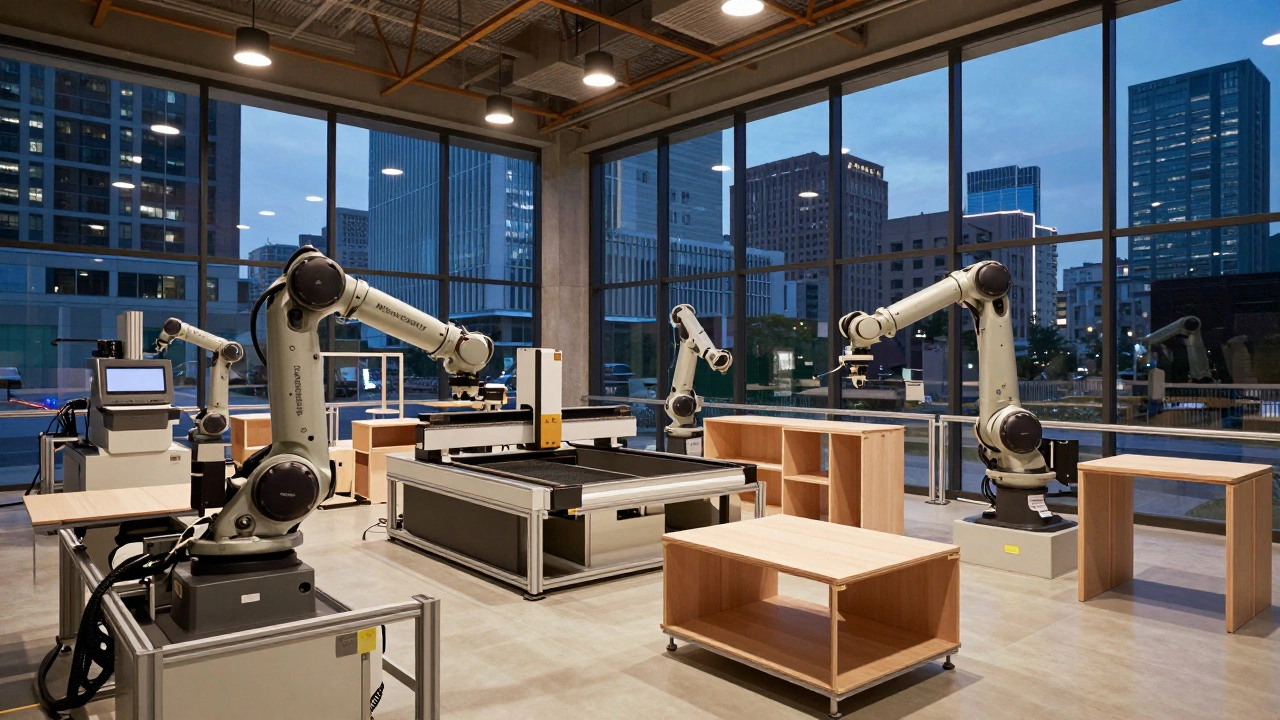
The old way of manufacturing was: build one giant plant in a low-cost region and ship products across the ocean. That model is breaking. Shipping costs are volatile, and customers want things *now*. The new trend is the Micro-Factory, which is a small-scale, highly automated production facility located close to the end consumer.
Micro-factories use a heavy dose of robotics and AI to keep labor costs low while staying local. For example, instead of importing furniture from halfway around the world, a micro-factory in a city like Auckland uses CNC machines and robotic arms to produce custom pieces on demand. You eliminate shipping costs, reduce warehouse inventory, and can offer a "made in your city" premium.
This approach is incredibly profitable because it removes the biggest risk in manufacturing: overproduction. You only make what is already sold. By combining local production with a digital storefront, you operate with a lean structure that traditional factories can't touch.
Common Pitfalls to Avoid
Many entrepreneurs fail in manufacturing because they fall in love with the product and forget about the process. The most common mistake is scaling too fast. Buying a million-dollar machine before you have a signed purchase order from a client is a recipe for bankruptcy.
Another trap is ignoring the "hidden costs" of quality control. In precision manufacturing, a 1% error rate can wipe out your entire profit margin if it leads to product recalls. Investing in automated inspection systems-using computer vision to spot defects-is not an optional luxury; it's a survival requirement.
Finally, don't compete on price. If your only selling point is "I'm cheaper than the guy in China," you've already lost. Compete on speed, customization, or sustainability. People will pay more for a product that arrives in two days and doesn't kill the planet than they will for a cheap one that takes six weeks to arrive.
How much capital do I need to start a manufacturing business?
It varies wildly. A micro-factory using 3D printers or CNC machines can start for $20,000 to $50,000 in a garage setting. However, a specialized chemical or semiconductor plant requires millions. The smartest move in 2026 is to start with a "Minimum Viable Product" (MVP) using outsourced prototyping before investing in your own heavy machinery.
Is 3D printing actually profitable for a business?
Yes, but only if you avoid the "hobbyist trap." Printing cheap plastic toys is not a business. Profits come from high-value materials (titanium, carbon fiber, PEEK) and specialized industries (dental, aerospace, jewelry). The money is in the engineering and the material science, not the printer itself.
Which is better: a niche product or a wide range of goods?
In the current market, niche wins. Specializing in one high-demand area (like biodegradable packaging for cosmetics) allows you to optimize your machinery and become an expert. A wide range of goods requires too much diverse equipment and increases the risk of unsold inventory.
How do I find customers for a new manufacturing startup?
B2B (Business-to-Business) is the way to go. Instead of trying to sell to individual consumers, target companies that have a problem you can solve. Use LinkedIn to find procurement managers and offer them a prototype that solves a specific pain point, such as reducing their waste or speeding up their assembly process.
What role does AI play in manufacturing profitability?
AI is used for predictive maintenance-knowing a machine will break before it actually does-which saves thousands in downtime. It's also used in generative design, where AI suggests the most efficient shape for a part to reduce material waste while maintaining strength, directly increasing your margins.
Next Steps for Aspiring Founders
If you're ready to move forward, start by mapping out your supply chain. Where will your raw materials come from? Are there geopolitical risks if you rely on a single country? Diversifying your sources is the best way to ensure your factory doesn't go dark during a trade dispute.
Next, look into local government grants. Many regions are offering huge subsidies for businesses that move toward "green" manufacturing or bring high-tech jobs back to the local community. This is essentially free capital that can lower your initial risk significantly.
Finally, build a network of engineers and material scientists. In modern manufacturing, the "idea person" is less valuable than the person who knows how to make the material behave. Partner with someone who understands the chemistry or the physics of your product, and you'll avoid the costly mistakes that sink most startups.