Textile Hub Sourcing Guide
Not sure whether to source from Surat or Tirupur? Use this guide to find the right Indian textile hub based on your product type and target market.
Ask anyone in the garment trade who runs India’s textile game, and you’ll get two very different answers depending on what they sell. If they deal in shiny fabrics for sarees and home decor, they’ll point to Gujarat. If they’re shipping t-shirts to Europe or America, they’ll say Tamil Nadu. There isn’t just one "No 1" textile city in India because the title depends entirely on whether you measure by volume of fiber processed or by export value of finished garments.
However, if we look at raw production capacity and the sheer scale of synthetic fiber processing, Surat takes the crown as the largest man-made fabric hub in Asia. On the other hand, Tirupur is the global capital of cotton knitwear exports. Understanding this split is crucial for anyone looking to source materials, start a business, or understand the economic backbone of these regions.
The Synthetic Giant: Why Surat Leads in Volume
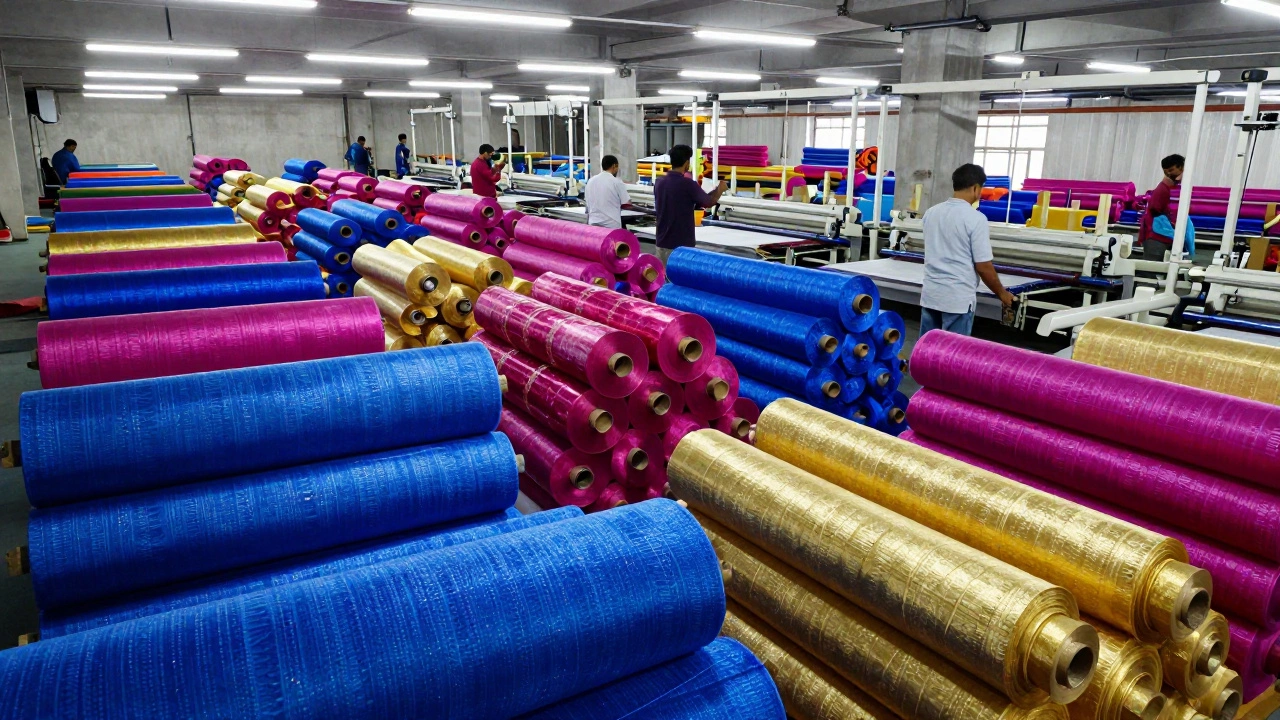
Surat, located in the state of Gujarat, has transformed from a diamond-polishing center into the world’s second-largest producer of synthetic yarn after China. It is often referred to as the "Silk City of India," but that name is somewhat misleading today. The silk here is largely artificial-polyester, viscose, and nylon.
The dominance of Surat comes down to infrastructure and cluster efficiency. The city hosts thousands of small-to-medium enterprises (SMEs) that specialize in every step of the supply chain, from spinning synthetic fibers to weaving them into fabric and finally printing intricate designs. This vertical integration means a manufacturer can turn raw polymer chips into a printed saree within days, not weeks.
| Feature | Surat (Gujarat) | Tirupur (Tamil Nadu) |
|---|---|---|
| Primary Product | Synthetic Fabrics (Polyester, Viscose) | Cotton Knitwear (T-shirts, Hosiery) |
| Key Market | Domestic (India), Middle East | Global Exports (USA, EU, UK) |
| Production Model | High-volume weaving & printing | Knitting, dyeing & garment finishing |
| Economic Driver | Affordable fashion & home textiles | Export-oriented manufacturing |
| Infrastructure | Power looms, modern weaving mills | Effluent treatment plants, circular knitting machines |
In 2024-2025, Surat contributed significantly to India’s GDP through its textile sector, with annual turnover exceeding ₹1 lakh crore (approx. $12 billion). The city benefits from proximity to ports like Mundra, which facilitates the import of raw petrochemicals needed for synthetic fiber production. For buyers looking for low-cost, high-volume fabric for domestic markets or budget-friendly international orders, Surat is unmatched.
The Export Powerhouse: Tirupur’s Global Reach
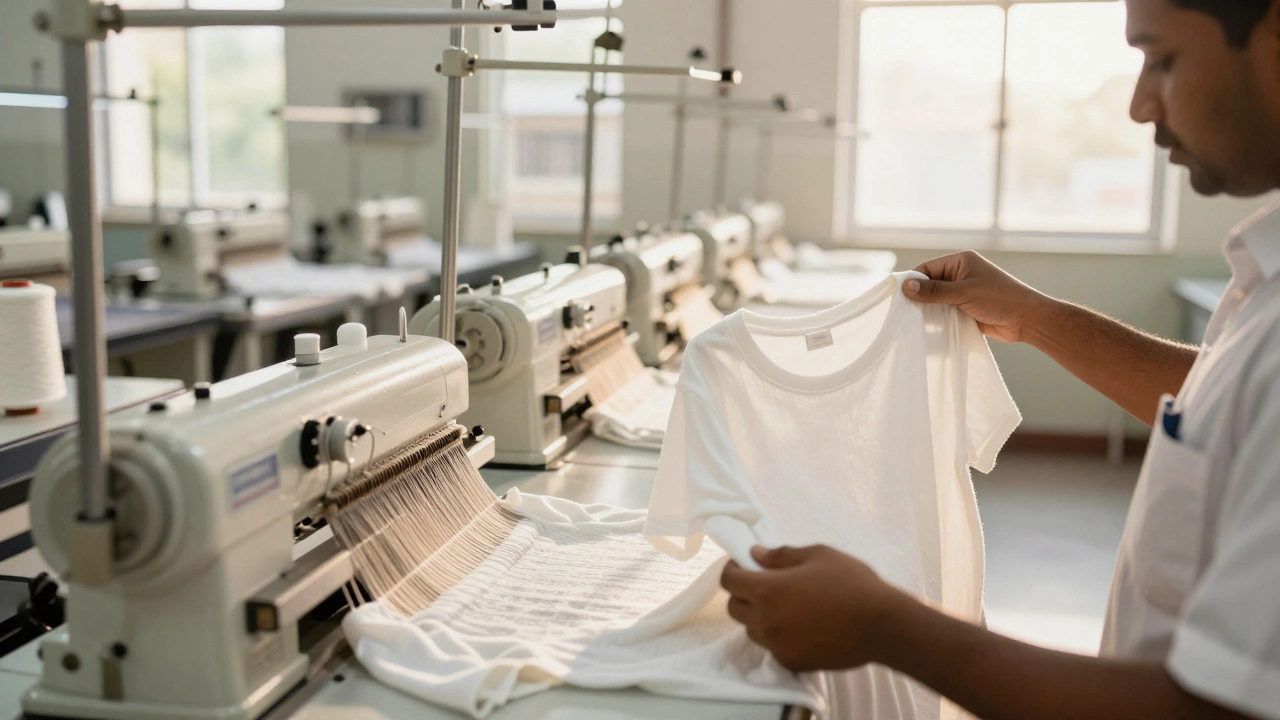
If Surat wins on volume, Tirupur wins on brand recognition in the global market. Located in Tamil Nadu, this town is famously known as the "Knitwear Capital of India." While it doesn’t process as many tons of fiber as Surat, the value addition per unit is higher because Tirupur produces finished garments rather than just rolls of fabric.
Tirupur’s success story began in the late 1980s when entrepreneurs shifted from traditional weaving to circular knitting. Today, it accounts for a massive share of India’s total textile exports, particularly in the segment of knitted apparel. Major global brands like H&M, Zara, Nike, and Adidas source millions of units from factories here annually.
The key advantage of Tirupur is its compliance with international environmental and labor standards. Over the past decade, the region has invested heavily in Common Effluent Treatment Plants (CETPs) to manage wastewater from dyeing processes. This regulatory maturity makes it easier for foreign buyers to source from Tirupur without fearing supply chain disruptions due to environmental crackdowns-a risk that still plagues some unorganized clusters elsewhere in India.
Other Contenders: Ludhiana, Coimbatore, and Mumbai
While the debate usually centers on Surat and Tirupur, ignoring other major hubs gives an incomplete picture. Each of these cities dominates a specific niche within the broader textile ecosystem.
- Ludhiana (Punjab): Known as the "Manchester of India," Ludhiana specializes in hosiery, woolens, and winter wear. As climate change alters consumer habits, demand for heavy woolens has fluctuated, but Ludhiana remains critical for cold-weather apparel and industrial textiles.
- Coimbatore (Tamil Nadu): Unlike Tirupur, which focuses on garments, Coimbatore is a powerhouse for textile machinery and spinning mills. It supplies the equipment that keeps Surat and Tirupur running. It also has a strong presence in power loom weaving and denim production.
- Mumbai (Maharashtra): Historically the heart of India’s cotton industry, Mumbai’s role has shifted. Today, it serves more as the commercial and trading hub where decisions are made, rather than the manufacturing floor. However, its surrounding belt (Thane, Kalyan) still houses significant spinning and weaving operations.
- Ichalkaranji (Maharashtra): Often called the "Manchester of Maharashtra," this city is renowned for its cotton textiles, particularly bedsheets and towels. It competes directly with parts of Tirupur in the domestic cotton segment.
How to Choose the Right Hub for Your Business
If you are a buyer, investor, or entrepreneur trying to decide where to engage with India’s textile sector, your choice should depend on your product type and target market.
- For Synthetic & Home Textiles: Go to Surat. If you need polyester sarees, curtains, or affordable dress materials for the mass market, Surat offers the lowest cost per meter due to economies of scale.
- For Cotton Apparel & Exports: Go to Tirupur. If you are a brand looking to manufacture t-shirts, sweatshirts, or activewear for Western markets, Tirupur provides the necessary quality control, compliance certifications, and logistics support.
- For Winter Wear & Woolens: Look at Ludhiana. The infrastructure for knitting warm fabrics is deeply entrenched here, with specialized expertise in thermal insulation properties.
- For Machinery & Spinning: Visit Coimbatore. If you are setting up a new mill, you will likely buy your spinning frames and knitting machines from manufacturers in this region.
Challenges Facing India’s Textile Cities
No discussion of India’s textile leaders is complete without addressing the hurdles they face. Both Surat and Tirupur struggle with issues that could impact their future growth.
Environmental Regulations: Textile manufacturing is water-intensive and polluting. Dyeing houses in both cities have faced strict scrutiny from local governments. In recent years, several units in Tirupur were shut down temporarily for failing to meet effluent discharge norms. Surat faces similar pressures regarding air quality and waste management from synthetic processing.
Competition from Bangladesh and Vietnam: These countries offer lower labor costs and preferential trade access to the EU and USA under various free trade agreements. India’s textile cities must compete not just on price but on speed and customization. Tirupur has responded by focusing on smaller, faster batches, while Surat leverages its vast domestic market buffer.
Energy Costs: Electricity and fuel prices affect profitability. Gujarat generally has more stable industrial power supply compared to some other states, giving Surat a slight operational edge. However, renewable energy adoption is becoming a mandatory requirement for many global buyers, pushing both hubs to invest in solar power.
The Future: Automation and Sustainability
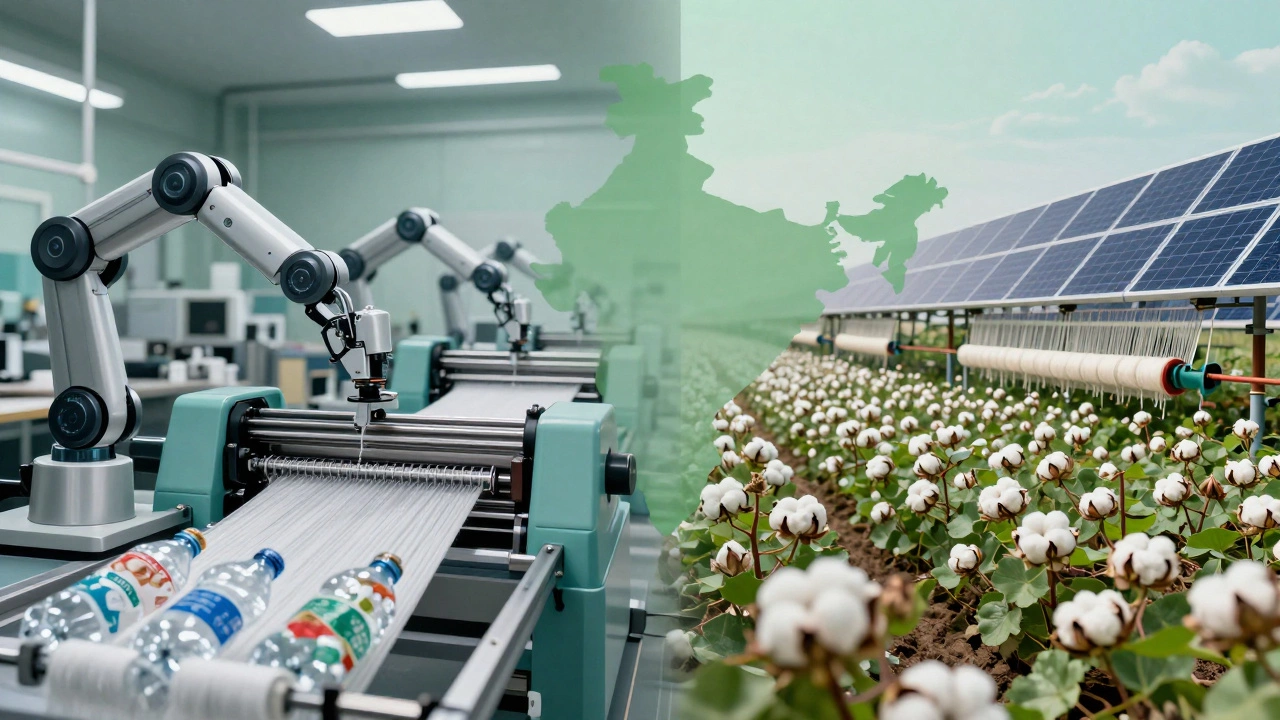
By 2026, the definition of a "textile city" is evolving. It’s no longer just about having the most looms; it’s about having the smartest ones. Both Surat and Tirupur are seeing increased adoption of automated cutting machines, digital printing technologies, and AI-driven quality inspection systems.
Sustainability is no longer optional. Buyers are demanding traceability-knowing exactly where the cotton was grown or where the polyester was recycled. Tirupur is leading in organic cotton certification, while Surat is exploring chemical recycling of post-consumer plastic bottles into textile-grade polyester. The "No 1" city of the future will be the one that balances scale with sustainability most effectively.
Is Surat or Tirupur better for sourcing?
It depends on your product. Choose Surat for synthetic fabrics, home textiles, and domestic market goods. Choose Tirupur for cotton knitwear, finished garments, and export-oriented orders requiring international compliance.
What is the main textile product of Surat?
Surat is primarily known for synthetic fabrics, including polyester, viscose, and nylon. It is the largest producer of man-made fiber fabrics in India, widely used for sarees, salwar kameez, and home furnishings.
Why is Tirupur called the Knitwear Capital?
Tirupur earned this title due to its massive concentration of circular knitting units and garment exporters. It supplies a significant portion of the world's cotton t-shirts and hosiery, serving major global retail brands.
Which city has more textile employment?
Surat likely employs more people in absolute numbers due to the sheer volume of small-scale weaving and printing units. However, Tirupur has a highly skilled workforce focused on garment finishing and export documentation.
Are there environmental concerns in these textile cities?
Yes. Both cities face challenges with water pollution from dyeing processes and air quality issues. Tirupur has implemented stricter effluent treatment regulations, while Surat is working on waste management solutions for synthetic production.