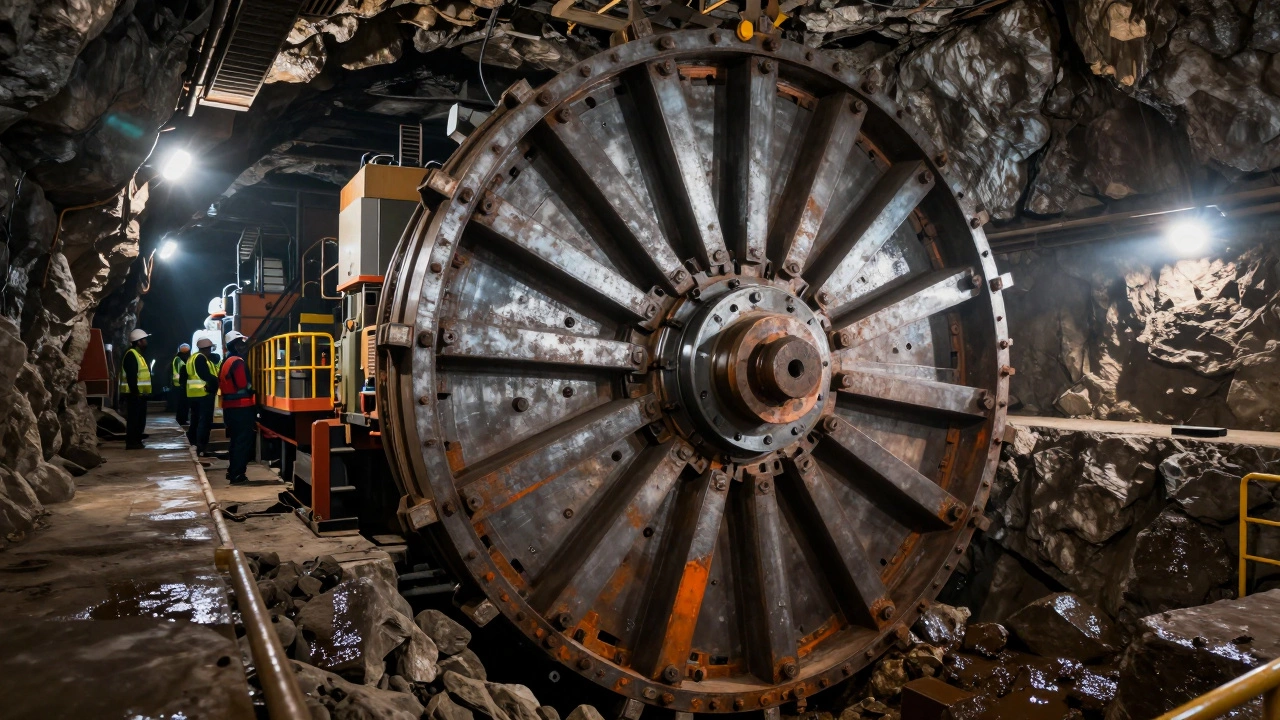
Tunnel Boring Machine (TBM) Market Analyzer
Estimate the market potential for TBM components and services in India based on projected tunneling infrastructure growth.
Analysis Results
- Total Project Value $0 M
- Component/Service Market Size $0 M
- Domestic Opportunity (Local Share) $0 M
India is digging deep. Literally. With the rapid expansion of metro networks in cities like Delhi, Mumbai, and Bengaluru, plus ambitious highway tunnel projects in the Himalayas, the demand for specialized underground construction equipment has skyrocketed. If you are looking to understand who builds the massive machines that carve through rock and soil, or if you are an investor eyeing the heavy machinery sector, knowing the key players is essential.
The core question isn't just "who makes tunnels?" but rather "who manufactures the Tunnel Boring Machines (TBMs) and related infrastructure technology?" While many global giants supply these machines, a robust domestic ecosystem of manufacturers, assemblers, and service providers has emerged in India. This article breaks down the landscape of **tunnel boring machine manufacturers** in India, distinguishing between those who build the iron beasts themselves and those who construct the actual tunnels using them.
Understanding the TBM Manufacturing Landscape
To grasp the industry, we must first separate two distinct roles: the Tunnel Boring Machine (TBM) is a specialized piece of heavy machinery used to excavate circular tunnels with high precision and minimal surface disturbance, and the civil engineering firms that operate them. In India, very few companies manufacture TBMs from scratch due to the immense technical complexity and capital requirements. Instead, the market is dominated by joint ventures, local assembly units of global brands, and specialized fabricators who handle components like cutterheads and shields.
The central entity here is the Heavy Engineering Sector in India's infrastructure development framework, which includes fabrication, assembly, and maintenance of large-scale construction equipment. This sector relies on a mix of public sector undertakings (PSUs) and private engineering firms. When people ask about companies making tunnels, they often mean the contractors (like L&T), but when asking about machinery manufacturers, they refer to the OEMs (Original Equipment Manufacturers) and their Indian partners.
Key Domestic Assemblers and Fabricators
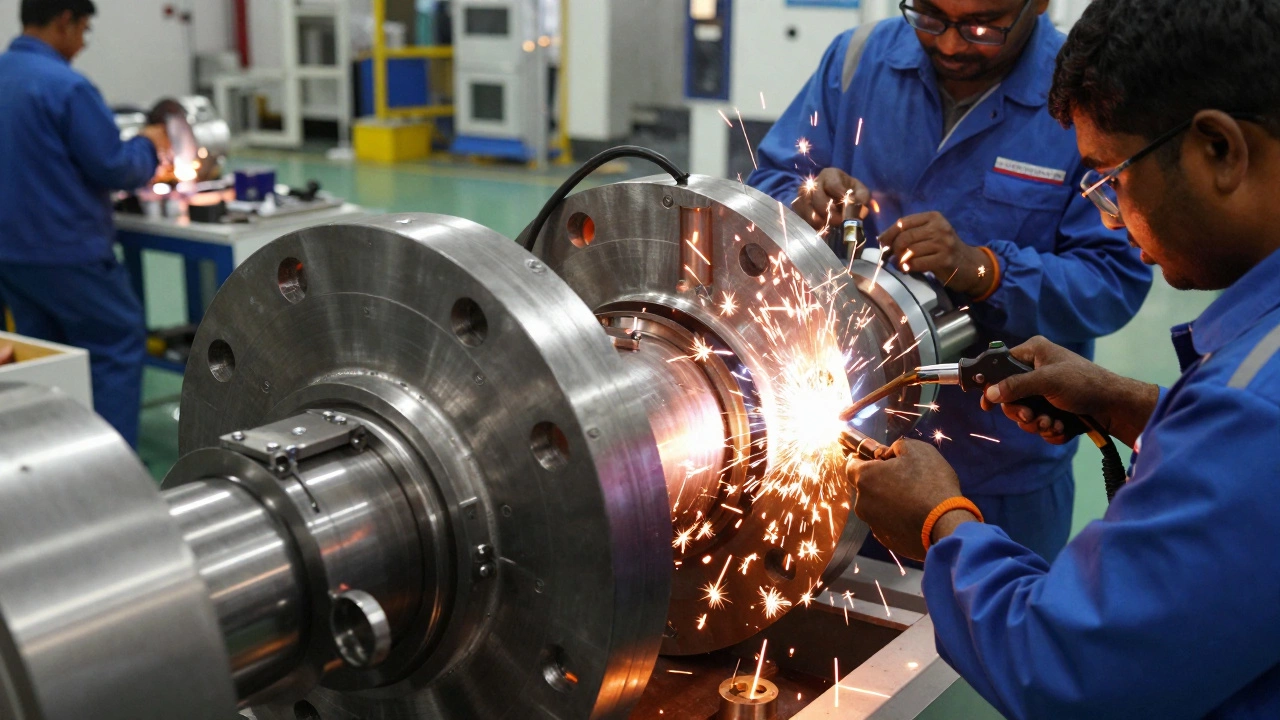
While complete TBM manufacturing is rare domestically, several Indian companies play critical roles in the supply chain. They either assemble kits imported from abroad or fabricate major structural components locally.
- Larsen & Toubro (L&T): While primarily known as a contractor, L&T has a strong engineering division. Through its subsidiary L&T Construction is one of India's largest infrastructure developers, operating numerous TBMs for metro and highway projects, they manage the entire lifecycle. More importantly, L&T Heavy Engineering has collaborated with global firms to localize parts. They don't just use TBMs; they have the capability to maintain and modify them extensively in their Pune and Chennai facilities.
- BHEL (Bharat Heavy Electricals Limited): A state-owned PSU, BHEL is a giant in power and industrial equipment. While not a primary TBM builder, BHEL manufactures the electrical drives, transformers, and control systems that power these massive machines. Their role in the Electrical Systems for Mining is critical for the operation of underground excavation equipment, providing high-voltage power solutions is significant.
- Kirloskar Brothers: Known for pumps and engines, Kirloskar has expanded into industrial machinery. They contribute to the hydraulic systems required for TBM jacking and thrust mechanisms. Hydraulics are the muscle of a TBM, pushing the cutterhead against the rock face.
Global Giants with Local Presence
The bulk of advanced TBMs in India come from multinational corporations that have established service centers, assembly lines, or joint ventures within the country. These companies bring the core technology while leveraging local labor and steel.
| Company | Origin | Role in India | Key Projects |
|---|---|---|---|
| Hitachi Zosen is a Japanese multinational specializing in environmental and energy technologies, including tunnel boring machines | Japan | Full Supply & Service | Mumbai Metro, Delhi Metro extensions |
| Caterpillar Inc. is an American corporation that produces construction and mining equipment, diesel-electric locomotives, and industrial engines | USA | Equipment & Support | Various highway tunnels |
| Weir Group is a Scottish industrial group providing flow control and separation products, including slurry handling systems for TBMs | UK | Slurry Systems | National Capital Region Metro |
| Kobelco Construction Machinery is a Japanese manufacturer of construction equipment, including earth-moving and tunneling machinery | Japan | Assembly & Sales | Bengaluru Metro Phase 2 |
Hitachi Zosen, in particular, has been a dominant force. They supplied the TBMs for the Chhatrapati Shivaji Maharaj Terminus (CSMT) to Dadar East project in Mumbai. These machines had to navigate complex geology under a busy city, requiring real-time monitoring and immediate spare parts availability-services Hitachi provides through its local offices.
The Role of Public Sector Undertakings (PSUs)
In India, government entities drive most tunneling projects. Consequently, PSUs are deeply involved. NHAI (National Highways Authority of India) is the apex body responsible for the development, maintenance, and management of National Highways in India, including tunnel projects commissions the work, but the execution involves specialized arms.
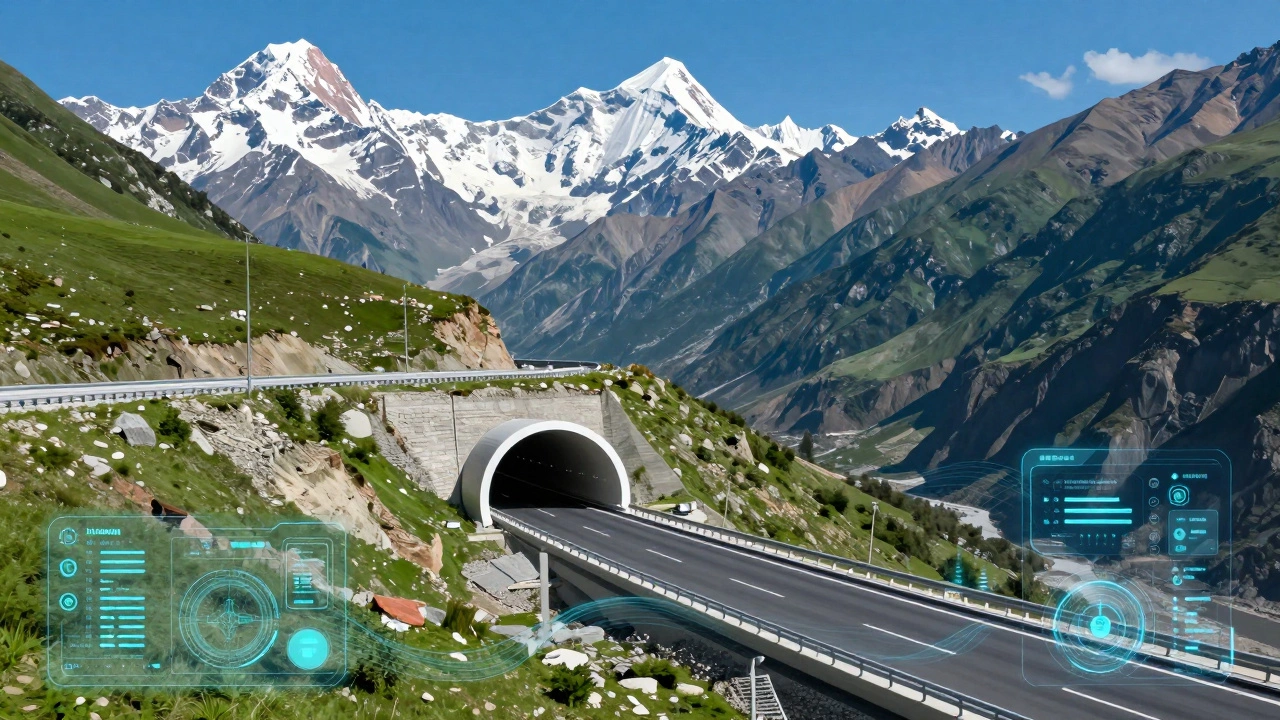
Consider the Zoji La Tunnel is a strategic road tunnel in Jammu and Kashmir, designed to provide all-weather connectivity to Ladakh. The construction involves multiple agencies. While the tunneling itself might be done by a consortium, the machinery support comes from a blend of domestic fabricators and international OEMs. The Indian government's push for 'Atmanirbhar Bharat' (Self-Reliant India) is encouraging more localization. For instance, some smaller micro-tunneling machines (used for utility pipes) are now being fabricated entirely within India by smaller engineering workshops in Gujarat and Maharashtra.
Micro-Tunneling and Utility Infrastructure
Not all tunneling requires a 10-meter diameter TBM. Urban utilities-water mains, sewage lines, fiber optic cables-require Micro-Tunneling Machines (MTMs). This segment is seeing genuine domestic manufacturing growth.
Companies like Shankar Builders is an Indian infrastructure company involved in road construction and tunneling projects and various SMEs in the metal fabrication space are building MTMs. These machines are smaller, less complex, and easier to produce locally. They use standard hydraulic cylinders and compact cutterheads. If you are a small-scale manufacturer looking to enter this space, focusing on MTM components-such as cutting discs, backup systems, and steering mechanisms-is a viable entry point.
Supply Chain Components: Where the Real Opportunity Lies
If you cannot build a full TBM, you can build the parts. The TBM supply chain offers several opportunities for Indian manufacturers:
- Cutter Discs and Tools: Made from high-grade alloy steel. Companies like Jindal Steel & Power is one of India's leading integrated steel producers, supplying raw materials for heavy machinery provide the base material, but specialized forging units shape the cutters.
- Segment Molds: After the TBM bores the hole, concrete segments form the tunnel lining. Manufacturers of precast concrete molds are in high demand. This is a lower-tech but high-volume business.
- Grouting Equipment: To stabilize the ground behind the TBM, grout is injected. Pumps and mixing plants for this process are manufactured by local fluid handling companies.
Challenges for Domestic Manufacturers
Why isn't every Indian company building TBMs? The barriers are high. First, the R&D cost is astronomical. Designing a machine that can withstand millions of tons of pressure without failing requires decades of data. Second, liability is huge. If a TBM breaks down mid-tunnel, it costs millions per day in delays. Clients prefer proven global brands. Third, the scale is limited. India’s tunneling boom is growing, but it doesn't yet match China’s volume, where companies like CRCC and CREG mass-produce TBMs at low costs.
However, the trend is shifting. With projects like the Chenani-Nashri Tunnel is India's longest highway tunnel, located in Jammu and Kashmir, showcasing advanced tunneling techniques and upcoming rail links, the need for localized maintenance and part fabrication is undeniable. Domestic companies are moving from "assemblers" to "co-developers."
Future Outlook: Localization and Innovation
By 2030, India aims to have over 500 kilometers of new tunnels. This will require a steady stream of machinery. The government is likely to impose higher import duties on fully assembled TBMs to encourage local partnerships. Expect to see more Joint Ventures (JVs) between Indian engineering firms (like L&T, Tata Projects) and global OEMs (like Hitachi, Robbins). These JVs will assemble final units in India, creating jobs and transferring technology.
For entrepreneurs, the sweet spot is not the full TBM, but the supporting ecosystem. Think digital monitoring software, AI-driven predictive maintenance tools, or specialized wear-resistant coatings for cutterheads. These are high-value, low-weight additions that Indian tech startups can easily integrate into the traditional heavy machinery workflow.
Who manufactures Tunnel Boring Machines (TBMs) in India?
There are no purely indigenous companies that manufacture complete, advanced TBMs from scratch in India. However, major players like Larsen & Toubro (L&T) and Bharat Heavy Electricals Limited (BHEL) are involved in assembly, component fabrication, and integration. Most TBMs are supplied by global giants like Hitachi Zosen, Caterpillar, and Weir Group, often through local service centers or joint ventures.
Which company built the Mumbai Metro tunnels?
The Mumbai Metro tunnels were constructed by contractors like Larsen & Toubro (L&T) and Afcons Infrastructure. The TBMs used for these projects were largely supplied by Hitachi Zosen (Japan) and other international manufacturers, operated by these Indian contracting firms.
Can small businesses manufacture parts for tunneling machines?
Yes. Small and medium enterprises (SMEs) can manufacture critical components such as cutter discs, hydraulic hoses, segment molds, and grouting pumps. These parts require precision engineering but do not involve the massive capital expenditure of building a full TBM. This is a viable niche for specialized metal fabrication units.
What is the difference between a TBM and a Shield TBM?
A standard TBM excavates rock, while a Shield TBM includes a protective shield that supports the tunnel walls immediately after excavation, preventing collapse in soft soil or unstable ground. Most urban metro projects in India use Shield TBMs because they operate in mixed geological conditions beneath cities.
Is the Indian government promoting local TBM manufacturing?
Yes, under the 'Atmanirbhar Bharat' initiative, there is a push to localize heavy machinery production. While full manufacturing is still emerging, the government encourages joint ventures and local assembly to reduce import dependency and create domestic expertise in tunneling technology.