5S Food Processing Implementation Simulator
📄 Select a Principle to Explore
Click on any card below to see specific implementation strategies for food processing.
Sort
SeiriSet in Order
SeitonShine
SeisoStandardize
SeiketsuSustain
ShitsukeReady to Optimize?
Select a 5S principle from the left panel to view actionable steps for your facility.
Imagine walking into a commercial kitchen where ingredients are stacked haphazardly on the floor, cleaning supplies are mixed with raw produce, and no one knows where the sanitizing logs are kept. It’s chaotic, unsafe, and likely to fail any health inspection. Now imagine that same facility after implementing the 5S methodology. The workspace is spotless, every tool has a designated shadowed spot on the wall, labels are clear, and staff move with purpose. This isn’t just about looking tidy; it’s about preventing contamination, reducing waste, and keeping your food processing unit running smoothly.
The 5S system is a workplace organization method that uses five Japanese terms-Seiri, Seiton, Seiso, Seiketsu, and Shitsuke-to create efficient, safe, and sustainable environments. Originally developed by Toyota for automotive assembly lines, this framework has become indispensable in industries where cleanliness directly impacts product safety, like food processing. In this guide, we’ll break down exactly what each 'S' means in the context of food manufacturing and how you can apply it today.
Quick Summary: The 5 Core Principles
- Sort (Seiri): Remove unnecessary items from the workspace to reduce clutter and contamination risks.
- Set in Order (Seiton): Organize remaining items logically so they are easy to find and use.
- Shine (Seiso): Clean the workspace regularly to maintain hygiene and identify equipment issues early.
- Standardize (Seiketsu): Create consistent procedures and visual cues to maintain the first three S's.
- Sustain (Shitsuke): Build habits and discipline to keep the system running long-term.
1. Sort (Seiri): Eliminate the Unnecessary
The first step is often the hardest because it requires making tough decisions about what stays and what goes. In a food processing plant, excess inventory or unused equipment isn't just an eyesore-it’s a potential source of pest infestation, bacterial growth, and cross-contamination.
To implement Seiri, walk through your production area with a red tag. Mark anything that doesn’t belong there: broken pallets, expired packaging materials, obsolete tools, or personal items left by staff. Ask yourself: "Do I need this item for my current shift?" If the answer is no, remove it immediately. Don’t just move it to another corner; send it to storage, scrap it, or recycle it.
For example, if you have three different types of cutting boards but only use two daily, store the third one away. This reduces the surface area that needs cleaning and minimizes the chance of using the wrong board for meat versus vegetables. By clearing out the clutter, you make the necessary items visible and accessible, which sets the stage for better hygiene practices.
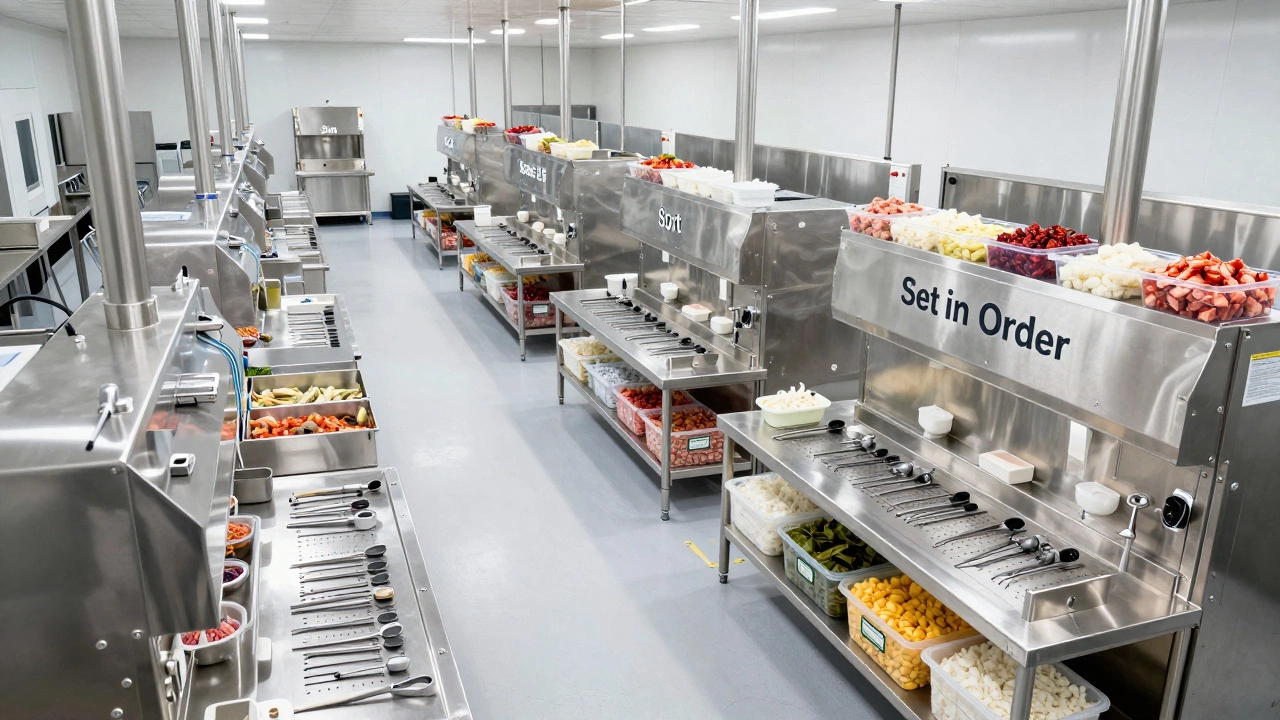
2. Set in Order (Seiton): A Place for Everything
Once you’ve sorted through the junk, the next step is organizing what remains. Seiton is about efficiency and logic. Every tool, ingredient, and container should have a specific, labeled home. This prevents workers from wasting time searching for items and ensures that processes follow a logical flow.
In food processing, this might look like color-coded bins for different allergens or shadow boards for utensils. For instance, assign blue containers for dairy products, yellow for eggs, and green for fresh produce. Label these clearly so anyone on the team knows exactly where things go without asking. Use floor tape to mark walkways and work zones, ensuring that raw materials never cross paths with finished goods-a critical requirement for HACCP compliance.
Think about your workflow. Does the path from receiving raw ingredients to packaging finished products make sense? If employees have to backtrack or reach across busy aisles, you’re creating bottlenecks and safety hazards. Rearrange stations so that the most frequently used items are within arm’s reach, while less common tools are stored slightly further away but still easily accessible.
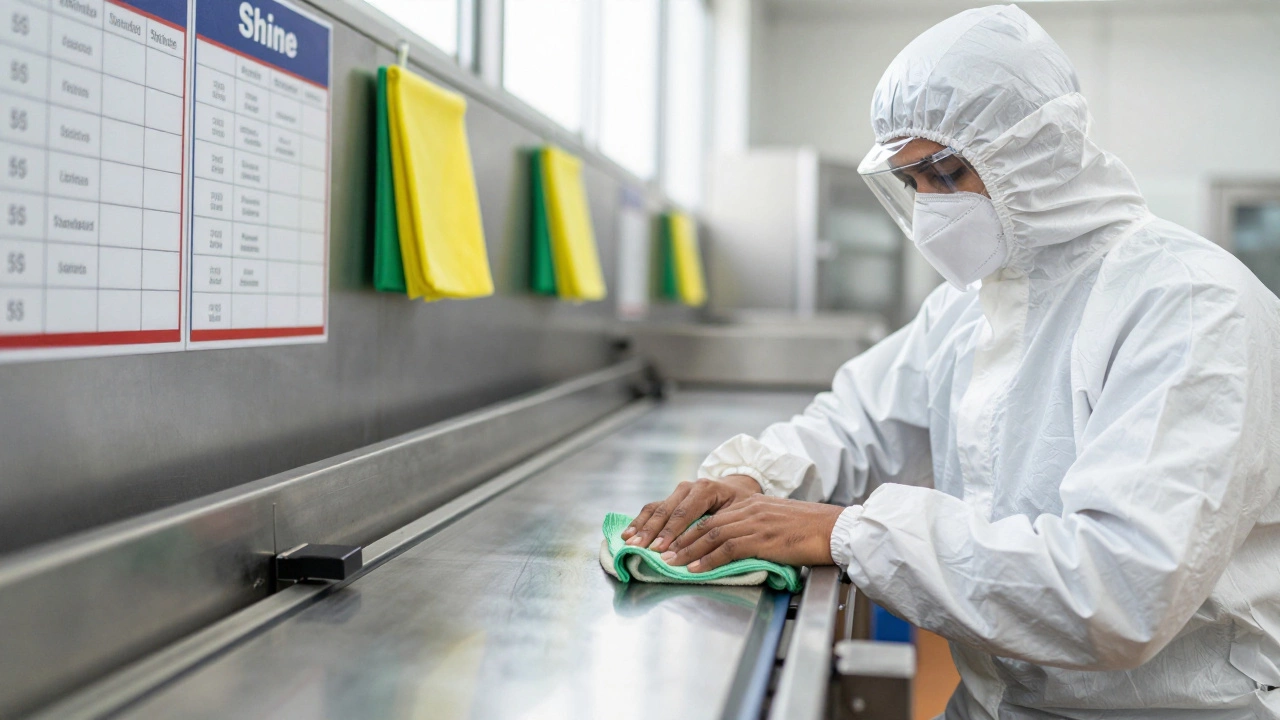
3. Shine (Seiso): Clean as You Inspect
Cleaning is not just about aesthetics; it’s a form of inspection. Seiso means shining your workspace to detect problems before they become major issues. In food manufacturing, dirt and grime can harbor pathogens like Salmonella or Listeria, making regular deep cleaning essential.
Instead of waiting for end-of-shift cleanup crews, integrate cleaning into daily routines. After each batch, wipe down surfaces, check for leaks under machinery, and sweep floors. When you clean a conveyor belt, you might notice a frayed belt or a loose screw-issues that could cause downtime later. By treating cleaning as part of maintenance, you catch small problems early.
Use standardized cleaning schedules posted visibly near relevant areas. Include tasks like degreasing fryers, sanitizing slicers, and emptying trash bins at set intervals. Encourage staff to report any unusual smells, stains, or residues immediately. Remember, a shiny machine is usually a well-maintained one, and a clean floor reflects a disciplined culture.
4. Standardize (Seiketsu): Make It Consistent
Without standards, efforts to organize and clean will eventually slip back into chaos. Seiketsu focuses on creating uniform practices so that everyone follows the same rules regardless of who is working the shift.
This involves documenting best practices and making them visible. Create checklists for opening and closing shifts, post photos of what a properly organized station looks like, and establish color codes for cleaning tools (e.g., red cloths for restrooms, green for food prep areas). These visual management techniques help new hires learn quickly and remind experienced staff to stay on track.
Consider developing a simple audit system where supervisors review key areas weekly against predefined criteria. Share results openly to celebrate successes and address gaps collaboratively. Standardization also extends to documentation-ensure that sanitation logs, temperature records, and quality checks are completed consistently and stored securely for regulatory audits.
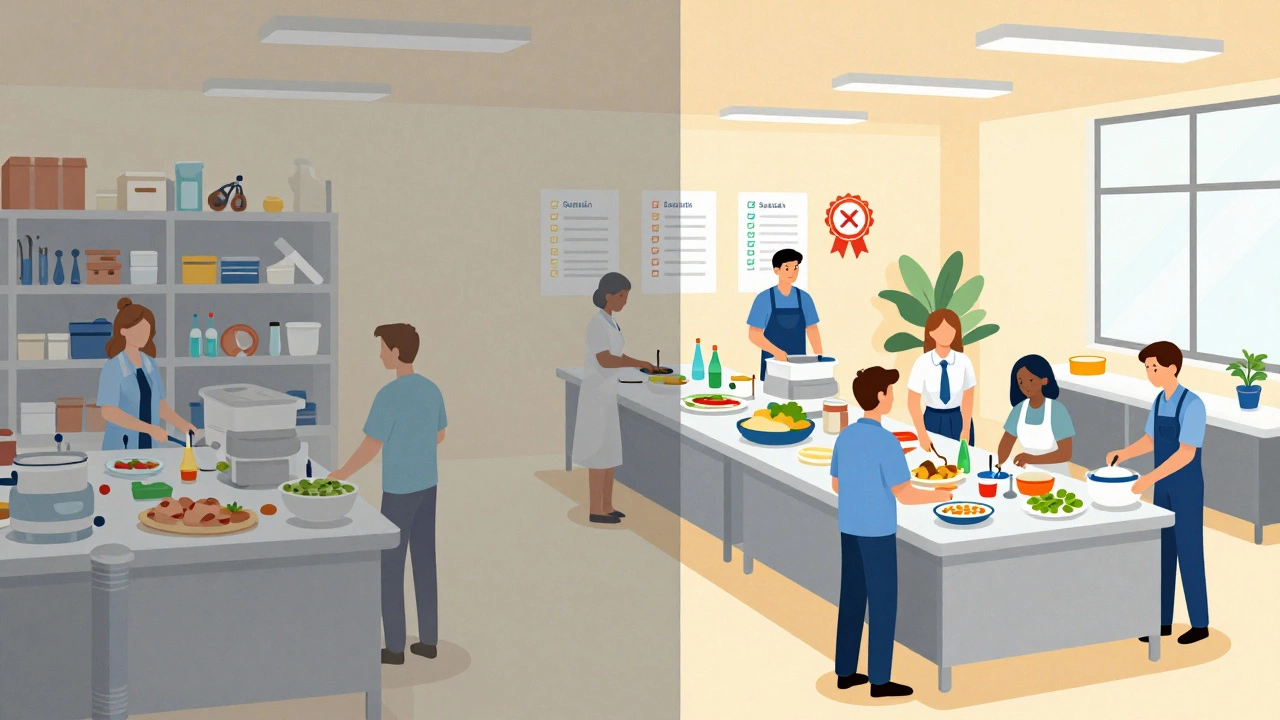
5. Sustain (Shitsuke): Build Discipline and Habits
The final 'S' is arguably the most important because it determines whether your improvements last. Shitsuke is about sustaining momentum through discipline and continuous improvement. It transforms temporary changes into permanent cultural norms.
Leadership plays a crucial role here. Managers must model the behavior they expect from their teams. If leaders ignore minor violations, such as leaving tools out overnight, employees will do the same. Conduct regular training sessions to reinforce why 5S matters-not just for passing inspections, but for protecting consumer health and boosting productivity.
Recognize and reward teams that excel at maintaining high standards. Hold monthly reviews to discuss challenges and brainstorm solutions together. Over time, following 5S principles becomes second nature, much like brushing your teeth. When sustainability takes root, your facility operates more efficiently, safely, and profitably.
| Aspect | Traditional Approach | 5S-Optimized Approach |
|---|---|---|
| Workspace Layout | Cluttered, ad-hoc arrangement | Organized, labeled zones |
| Cleaning Frequency | End-of-shift only | Continuous, integrated into workflow |
| Error Detection | Reactive (after incident) | Proactive (during cleaning) |
| Staff Engagement | Low ownership | High accountability & pride |
| Regulatory Compliance | Risky, inconsistent | Consistently compliant |
Why 5S Matters Specifically in Food Processing
While 5S originated in car factories, its application in food processing offers unique benefits tied directly to public health and brand reputation. Unlike mechanical parts, food products are perishable and susceptible to biological hazards. A single lapse in hygiene can lead to recalls, lawsuits, and loss of consumer trust.
Implementing 5S helps meet stringent regulations imposed by agencies like the FDA or EFSA. Auditors love seeing organized facilities because they demonstrate control over processes. Moreover, streamlined workflows reduce handling time, which lowers the risk of contaminating sensitive ingredients. Plus, when employees take pride in their clean environment, morale improves, leading to lower turnover rates and higher overall performance.
How long does it take to implement 5S in a food processing plant?
Initial implementation typically takes 4-8 weeks for sorting and organizing phases. However, full integration and sustained habit formation may require several months of ongoing effort and leadership support.
Can small-scale food businesses benefit from 5S?
Absolutely. Even tiny kitchens gain significantly from basic organization and cleanliness protocols. Start small-focus on one workstation first-and scale up as resources allow.
Is 5S expensive to adopt?
Not necessarily. Much of 5S relies on behavioral change rather than costly investments. Simple solutions like labeling shelves or rearranging existing furniture yield immediate returns without breaking the bank.
What happens if we skip the 'Sustain' phase?
Without sustainability, initial gains fade quickly. Facilities revert to old habits, increasing risks of accidents, inefficiencies, and non-compliance during audits.
Does 5S replace other food safety systems like HACCP?
No, 5S complements HACCP by providing a cleaner, more organized foundation upon which hazard analysis builds. Together, they create robust food safety management systems.