Gujarat Textiles Knowledge Quiz
Loading question...
Quiz Complete!
Keep learning about Gujarat's rich textile heritage.
You might have seen those incredibly vibrant saris with geometric patterns that look like they were painted by hand. Or maybe you’ve admired a scarf with tiny, perfect dots of color that seem impossible to replicate by machine. If you’re wondering what is Gujarat famous cloth, you’re looking at some of the oldest and most intricate textile traditions in the world.
Gujarat isn’t just a state in western India; it’s a global hub for fabric innovation. From the double-ikat weaves of Patan to the mirror-work embroidery of Kutch, this region has been exporting style for centuries. But what makes these fabrics special? It’s not just the colors. It’s the sheer human effort, the mathematical precision of the dyeing processes, and the cultural stories woven into every thread.
The Crown Jewel: Patola Silk
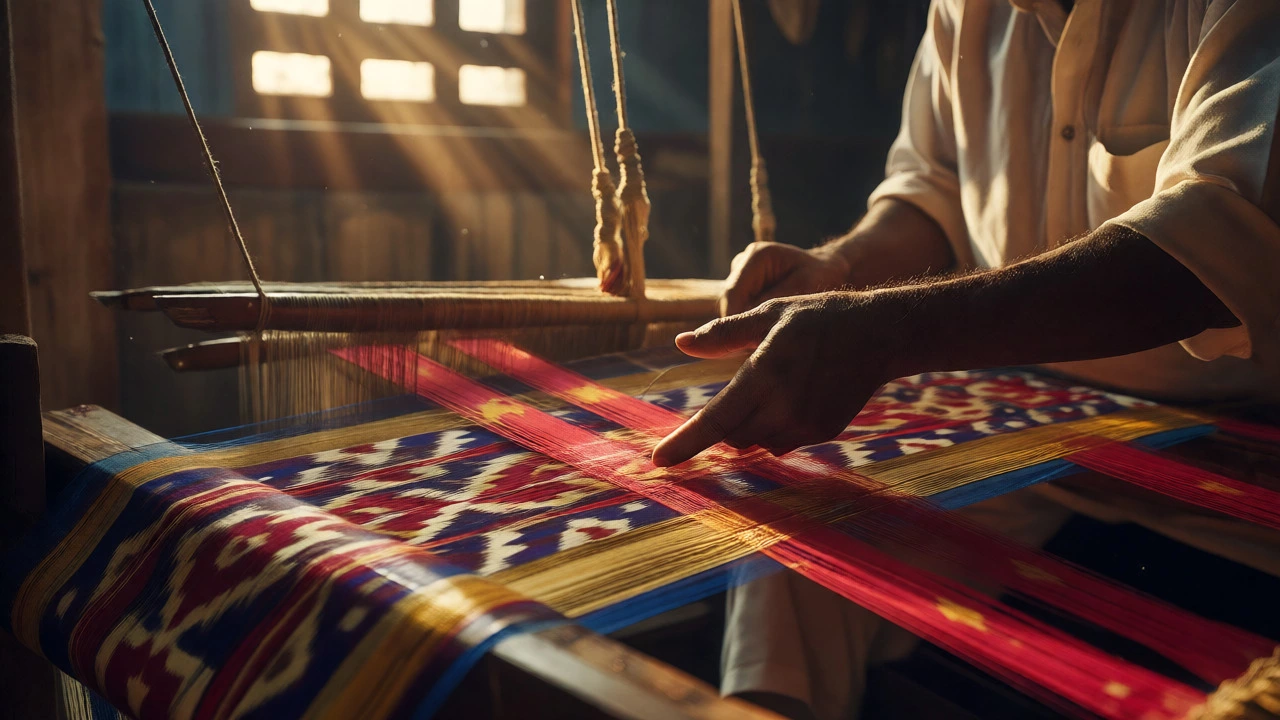
If there’s one fabric that defines luxury in Gujarat, it’s Patola. This is a type of silk sari made using a technique called double ikat. In simple terms, both the warp (vertical threads) and the weft (horizontal threads) are dyed before weaving begins. Imagine trying to paint a picture on individual strings before you even start knitting them together. That’s Patola.
The process takes months, sometimes years. Artisans in Patan use natural dyes derived from plants, minerals, and insects. The patterns are usually geometric-diamonds, squares, and circles-because curved lines are nearly impossible to achieve with such tight tension on the loom. Because each sari is unique and requires immense skill, a single authentic Patola can cost more than a used car. It’s not just clothing; it’s an heirloom passed down through generations.
| Fabric Type | Primary Technique | Origin Region | Material |
|---|---|---|---|
| Patola | Double Ikat (Resist Dyeing) | Patan | Silk |
| Bandhani | Tie-Dye (Knotting) | Jamnagar, Bhuj | Cotton, Silk, Georgette |
| Ajrakh | Block Printing & Resist Dyeing | Kutch | Cotton |
| Kutch Embroidery | Mirror Work & Stitching | Kutch | Cotton, Wool |
Bandhani: The Art of Knotting
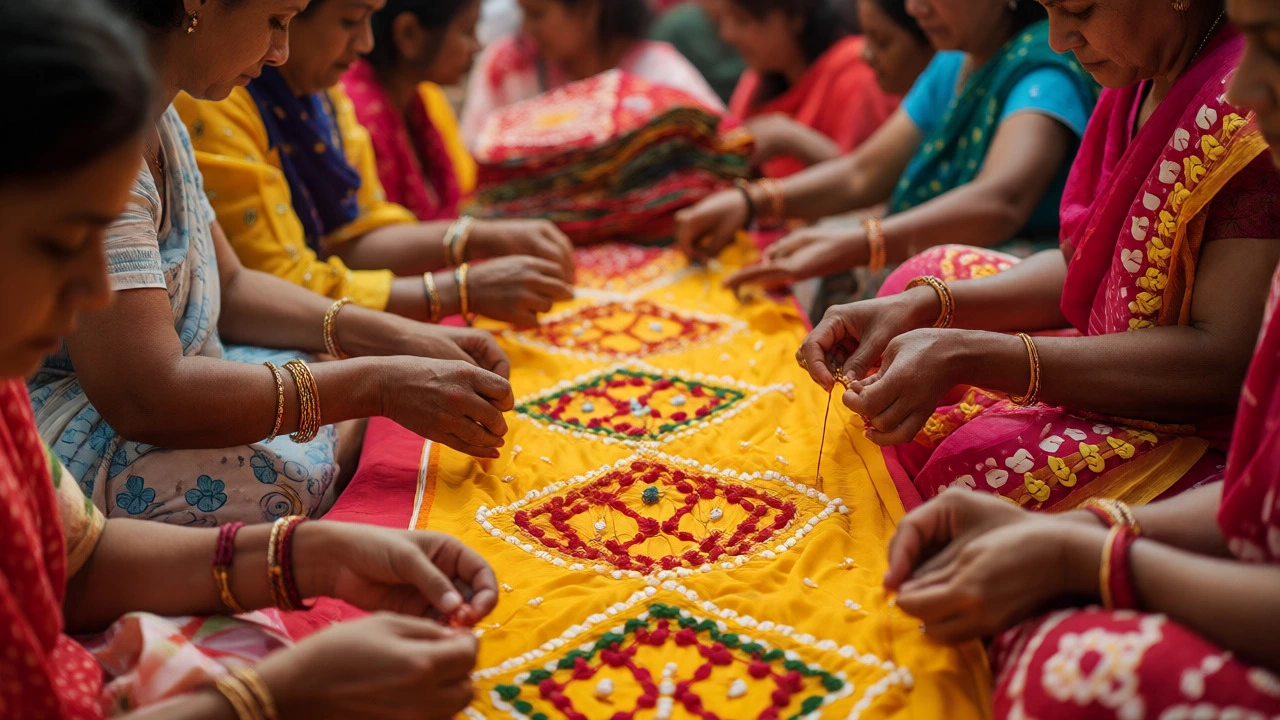
While Patola is about complex weaving, Bandhani is all about resistance. The word comes from "bandh," meaning to tie. Before the fabric touches any dye, artisans use their fingernails to pinch tiny sections of the cloth and tie them tightly with thread. When the fabric is dipped in color, the tied spots remain white or retain the previous color, creating a pattern of dots.
This isn’t done by machines. Even today, in places like Jamnagar and Bhuj, women sit in groups, tying thousands of knots per square inch. A typical Bandhani sari might have over 10,000 knots. The complexity depends on the design. Simple dot patterns are quicker, but intricate floral or geometric designs require multiple rounds of tying and dyeing. You’ll often see Bandhani in bright yellows, reds, and greens, which are traditional colors for weddings and festivals.
Ajrakh: Nature’s Palette
If you prefer earthy tones over neon brightness, you’ll love Ajrakh. Originating from the Kutch region, this fabric uses a labor-intensive block-printing method combined with resist dyeing. The name "Ajrakh" is said to come from the Arabic word "Azarakh," meaning blue, though the final product features deep indigos, madder reds, and black.
What makes Ajrakh unique is its reliance on natural chemistry. Artisans use mordants like alum and iron to fix the dyes. The process involves printing the pattern with mud paste to block out areas, then dyeing the fabric. This cycle repeats up to 16 times. The result is a fabric that feels soft, breathable, and smells faintly of the earth. Unlike synthetic prints that fade quickly, Ajrakh colors actually deepen with washing. It’s a sustainable choice that has gained massive popularity among eco-conscious buyers globally.
Kutch Embroidery: Mirror Work Magic
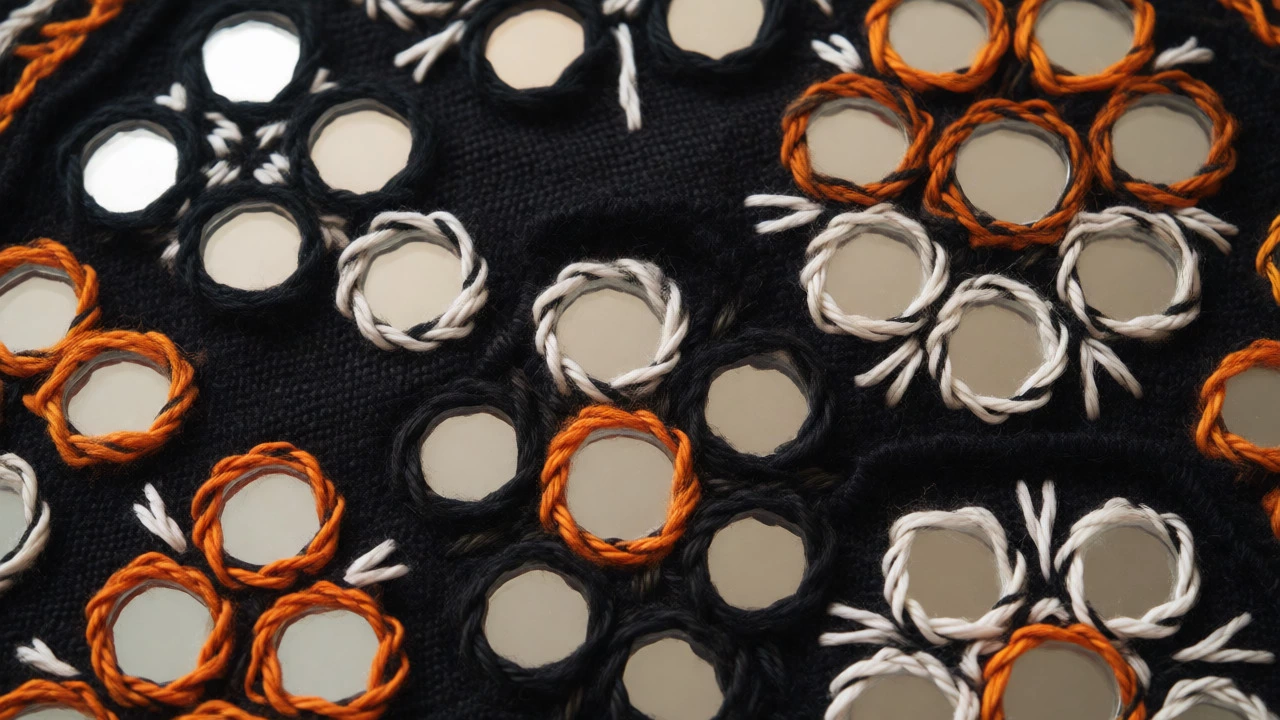
Not all Gujarati fame comes from dyeing. The Kutch region is world-renowned for its embroidery. Specifically, Kutch Embroidery is famous for its use of small mirrors, known as "abhla bharat." These aren’t just decorative; historically, they were believed to ward off evil spirits by reflecting bad energy away.
Different communities within Kutch have distinct styles. Rabari women stitch bold, dense patterns using chain stitches. Ahir women prefer satin stitches with colorful threads. Suthar artisans create intricate geometric designs. The base fabric is usually cotton or wool, making these garments durable and suitable for the harsh desert climate. Today, you’ll find these motifs on everything from heavy bridal lehengas to modern denim jackets and tote bags.
Why Gujarat Dominates the Textile Market
Beyond traditional crafts, Gujarat is an industrial powerhouse. Ahmedabad is often called the "Manchester of India" because of its historic cotton mills. The state produces a significant portion of India’s cotton and polyester yarn. Why does this matter to you? Because when you buy mass-market shirts or bedsheets labeled "Made in India," there’s a high chance the raw material came from Gujarat.
The region benefits from proximity to ports like Kandla and Mundra, making export logistics cheap and fast. This infrastructure allows local manufacturers to compete globally on price while still maintaining quality. For business owners or fashion students, understanding this supply chain is crucial. You can source high-quality fabrics directly from Gujarat mills at competitive rates, bypassing middlemen who inflate costs in Mumbai or Delhi.
How to Spot Authenticity
With so much imitation out there, how do you know if you’re buying real Gujarat famous cloth? Here are three quick checks:
- Check the Backside: In genuine Patola, the reverse side should be almost as clear as the front. If the back looks blurry or messy, it’s likely a printed imitation.
- Look for Knot Marks: On authentic Bandhani, you can often feel the slight texture where the knots were tied. Machine-made versions look perfectly flat and uniform.
- Smell Test: Real Ajrakh has a distinct, earthy scent due to natural dyes. Synthetic prints smell like chemicals or plastic.
Buying authentic handicrafts supports rural artisans who keep these traditions alive. It’s worth paying a premium for durability and artistry that won’t fade after two washes.
Which city is famous for Patola silk?
Patan is the primary city famous for Patola silk. The craft is deeply rooted here, and the Patan Patola Weavers Association protects the geographical indication status of this fabric. While other regions attempt imitations, authentic double-ikat Patola is exclusively woven in Patan.
Is Bandhani only made on silk?
No, Bandhani is made on various fabrics including cotton, georgette, chiffon, and silk. Cotton Bandhani is common for daily wear and summer clothes, while silk Bandhani is reserved for weddings and formal events. The technique remains the same regardless of the base fabric.
Why is Ajrakh fabric expensive?
Ajrakh is expensive because of the time-consuming production process. It involves up to 16 stages of printing, dyeing, and washing using natural ingredients. Each step must dry completely before the next begins, which can take weeks. Additionally, skilled artisans are required to align blocks precisely, limiting mass production speed.
What is the difference between Bandhani and Leheriya?
Both are tie-dye techniques, but they differ in pattern creation. Bandhani involves tying individual points to create dots. Leheriya involves rolling the fabric diagonally and tying it at intervals to create wave-like diagonal stripes. Leheriya is also popular in Rajasthan but widely produced in Gujarat.
Can I wash Patola silk at home?
It is highly recommended to dry clean Patola silk. The natural dyes are delicate, and the fabric structure is fragile during the initial years. Washing at home can cause colors to bleed or distort the weave. Once the sari is older and the dyes have set permanently, gentle hand washing may be possible, but caution is advised.