Manufacturing Business Profit Calculator
Calculate Your Earnings
Estimate potential profits from low-cost manufacturing businesses using the exact cost structures from the article. Input your quantities and prices to see realistic earnings.
People ask, what is the easiest business to earn money? Not the flashiest, not the most scalable, not the one that needs a team of five or a warehouse full of equipment. Just something simple, real, and fast to start making cash. In manufacturing, that answer isn’t about building cars or making smartphones. It’s about small, smart, hands-on work you can do from a garage, a basement, or even your kitchen table.
Soap Making Is Still the Top Pick
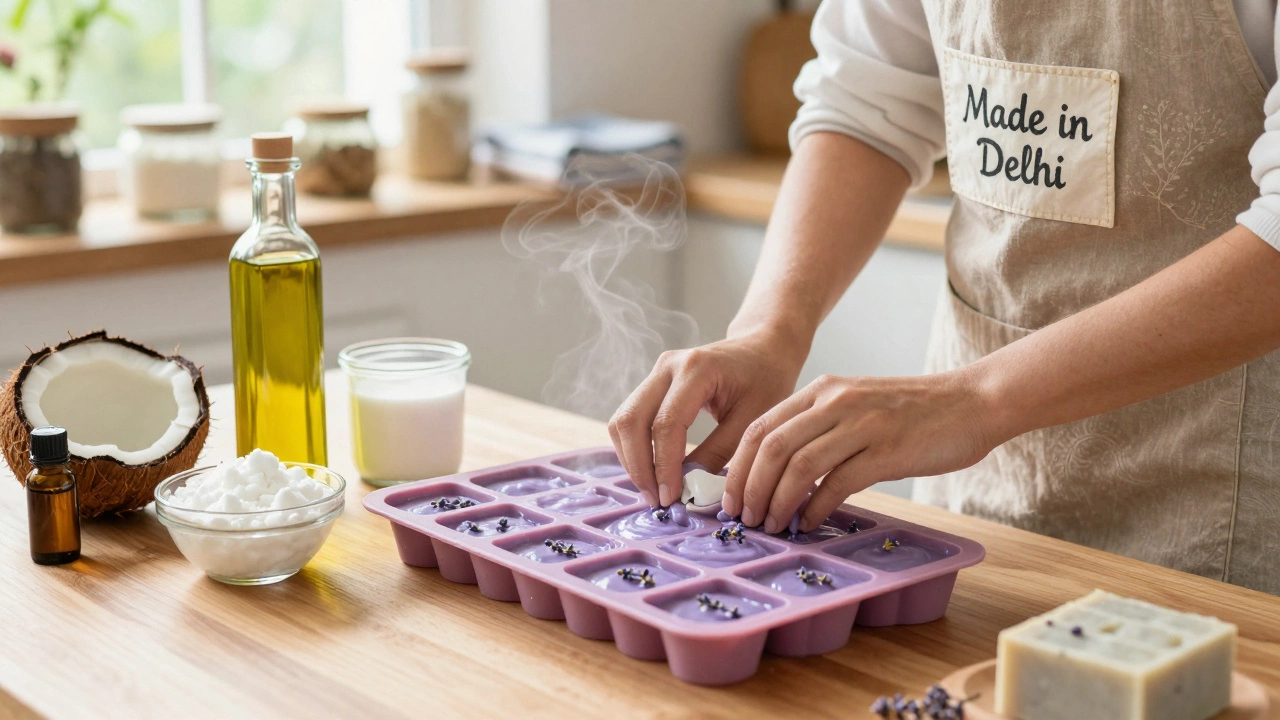
Soap making isn’t new, but it’s still the easiest manufacturing business to start with under $500. You don’t need a license in most places if you’re selling locally. Basic ingredients-coconut oil, olive oil, lye, essential oils, and molds-cost less than $100. You can make 50 bars in a weekend. Sell them for $8 each at farmers markets, local boutiques, or Etsy. That’s $400 in revenue before overhead. Profit? Around $250. Repeat that every two weeks, and you’re making $5,000 a year with no employees.
People don’t buy soap because it’s cheap. They buy it because it smells good, feels nice, and isn’t full of chemicals. Handmade soap has a story. That’s your edge. Add a label that says “Made in Brooklyn” or “For Sensitive Skin” and you’re not just selling soap-you’re selling trust. Local buyers care about that. Big brands don’t.
Candles Are Simpler Than You Think
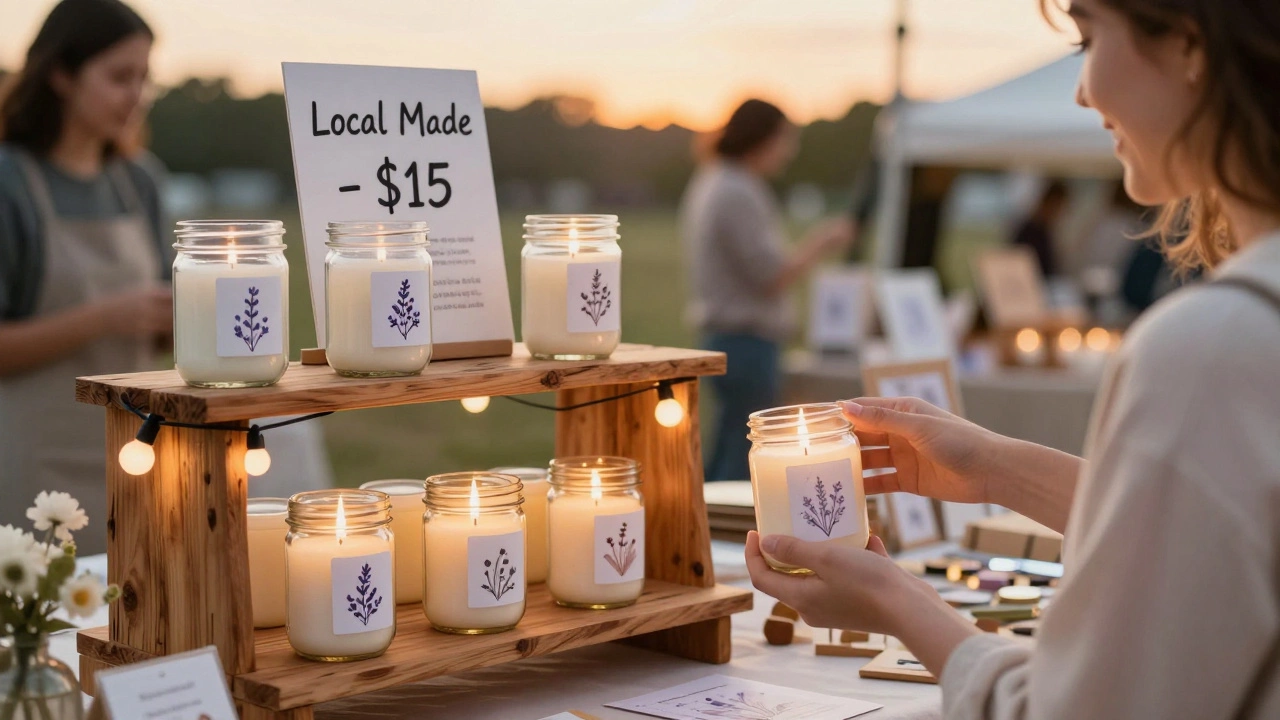
Candle making is even easier than soap. You need wax (soy or beeswax), wicks, fragrance oils, and jars. A 5-pound bag of soy wax costs $25. It makes about 25 medium candles. Each candle uses $1.50 in materials. Sell them for $15. That’s $375 in sales. Profit: $300. You can do this in a weekend. No special equipment. No training. Just melt, pour, wait.
People buy candles for mood, not function. A lavender candle for bedtime. A cedarwood one for the office. A vanilla one for the bathroom. You don’t need 50 scents. Start with three. Test them on friends. See which ones get asked for again. That’s your product line. Sell them at craft fairs, Instagram, or even on a small shelf in a local coffee shop. You keep 80% of the sale. No middleman. No shipping fees if you sell locally.
Custom Phone Cases Are Low-Risk, High-Margin
Phone cases aren’t just plastic shells. They’re personal statements. And people will pay for designs that mean something to them. You can buy blank cases in bulk for $1.20 each. Print custom designs with a heat press or sublimation printer-under $300 for a basic setup. A design that says “Dog Mom” or “Coffee First” sells for $20. Cost? $2.50. Profit? $17.50 per case.
You don’t need to be an artist. Use free design tools like Canva. Search for trending phrases on Pinterest or Etsy. “Cat Dad” and “Plant Parent” are still hot in 2026. Print 20 cases. Take photos. Post them on Facebook Marketplace. Someone buys one. You make $17.50. They ask for another. You print it. No inventory risk. No warehouse. No returns. You only make what someone asks for.
Pressed Flower Art Is Quietly Profitable
This one surprises people. But pressed flower art? It’s growing fast. You collect flowers from your yard, a park, or even buy dried ones from wholesalers for pennies. Press them between books for a week. Frame them in cheap wooden shadow boxes from Amazon ($5 each). Sell each piece for $35-$50.
Why does this work? People want nature in their homes. They don’t want mass-produced prints. They want something real, quiet, and handmade. A single framed piece with lavender, baby’s breath, and eucalyptus looks like a $150 piece from a boutique-but you made it for $8. You can sell these on Etsy, at wedding fairs, or even to local interior designers who need unique accents for client homes.
It’s slow to scale, but it’s pure profit. No electricity needed. No machines. Just patience and a little creativity.
Recycled Glass Jewelry Is the Hidden Gem
Look around your recycling bin. Bottles, jars, wine bottles-they’re all potential jewelry. Clean them. Cut them with a glass cutter (cost: $40). Sand the edges. Drill tiny holes. String them on leather cords or metal chains. You’ve got earrings, pendants, bracelets.
One wine bottle gives you 8-10 pieces. Cost per piece? $0.50. Sell them for $25. Profit? $24.50. You can make 50 pieces in a weekend. List them on Instagram with #HandmadeGlassJewelry. Tag local boutiques. Someone will DM you. You ship it. Done.
This isn’t just recycling. It’s upcycling. And people pay extra for sustainability. You’re not just selling jewelry. You’re selling a story: “This was a bottle. Now it’s yours.”
Why These Work When Others Don’t
Most people think manufacturing means factories, machines, and big loans. That’s not true. The easiest businesses to earn money in manufacturing are the ones that:
- Require under $1,000 to start
- Use materials you can find locally or cheaply online
- Have high perceived value but low production cost
- Don’t need permits or certifications (in most areas)
- Let you sell directly to customers-no middlemen
These aren’t “get rich quick” schemes. They’re “get paid slow and steady” businesses. You don’t need to go viral. You just need to show up, make something real, and let people see the difference.
What Doesn’t Work (And Why)
Don’t waste time on:
- Plastic injection molding-needs $50,000+ in equipment
- Electronics assembly-requires certifications, testing, liability insurance
- Food processing-requires health department inspections, labeling laws, refrigeration
- Textile printing-needs industrial machines and bulk fabric orders
These aren’t bad ideas. They’re just not easy. They’re not fast. And they don’t let you test the market before spending a fortune.
The real trick? Start small. Make five things. Sell them. See who buys. Then make ten more. Repeat. That’s how real manufacturing businesses grow-not with venture capital, but with cash from customers.

Where to Sell (Without Paying Fees)
You don’t need Etsy. You don’t need Amazon. Start local:
- Farmer’s markets-$20-$50 per weekend stall
- Local gift shops-offer consignment (they take 30%, you keep 70%)
- Facebook Marketplace-free, local buyers, no listing fees
- Instagram Reels-show your process. “How I turn wine bottles into earrings” gets views. Views turn into sales.
People trust what they can touch. If you can hand someone a candle and say, “I made this yesterday,” they’ll buy it. That’s the power of handmade.
How to Start Tomorrow
Here’s your 24-hour plan:
- Choose one product: soap, candle, phone case, pressed flower art, or glass jewelry.
- Buy the materials online (Amazon, Etsy, or Alibaba for bulk).
- Make 5 samples.
- Take photos in natural light.
- Post them on Facebook Marketplace with “Handmade in [Your City] - $15 each.”
- Wait for the first message.
That’s it. You’re a manufacturer now. No degree. No loan. No boss. Just you, your hands, and something real you made.
Do I need a business license to sell handmade soap or candles?
In most U.S. states and many countries, you don’t need a business license to sell handmade soap or candles if you’re operating under a small-scale exemption. Check your local health or consumer safety department. Some places require a basic home occupation permit if you’re selling from home, but it’s usually under $50. You do need to label products with ingredients and your name or business name. No FDA approval needed for soap unless you claim it treats skin conditions.
How long does it take to make a profit in these businesses?
You can make your first profit in under 48 hours. Buy materials on Monday, make five items on Tuesday, list them on Friday, and sell one by Saturday. That’s $15-$25 profit. Repeat that weekly, and you’re clearing $100-$200 a week within a month. Most people who stick with it make $1,000-$3,000 a month within six months-without hiring anyone.
Can I scale these businesses later?
Yes. Once you’re selling consistently, you can buy a second heat press, order wax in bulk, or hire a helper for packing. You can even license your designs to other makers. But most people don’t need to scale. They just want to earn $2,000-$5,000 a month on the side. That’s doable without turning it into a company.
What’s the most common mistake beginners make?
Buying too much inventory too soon. Don’t order 500 blank phone cases. Order 20. Make 5 designs. Test them. See which one sells. Then make more of that. The mistake isn’t making the product-it’s assuming everyone will love it. Start small. Let the market tell you what to make next.
Are these businesses sustainable in 2026?
Yes. Consumers are more aware than ever. They’re tired of plastic, mass-produced junk. They want authenticity, sustainability, and local connection. Handmade items fit perfectly. Even big retailers are now buying from small makers for their “local craft” sections. The trend isn’t fading-it’s growing.
Final Thought: You Don’t Need to Be an Expert
You don’t need to know how to run a factory. You don’t need to be a chemist or a designer. You just need to be willing to try. Make one thing. Sell it. Learn. Make another. Sell that. Keep going. The easiest business to earn money isn’t the one with the most money. It’s the one you can start today-with what you already have.