
Manufacturing Scale & Opportunity Estimator
Explore how different manufactured items compare in global annual production volume and identify potential business opportunities within these sectors.
Strategic Insight
Select a category above to see strategic insights derived from manufacturing data.
You might guess it's a smartphone, a car, or maybe even a bag of potato chips. But if you look at raw numbers, those items are rounding errors compared to the true king of mass production. The answer isn't just interesting trivia; it’s a blueprint for understanding scale, supply chains, and where the money flows in modern manufacturing.
For anyone looking into manufacturing startup ideas, knowing what gets made by the trillions changes how you view your own potential niche. Are you chasing high-margin, low-volume goods, or are you aiming for the sheer volume game? Let’s break down the actual data, because the reality is more surprising-and more instructive-than most people think.
The Undisputed Champion: Plastic Pellets
If we define "item" as a discrete unit that leaves a factory line, the winner is almost certainly plastic resin pellets. These tiny, uniform beads are the raw material for nearly everything else on this list. They aren’t sold to consumers directly; they are sold to other manufacturers. But their production volume dwarfs everything else.
Global plastic production has hovered around 400 million metric tons annually in recent years. If an average pellet weighs about 0.05 grams (which is standard for injection molding grades), that translates to roughly 8 trillion pellets per year. That’s 8,000,000,000,000 units. No single consumer product comes close. Why does this matter to you? Because it highlights the power of B2B (business-to-business) manufacturing. You don’t need a catchy brand name to dominate volume; you just need to be the essential input for someone else’s product.
The Consumer King: Screws and Fasteners
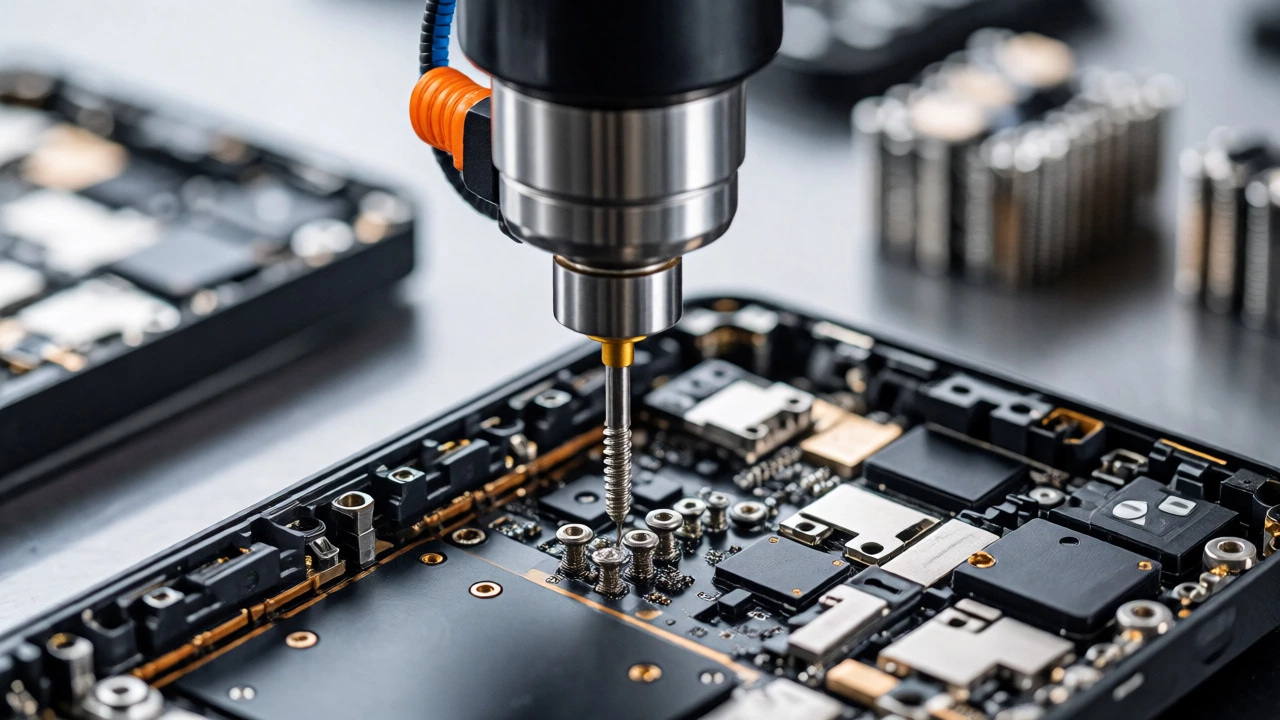
When people ask this question, they usually mean finished goods. In that category, the humble screw takes the crown. Specifically, steel screws used in construction, automotive assembly, and electronics. Estimates suggest over 100 billion screws are manufactured globally every year. Some industry reports push this number higher when including rivets and bolts.
Why screws? Because they are the connective tissue of the physical world. Every iPhone needs them. Every IKEA bookshelf relies on them. Every bridge uses tons of fasteners. For a small scale manufacturer, this teaches a vital lesson: component manufacturing is resilient. While fads come and go, things still need to hold together. If you’re considering a machine shop or a specialized fastener business, you’re entering a market with infinite demand but brutal competition on price.
| Item Category | Estimated Annual Volume | Primary Use Case | Startup Opportunity Level |
|---|---|---|---|
| Plastic Pellets | ~8 Trillion units | Raw material for all plastics | Low (Capital intensive) |
| Screws/Bolts | ~100+ Billion units | Construction, Auto, Electronics | Medium (Niche specialization) |
| Smartphones | ~1.2 Billion units | Communication, Computing | High (Brand & Tech dependent) |
| T-Shirts | ~2 Billion units | Apparel | Medium-High (Design focused) |
| Canned Food | ~50 Billion units | Food preservation | Medium (Local distribution) |
Electronics: The Smartphone Paradox
Everyone talks about smartphones as the peak of modern manufacturing. And sure, ~1.2 billion units sold per year is massive. But here’s the twist: a single smartphone contains hundreds of smaller components that each qualify as "items." A typical phone has over 1,000 individual parts, from capacitors to camera modules.
This reveals a hidden layer of manufacturing volume. If you count electronic components like resistors, capacitors, and connectors, the numbers explode again. Resistors alone are likely produced in the hundreds of billions annually. For a tech-focused entrepreneur, this suggests that building a new gadget is hard, but supplying the internal ecosystem of gadgets might be more stable. The margin is thinner, but the volume is consistent regardless of which brand wins the smartphone war.
Textiles and Apparel: The Disposable Wave
The fashion industry produces roughly 2 billion T-shirts per year. When you add pants, dresses, and undergarments, the textile sector moves tens of billions of units annually. What makes this relevant for startups is the shift toward sustainability. The current model is built on cheap, disposable volume. But regulations in Europe and New Zealand are starting to bite, pushing for durability and recyclability.
If you’re looking at textile manufacturing, the opportunity isn’t in matching the volume of H&M or Uniqlo. It’s in disrupting the waste stream. Can you produce a garment that lasts ten times longer but costs only twice as much? Or can you create a closed-loop recycling process that turns old shirts into new fiber? Volume is easy; value is hard.
Food Processing: Cans and Bottles
Let’s talk about food. Over 50 billion canned goods are produced globally each year. Add plastic bottles for water and soda, and you’re looking at hundreds of billions of containers. This is one of the few sectors where local manufacturing can compete with global giants. Why? Shipping air and water is expensive. A factory in Auckland doesn’t need to beat Coca-Cola’s global logistics; it just needs to serve the Pacific region efficiently.
For a startup, this points to regional advantages. High-volume, low-weight items like chips can be shipped globally. Low-value, high-weight items like bottled water or canned beans benefit from local production. Analyze the logistics cost of your product. If shipping eats up 30% of your margin, you have a geographic moat. If it’s less than 5%, you’re competing with the world.

What This Means for Your Startup
So, why care about the most produced item ever? Because it helps you calibrate your expectations. Here’s how to apply this:
- Avoid the "Next iPhone" Trap: Don’t assume you’ll sell millions of units immediately. Even the biggest hits take time to scale. Start with niches where volume is lower but margins are higher.
- Look at Components: Instead of making the final product, consider making the screws, the packaging, or the sensors inside. These markets are huge and often overlooked by flashy startups.
- Understand Raw Materials: If you’re using plastic, know that prices fluctuate with oil. If you’re using steel, know that tariffs change overnight. Supply chain resilience is part of your product design.
- Sustainability is the New Volume: Consumers are starting to reject disposability. Even if you produce fewer units, if each unit represents a higher lifetime value, you win.
The most produced items tell us what humanity values enough to make trillions of times: connectivity (screws), containment (plastics), and communication (electronics). Your job as a founder is to find the gap in these massive systems. Maybe it’s a better screw for electric vehicles. Maybe it’s a biodegradable pellet. Maybe it’s a localized food container service. The giants prove the demand exists; you just need to find the angle they missed.
Frequently Asked Questions
Is the screw really the most produced consumer item?
Among finished goods sold to end-users or businesses for direct use, yes. Screws, bolts, and nuts are produced in the tens of billions annually. However, if you include intermediate goods like plastic pellets, those exceed screws significantly. For most practical business contexts, screws represent the highest volume of a distinct, usable tool/component.
How do manufacturers track such high volumes?
They use automated counting systems, weight-based estimation, and batch tracking. For items like screws, factories often weigh bulk boxes rather than counting each piece individually, using statistical averages for unit counts. ERP (Enterprise Resource Planning) software integrates these metrics into real-time dashboards.
Does high production volume always mean high profit?
No. High volume often correlates with thin margins due to intense competition. For example, plastic bag manufacturers operate on fractions of a cent per unit. Profitability depends on efficiency, scale, and supply chain control, not just sales quantity. Niche products with lower volume can often yield higher net profits per unit.
What is the most produced item in New Zealand?
Locally, dairy products (specifically milk powder and butter blocks) and wool bales are among the highest volume exports. Domestically, packaged foods and construction materials like timber and concrete blocks see very high turnover rates due to local consumption patterns and housing demands.
Should I start a manufacturing business based on volume leaders?
Not necessarily. Entering a market dominated by volume leaders (like generic plastics) requires massive capital. It’s often smarter to innovate within a sub-sector of a high-volume category. For instance, instead of making generic screws, make corrosion-resistant screws for marine environments, leveraging local expertise and specific demand.