U.S. Steel Import Source Explorer
Explore which countries supply the most steel to the United States. Click on a country card or table row to see detailed insights on why they are a key partner and what risks are involved.
Canada: The Leading Supplier
Canada consistently ranks as the number one source of steel imports for the United States. This is due to geographical proximity, established trade agreements like USMCA, and highly integrated supply chains between Canadian mills and U.S. manufacturers, particularly in the automotive sector.
Primary Steel Type
Automotive Sheet, Flat Rolled
Key Advantage
Proximity, Integrated Supply Chains
Major Risk Factor
Border Policy Changes
Comparison Table
| Country | Primary Steel Type | Key Advantage | Major Risk Factor |
|---|
You might think the United States is a self-sufficient industrial powerhouse, but here’s a fact that surprises most people: the U.S. relies heavily on foreign steel to keep its buildings standing and its cars rolling. Despite having massive domestic steel manufacturing plants in states like Indiana and Pennsylvania, the country imports millions of tons every year. Why? It’s not just about cost; it’s about specialized grades, supply chain logistics, and sheer volume demands that domestic capacity can’t always meet instantly.
If you’re tracking global trade flows or looking for investment opportunities in the sector, knowing where this metal comes from is crucial. The answer isn’t a single country. It’s a complex web of neighbors and distant partners. Let’s break down exactly who is shipping steel across American borders and why.
The Short Answer: Canada Leads the Pack
When we look at the raw numbers, one name dominates the conversation: Canada. For years, Canada has been the top source of imported steel into the United States. This relationship makes perfect sense when you look at geography. The two countries share the longest undefended border in the world, and their industrial bases are deeply intertwined.
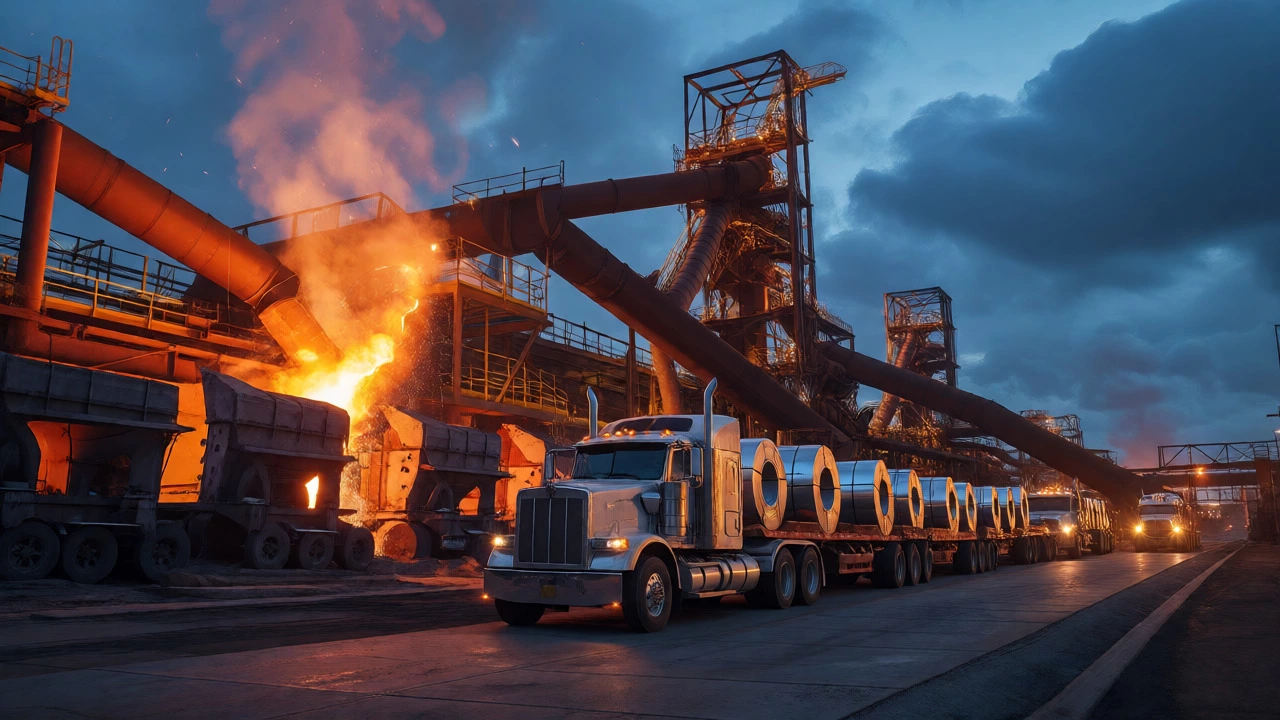
ArcelorMittal Dofasco in Hamilton, Ontario, is a prime example. This facility produces high-quality automotive steel that feeds directly into factories in Michigan and Ohio. Because trucks can cross the border in hours rather than weeks, Canadian suppliers offer speed and reliability that overseas competitors simply can’t match. If a car assembly line in Detroit runs low on specific sheet steel, a Canadian mill can restock it almost immediately.
Mexico holds the second spot firmly. Like Canada, Mexico benefits from proximity and trade agreements. Under the United States-Mexico-Canada Agreement (USMCA), tariffs are minimized or eliminated for qualifying goods. This encourages integrated supply chains where components move back and forth multiple times during production. A door panel stamped in Monterrey might be welded onto a chassis built in Texas, all using steel sourced regionally.
Beyond North America: Who Else Ships Steel?
While Canada and Mexico dominate by volume, other countries play significant roles depending on the type of steel needed. South Korea often ranks third. Companies like POSCO provide high-grade specialty steels used in energy infrastructure and advanced manufacturing. Their products aren’t always the cheapest, but they offer technical specifications that some domestic mills struggle to replicate at scale.
Japan also remains a key player. Japanese steelmakers focus on precision and quality control. You’ll find their steel in high-end appliances, aerospace components, and luxury vehicles. While the tonnage is lower compared to Canada, the value per ton is often higher. This distinction matters if you’re analyzing profit margins in downstream industries.
Then there’s China. You’d expect China to top the list given its status as the world’s largest steel producer. However, due to anti-dumping duties and Section 232 tariffs implemented in recent years, Chinese direct exports to the U.S. have fluctuated wildly. At times, China drops out of the top five entirely. Instead, Chinese steel often enters the U.S. indirectly through processing in Vietnam, Malaysia, or Thailand. This "transshipment" complicates trade statistics and frustrates policymakers trying to protect domestic jobs.
Why Does the U.S. Import So Much Steel?
If the U.S. has so many steel mills, why import at all? Three main reasons drive these purchases:
- Specialization: Not all steel is created equal. Some applications require ultra-high-strength alloys or specific corrosion-resistant coatings that only certain foreign mills produce efficiently.
- Capacity Gaps: During construction booms or auto manufacturing surges, domestic demand can outstrip local supply. Imports fill this gap quickly.
- Cost Competitiveness: In some cases, labor costs, energy prices, or government subsidies make foreign steel cheaper, even after shipping fees.
It’s a balancing act. Domestic producers argue that cheap imports undercut their prices, forcing them to cut wages or close plants. Consumers and manufacturers argue that competitive pricing keeps end-products affordable. This tension defines modern U.S. trade policy.
How Trade Policies Shape the Source List
You cannot discuss steel sources without talking about politics. Tariffs change everything. When the U.S. imposed Section 232 tariffs on steel imports under the Trump administration, the landscape shifted overnight. Countries like Canada and Mexico were initially hit, then exempted, then renegotiated. These moves forced buyers to scramble for new suppliers.
For instance, when tariffs targeted China specifically, importers turned to Brazil and Russia. But those relationships are fragile too. Geopolitical conflicts can sever supply lines instantly. The war in Ukraine disrupted Russian nickel and steel supplies, pushing buyers toward European and South American alternatives. This volatility teaches us one thing: diversification is survival.
Current policies under the Biden administration maintain strict enforcement against dumping-selling goods below cost to kill competition. They also monitor "circumvention," where companies route goods through third countries to avoid taxes. If you’re sourcing steel today, compliance with these rules is non-negotiable. Getting caught with mislabeled origin can result in heavy fines and delayed shipments.
A Closer Look at Key Suppliers
To give you a clearer picture, let’s compare the major players. Note that rankings shift monthly based on economic conditions, but these trends remain consistent over time.
| Country | Primary Steel Type | Key Advantage | Major Risk Factor |
|---|---|---|---|
| Canada | Automotive Sheet, Flat Rolled | Proximity, Integrated Supply Chains | Border Policy Changes |
| Mexico | Long Products, Tubulars | Low Labor Costs, USMCA Benefits | Security Concerns, Infrastructure Limits |
| South Korea | High-Grade Specialty Alloys | Technical Quality, Reliability | Currency Fluctuations |
| Brazil | Semi-finished Slabs, Billets | Resource Abundance (Iron Ore) | Distance, Shipping Costs |
| Germany | Tool Steel, Stainless | Precision Engineering Heritage | Energy Cost Volatility |
This table highlights that no single country does it all. Canada wins on speed and integration. Brazil wins on raw material access. Germany wins on niche precision. Your choice depends on what you’re building.

The Future of U.S. Steel Sourcing
Where is this heading? Several trends will reshape the map in the coming years.
First, green steel is emerging. The EU’s Carbon Border Adjustment Mechanism (CBAM) pressures exporters to prove their carbon footprint. U.S. buyers may start preferring suppliers with verified low-carbon processes. Sweden’s H2 Green Steel project aims to use hydrogen instead of coal, potentially attracting premium U.S. contracts despite higher costs.
Second, nearshoring continues. As companies try to reduce dependency on Asia, North American production gets a boost. New electric arc furnace (EAF) plants are popping up in the U.S. and Mexico. EAFs melt scrap steel rather than iron ore, making them more flexible and environmentally friendly. This could reduce long-haul imports while increasing regional trade.
Third, automation improves efficiency. Advanced robotics in Canadian and German mills allow for faster turnaround times. If domestic U.S. plants don’t adopt similar tech, they risk losing market share even within their own borders.
What This Means for Business Owners
If you run a manufacturing business, this data isn’t just trivia-it’s operational intelligence. Relying on a single source is dangerous. Always have a backup supplier in a different geographic zone. If your primary steel comes from Canada, keep a qualified vendor in South Korea or Brazil on standby.
Also, watch the news closely. Tariff decisions happen fast. A sudden policy change can double your material costs overnight. Build contracts with price adjustment clauses tied to commodity indices. And never ignore origin documentation. Customs officials are stricter now than ever before.
Understanding where the U.S. buys its steel helps you anticipate risks and seize opportunities. It reveals which partners are stable, which are volatile, and where innovation is happening. Whether you’re buying a few tons for a workshop or thousands for an auto plant, the source determines your timeline, your cost, and your resilience.
Which country sends the most steel to the USA?
Canada consistently ranks as the number one source of steel imports for the United States. This is due to geographical proximity, established trade agreements like USMCA, and highly integrated supply chains between Canadian mills and U.S. manufacturers, particularly in the automotive sector.
Does the US buy steel from China?
Yes, but volumes vary significantly due to tariffs. Direct imports from China have decreased because of anti-dumping duties and Section 232 tariffs. Often, Chinese-origin steel enters the U.S. indirectly through processing in other countries like Vietnam or Malaysia, which complicates tracking and leads to ongoing trade disputes.
Why doesn't the US produce all its own steel?
Domestic production cannot always meet peak demand, nor can it produce every specialized grade required by industry. Additionally, global market forces sometimes make imported steel more cost-effective. Specialized alloys and specific dimensions often come from international suppliers with unique technological capabilities or lower production costs.
How do tariffs affect steel imports?
Tariffs raise the price of imported steel, making domestic options more competitive. They can shift sourcing patterns, causing buyers to switch from taxed countries to exempt ones. However, if domestic supply is insufficient, tariffs may lead to higher prices for consumers rather than increased domestic output.
Is Mexican steel cheaper than Canadian steel?
Often, yes, due to lower labor costs in Mexico. However, total landed cost includes transportation, duties, and quality consistency. Canadian steel offers faster delivery and tighter integration with U.S. auto plants, which can offset higher base prices through reduced inventory holding costs and improved production scheduling.