Plastic Reduction Progress Calculator
Key Metrics
Compare how different countries reduced plastic waste using measurable policies and enforcement.
How It Works
See which countries have implemented the most effective plastic reduction policies. Filter by ban type, enforcement strength, and real-world impact.
Plastic Reduction Leaders Comparison
| Country | Ban Year | Banned Items | Enforcement | Impact |
|---|---|---|---|---|
|
Rwanda
First plastic bag ban
|
2008 | All plastic bags (any thickness) | Strict enforcement | 95% reduction |
|
Kenya
Felonious ban
|
2017 | Plastic bags + 6 single-use items | Fines up to $40,000 | >80% reduction |
|
Canada
Nationwide phase-out
|
2022-2023 | 6 single-use plastics | Regulatory framework | 10% waste reduction |
|
EU
Continental directive
|
2021 | 12+ single-use items | Extended Producer Responsibility | Industry-wide shift |
There’s no such thing as a fully plastic-free country-not yet, anyway. But some nations are coming closer than others, and they’re doing it by cutting plastic at the source, not just cleaning it up afterward. If you’re asking which country is plastic free, you’re really asking: where is plastic use being eliminated the fastest? Countries that claim to be plastic free often mean they’ve banned single-use plastics. That’s a start. But true progress means rethinking how everything is packaged, shipped, sold, and used. It’s not about being perfect. It’s about being bold. Let’s cut through the noise. No country has erased plastic from every corner of life. But a few have made it so hard to use disposable plastic that it’s practically vanished from daily routines. Here’s who’s doing it right-and how.
Rwanda: The First to Ban Plastic Bags
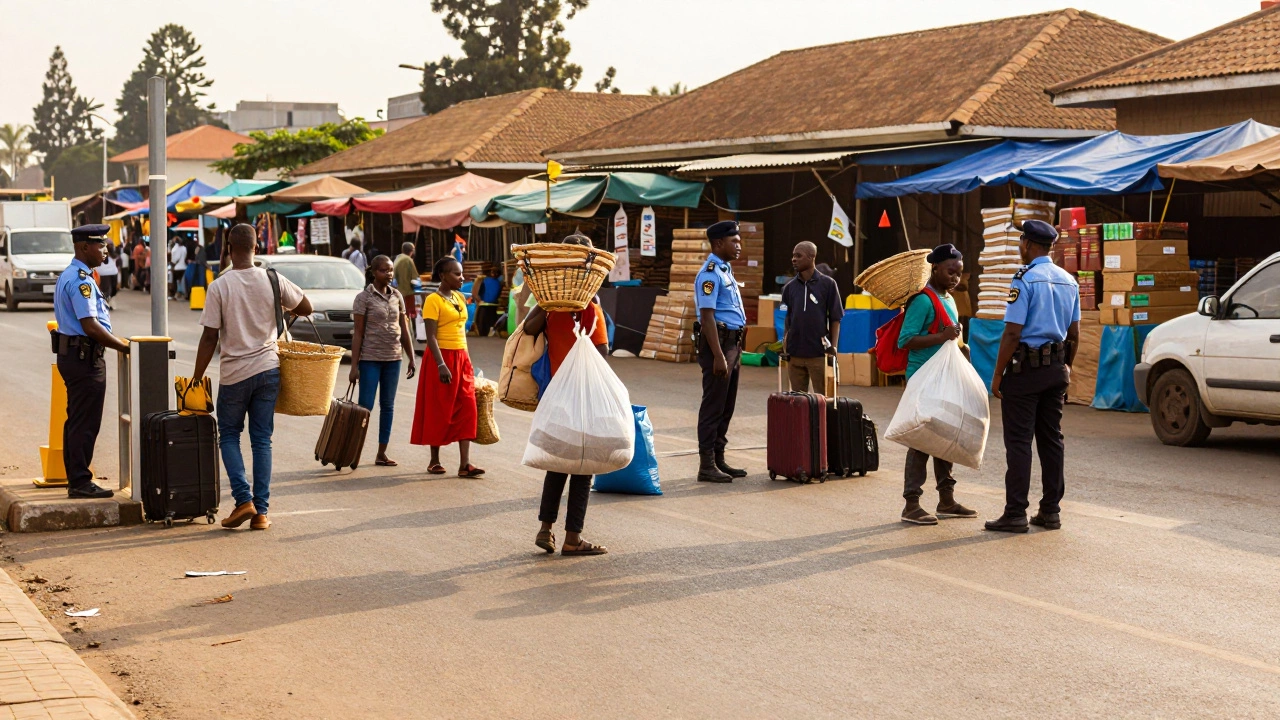
Rwanda banned all plastic bags in 2008. Not just thin shopping bags. Every plastic bag, no matter the thickness. Even the ones used for packaging bread or vegetables. The law isn’t just symbolic. At airports, visitors get fined if they try to bring plastic bags in. Locals who sell goods must use paper, cloth, or reusable containers. Police enforce it. People obey it. Why? Because plastic bags were clogging drains, killing livestock, and turning cities into trash heaps. The government didn’t wait for global consensus. They acted. Today, Kigali is one of the cleanest cities in Africa. Plastic bags? You’ll see them maybe once a year, smuggled in by tourists. Most people use woven baskets, cloth sacks, or cardboard boxes. The shift wasn’t easy. But it worked.Kenya: Heavy Fines, Real Results
Kenya followed Rwanda’s lead in 2017. They didn’t just ban plastic bags-they made breaking the law a felony. Manufacturers, importers, sellers, even users can face fines up to $40,000 or four years in prison. That’s not a warning. That’s a deterrent. Before the ban, plastic bags littered streets, rivers, and forests. After? Within six months, plastic bag use dropped by over 80%. Supermarkets now use paper bags or reusable cloth ones. Street vendors wrap food in banana leaves. Even the roadside tea stalls switched to recycled paper cups. The ban didn’t just reduce waste. It created new industries. Local makers started producing durable, affordable cloth bags. Now, Kenya exports them to neighboring countries.Canada: Phasing Out Single-Use Plastics Nationwide
Canada didn’t go for a total ban. But in 2022, it became illegal to manufacture, import, or sell six types of single-use plastics: checkout bags, cutlery, stir sticks, food containers made from hard-to-recycle plastics, straws, and ring carriers. The rules are strict. Companies had to stop producing them by the end of 2022. Selling them? Banned by December 2023. It’s not perfect. Some exemptions exist for medical or accessibility needs. But the scale is massive. Canada produces over 3 million tons of plastic waste every year. This ban targets the top 10% that’s most easily replaced. Retailers adapted fast. Shoppers now carry their own bags. Restaurants switched to compostable paper straws. Manufacturers redesigned packaging. The change wasn’t forced-it was incentivized. Tax breaks helped small businesses transition.
The European Union: A Continent-Wide Shift
The EU didn’t pick one country. It picked a rulebook. In 2021, the Single-Use Plastics Directive became law across all 27 member states. It bans over a dozen items: plastic plates, cutlery, cups, cotton bud sticks, oxo-degradable plastics, and polystyrene food containers. Even the plastic lining in paper cups is now illegal unless it’s fully compostable. The real win? Extended Producer Responsibility (EPR). That means companies that make plastic packaging have to pay for its collection and recycling. It’s not a tax. It’s accountability. In France, supermarkets now charge for plastic produce bags. In Portugal, restaurants must offer tap water for free instead of selling plastic bottles. In Germany, refill stations for detergent and shampoo are popping up in every town. The EU doesn’t claim to be plastic free. But it’s making plastic expensive to use-and easy to avoid.What About Countries That Say They’re Plastic Free?
You’ve probably heard claims about Bhutan, Palau, or Costa Rica being plastic free. Let’s be clear: none are. Bhutan bans plastic bags at high altitudes but still uses plastic in cities. Palau has a strong eco-pledge, but tourists still bring plastic bottles. Costa Rica aims for zero plastic by 2030-but it’s still 2026. These countries are doing important work. But calling them plastic free is misleading. It’s like saying a house is fireproof because it has smoke alarms. Real progress isn’t about slogans. It’s about measurable, enforced, sustained change.Why Most Countries Still Can’t Go Plastic Free
You might wonder: if Rwanda and Kenya did it, why haven’t others? Three big reasons:- Supply chains are built on plastic. From medical devices to food packaging, plastic is cheap, light, and durable. Replacing it takes time and money.
- Industry resistance. Plastic manufacturers lobby hard. In the U.S., the American Chemistry Council spent over $100 million in 2023 fighting plastic bans.
- Infrastructure gaps. Recycling plants are rare in many countries. Without composting or refill systems, alternatives don’t work.

The Real Measure of Plastic Freedom
So which country is plastic free? The answer isn’t a name on a map. It’s a system. A country where:- Plastic packaging isn’t the default-it’s the exception.
- Businesses pay for the waste they create.
- Alternatives are affordable, available, and convenient.
- Lawmakers enforce rules, not just announce them.
What’s Next?
The next wave of change is coming from cities, not nations. San Francisco, Amsterdam, and Bogotá are banning plastic packaging in public markets. Tokyo is rolling out refill kiosks in every subway station. If you’re wondering where plastic will disappear next, look for places with:- Strong local leadership
- Community-driven alternatives
- Real penalties for violators
What You Can Do
You don’t need to wait for your government to act. Start small:- Carry a reusable bag-even if your store doesn’t charge for plastic.
- Buy in bulk and refill containers at local shops.
- Support businesses that use paper, glass, or metal instead of plastic.
- Ask: ‘Is this packaging necessary?’ If not, choose another option.
Is there any country that has completely eliminated all plastic?
No country has eliminated all plastic. Even the strictest bans target single-use items like bags, straws, and packaging. Plastic is still used in medical devices, electronics, infrastructure, and industrial tools. The goal isn’t zero plastic-it’s zero unnecessary plastic.
Why do some countries succeed with plastic bans while others fail?
Success comes from three things: enforcement, alternatives, and public support. Countries like Rwanda and Kenya didn’t just ban plastic-they made sure people had affordable, accessible replacements. They also enforced the law consistently. In places where bans exist but aren’t enforced, or where alternatives are too expensive, the bans fail.
Are biodegradable plastics a good alternative?
Most biodegradable plastics aren’t. They need industrial composting facilities to break down, which are rare. In landfills or oceans, they behave just like regular plastic. Many are still made from fossil fuels. The best alternatives are reusable containers, glass, metal, or paper-materials that can be cleaned and used again.
How do plastic bans affect manufacturing companies?
They force change. Companies that made plastic bags or packaging had to pivot. Some went bankrupt. Others redesigned products-using recycled paper, bamboo, or aluminum. In Kenya, new businesses emerged making cloth bags and compostable containers. The shift isn’t easy, but it creates new markets and reduces long-term environmental costs.
Can developing countries afford to ban plastic?
Yes-and they’re leading the way. Rwanda and Kenya didn’t wait for foreign aid. They used local materials and labor to build alternatives. Cloth bags cost less than plastic ones when made locally. Paper packaging can be produced with simple machines. The real cost isn’t money-it’s political will. When leaders prioritize clean streets and healthy communities, the solutions follow.