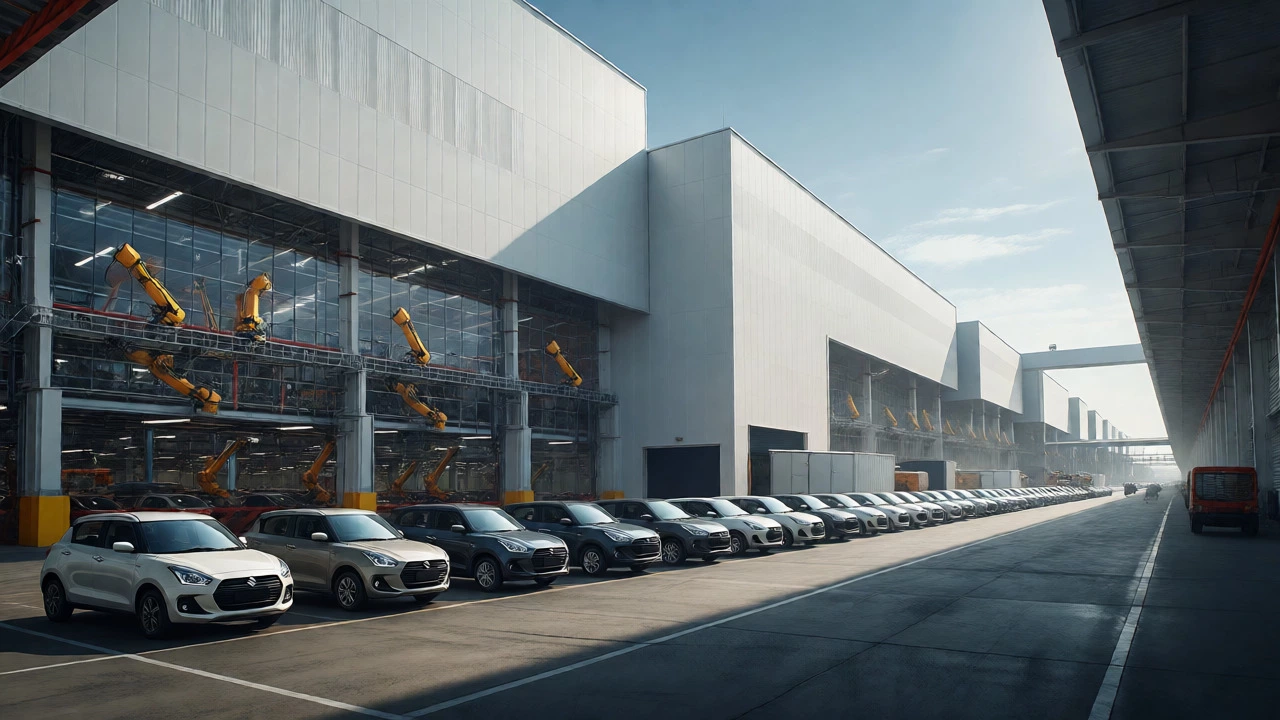
India's Auto Manufacturing Hub Explorer
Select a manufacturer below to view detailed insights about their primary Indian production facilities.
Maruti Suzuki
Manesar/Gurgaon
Highest Volume ~1 Million+ UnitsHyundai
Sriperumbudur, TN
Export Hub ~800,000 UnitsTata Motors
Pune, Maharashtra
EV Leader ~400,000 UnitsMahindra & M
Nashik/Chakan
SUV Specialist ~350,000 UnitsManufacturer Details
Location
-
Annual Capacity
-
Key Models
-
Strategic Advantage
-
You might think the biggest car factory in India belongs to a giant like Toyota or Honda. But if you look at the sheer volume of vehicles rolling off the assembly line every single day, one name dominates the landscape: Maruti Suzuki and its massive facility in Manesar. This isn't just about size; it's about efficiency, supply chain mastery, and an output capacity that dwarfs most competitors. If you are curious about where your next car comes from, or why this specific plant matters so much to the Indian economy, stick around. We are breaking down the numbers, the locations, and the tech behind India's automotive powerhouses.
The Uncontested Leader: Maruti Suzuki’s Manesar Complex
Let's cut to the chase. When people ask "which is the largest car plant in India," they are usually looking for the highest production capacity. By almost every metric-annual output, land area dedicated to vehicle assembly, and workforce size-the Maruti Suzuki India Limited (MSIL) complex in Manesar, Haryana takes the crown. It is not just a factory; it is a city within a city. The Manesar unit produces over 1 million units annually when combined with the nearby Gurgaon facility, but Manesar itself handles the bulk of high-volume models like the Swift, Baleno, and Ciaz.
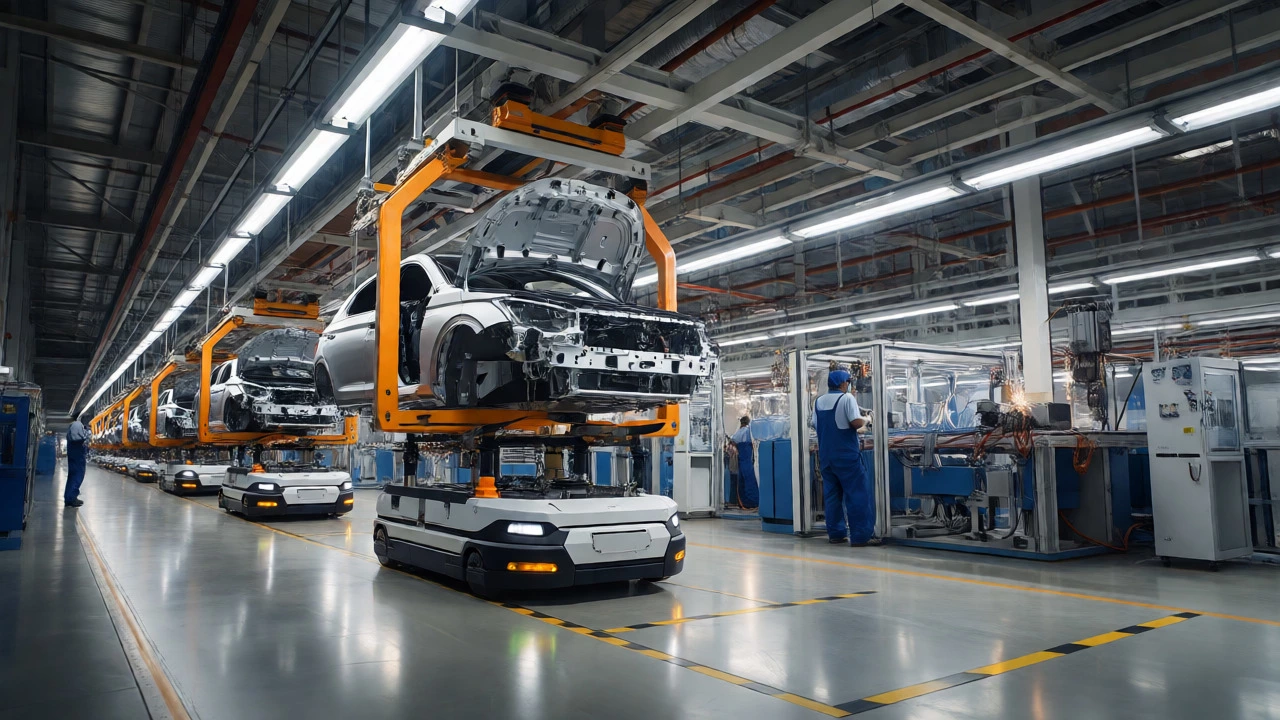
Why does this matter? Because Maruti Suzuki controls nearly half of the passenger vehicle market in India. Their ability to produce cars at such scale keeps prices competitive for millions of buyers. The plant utilizes advanced automation, including robotic welding cells and automated guided vehicles (AGVs) to move parts around the floor. If you visited today, you would see a synchronized dance of machinery designed to minimize downtime. Every second counts when you are building thousands of cars a day.
Key Attributes of the Manesar Facility
- Location: Manesar, Gurugram District, Haryana
- Primary Models Produced: Swift, Baleno, Dzire, Ciaz, Vitara Brezza
- Annual Capacity: Approximately 500,000+ units (standalone), higher when integrated with Gurgaon
- Workforce: Thousands of direct employees plus tens of thousands in ancillary units
- Technology: High-level automation in body shop and painting lines
The Southern Powerhouse: Hyundai Motor India’s Chennai Plant
If Maruti is the king of volume in the north, Hyundai Motor India's Chennai facility is the global export hub that rivals it in sophistication. Located in Sriperumbudur, Tamil Nadu, this plant is often cited as one of the most modern in the world. While its domestic sales volume is lower than Maruti's, its total throughput-including exports-is staggering. Hyundai uses Chennai as its primary base for exporting cars to over 100 countries.
The Chennai plant operates on a two-shift basis and has a capacity of around 700,000 to 800,000 units per year. What sets it apart is its integration with a massive supplier park nearby. Suppliers don't just deliver parts; many have factories right next door, feeding components directly into the assembly line via conveyor belts. This "just-in-time" approach reduces inventory costs and speeds up production. For anyone interested in lean manufacturing, this is a masterclass.
| Manufacturer | Location | Approx. Annual Capacity | Key Feature |
|---|---|---|---|
| Maruti Suzuki | Manesar/Gurgaon, Haryana | 1 Million+ (Combined) | Highest Domestic Volume |
| Hyundai | Sriperumbudur, Tamil Nadu | ~800,000 Units | Largest Export Hub |
| Tata Motors | Pune, Maharashtra | ~400,000 Units | EV & Commercial Focus |
| Mahindra & Mahindra | Nashik/Chakan, Maharashtra | ~350,000 Units | SUV Specialist |
Legacy Meets Innovation: Tata Motors in Pune
You cannot talk about Indian manufacturing without mentioning Tata Motors and its historic Pune plants. Tata started it all. The company built its first truck in 1945, and its roots in Pune run deep. Today, the Pune facility is crucial not just for legacy models like the Tiago and Altroz, but increasingly for electric vehicles (EVs). The Nexon EV, one of India's best-selling electric cars, rolls out from here.
Tata's approach differs from Maruti and Hyundai. They focus heavily on vertical integration. Tata owns steel mills, battery component suppliers, and software teams. This allows them to pivot quickly, especially as the market shifts toward electrification. The Pune plant is undergoing significant upgrades to accommodate EV-specific lines, which require different handling for heavy battery packs compared to traditional internal combustion engines. If you are tracking the future of mobility in India, watch Pune closely.
Why Pune Matters for EV Transition
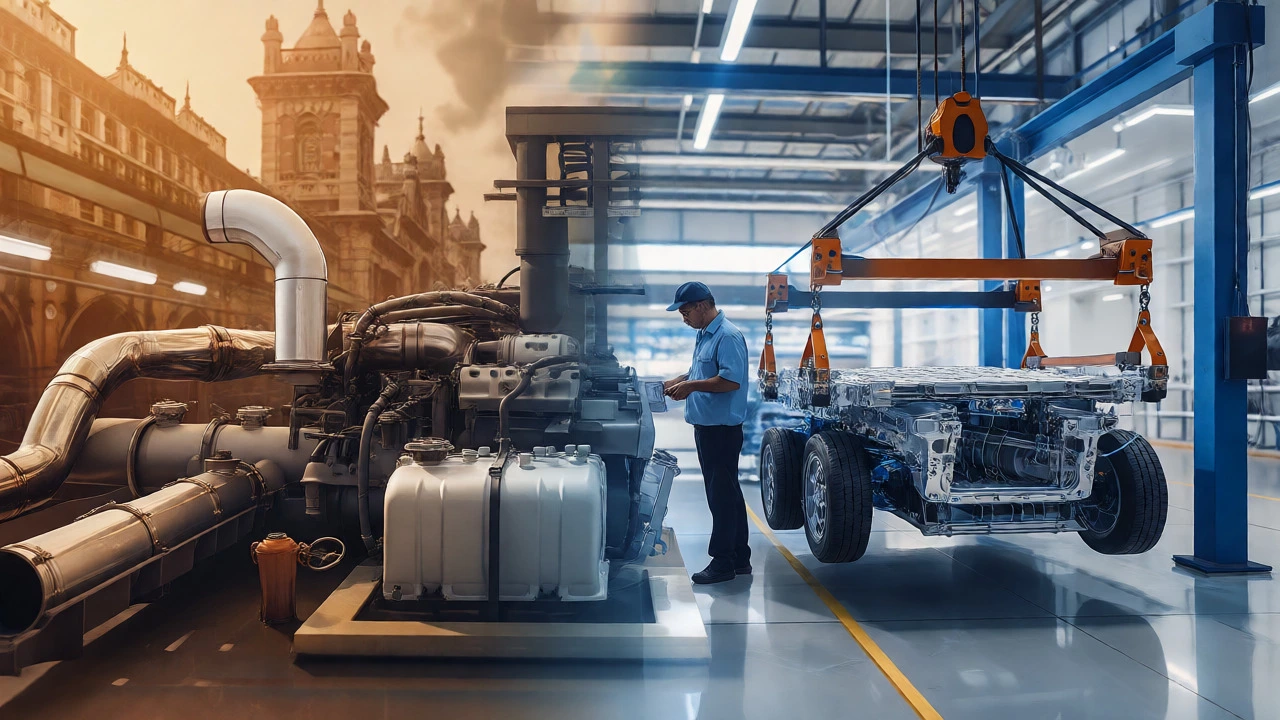
The shift to electric vehicles changes how factories work. You no longer need exhaust systems or fuel tanks, but you do need safety protocols for high-voltage batteries. Tata's Pune plant has adapted by creating specialized zones for battery pack assembly. This transition requires retraining workers and updating tooling. It is a costly process, but necessary for survival in a changing market. Tata's early investment in this space gives them a head start over competitors who are still figuring out their EV strategies.
The SUV Specialists: Mahindra & Mahindra’s Nashik and Chakan
While Maruti rules the hatchback and sedan segments, Mahindra & Mahindra dominates the SUV market. Their main passenger vehicle plants are in Nashik and Chakan, both in Maharashtra. These facilities are known for producing rugged vehicles like the Scorpio-N, XUV700, and Thar.
Mahindra's production philosophy emphasizes durability and capability. The plants are equipped with heavy-duty presses and welding robots capable of handling thicker steel sheets required for off-road vehicles. Unlike the high-speed, high-volume lines of Maruti, Mahindra's lines are slightly slower but more flexible, allowing for frequent model changes and customizations. This flexibility is key because the SUV segment sees rapid design updates to keep up with consumer trends.
Beyond the Big Three: Other Significant Players
It is not just Maruti, Hyundai, and Tata. Other manufacturers have substantial footprints too. Toyota Kirloskar's plant in Bidadi, Karnataka is highly efficient, focusing on quality and hybrid technology. Honda Cars India's facility in Greater Noida, Uttar Pradesh is another major contributor, known for precision engineering.
Even newer entrants are making waves. Companies like MG Motor and Kia have set up shops in Gujarat and Tamil Nadu respectively. Kia's Anantapur plant in Andhra Pradesh, for instance, was built with state-of-the-art automation and focuses on compact SUVs like the Seltos and Sonet. These plants may not match Maruti's volume yet, but they represent the growing diversification of India's auto sector.
What Makes a Plant "Largest"?
Defining the "largest" car plant can be tricky. Do we mean physical footprint? Number of employees? Or annual production capacity? In the automotive industry, production capacity is the standard metric. However, some plants have huge land areas but lower output due to multiple phases of construction or non-automotive businesses on site.
For example, Maruti's Manesar-Gurgaon corridor is technically one of the largest industrial clusters in Asia. But if you isolate a single building, Hyundai's Chennai plant might appear larger in terms of continuous covered area. Always check the source of the data. Some reports include commercial vehicle plants, which skew numbers since trucks take longer to build but occupy more space. This article focuses strictly on passenger vehicle manufacturing.
Factors Influencing Plant Size and Efficiency
- Supply Chain Proximity: Being close to suppliers reduces logistics costs.
- Automation Level: Higher automation increases speed and consistency.
- Government Policies: Local incentives in states like Tamil Nadu and Haryana attract big investments.
- Export Infrastructure: Proximity to ports (like Chennai) boosts export capabilities.
The Future of Auto Manufacturing in India
The landscape is shifting. With the push for electric vehicles, new plants are being planned specifically for EVs. Maruti is expanding its capacity to meet demand for hybrids and EVs. Tata is doubling down on its Pune EV lines. Even foreign players are reconsidering their setups to accommodate battery assembly.
Expect to see more localized sourcing. The Indian government's Production Linked Incentive (PLI) scheme aims to boost local manufacturing of advanced chemistry cell (ACC) batteries. This will likely lead to gigafactories springing up near existing auto hubs, further integrating the supply chain. The definition of "largest" might change again in five years if a new EV-focused mega-plant opens.
Which company has the most car factories in India?
Maruti Suzuki has the largest network, with major plants in Manesar, Gurgaon, and recently expanded facilities. However, companies like Hyundai and Tata also operate multiple large-scale units across different states to serve regional markets and export needs.
Is the Hyundai Chennai plant bigger than Maruti Manesar?
In terms of annual production volume, Maruti Manesar (combined with Gurgaon) is larger. However, the Hyundai Chennai plant is often considered more technologically advanced and serves as a major global export hub, giving it a different kind of strategic importance.
Where are most car factories located in India?
The top clusters are in Tamil Nadu (Chennai/Sriperumbudur), Haryana (Gurugram/Manesar), Maharashtra (Pune/Nashik), and Gujarat (Sanand/Halol). These regions offer good infrastructure, skilled labor, and proximity to ports or raw materials.
Does Tesla have a factory in India?
As of late 2026, Tesla does not have a full-scale manufacturing plant in India. They primarily import vehicles. Rumors persist about a potential future setup, but no concrete groundbreaking has occurred compared to established players like Maruti or Hyundai.
Which is the oldest car plant in India?
Tata Motors' Pune plant is among the oldest, tracing its roots back to the mid-20th century when Tata began assembling trucks and later passenger cars. It has evolved significantly but remains a core part of India's automotive history.