🧪 India's Chemical Sector Analyzer
Explore the leading chemical-producing states, their market share dominance, and specialized industrial hubs.
Gujarat
PetrochemicalsIndustry Insight
Gujarat accounts for roughly 40% of the nation’s total chemical turnover, dominating due to its developed port infrastructure like Mundra and Kandla.
You might be looking at investment opportunities or simply wondering where India’s industrial backbone really lies. When it comes to chemical production, the answer isn’t split evenly across the country. One specific region dominates the landscape due to its unique combination of ports, policy support, and raw material access. Understanding this dynamic is crucial for anyone interested in the supply chain, business setup, or economic trends within the sector.
The short answer is straightforward: GujaratGujarat is the leading state in India for chemical and petrochemical production, accounting for roughly 40% of the nation’s total chemical turnover.. However, knowing the state is only half the story. You also need to understand why this region became the powerhouse it is today and what makes it different from its competitors.
Why Gujarat Leads the Chemical Sector
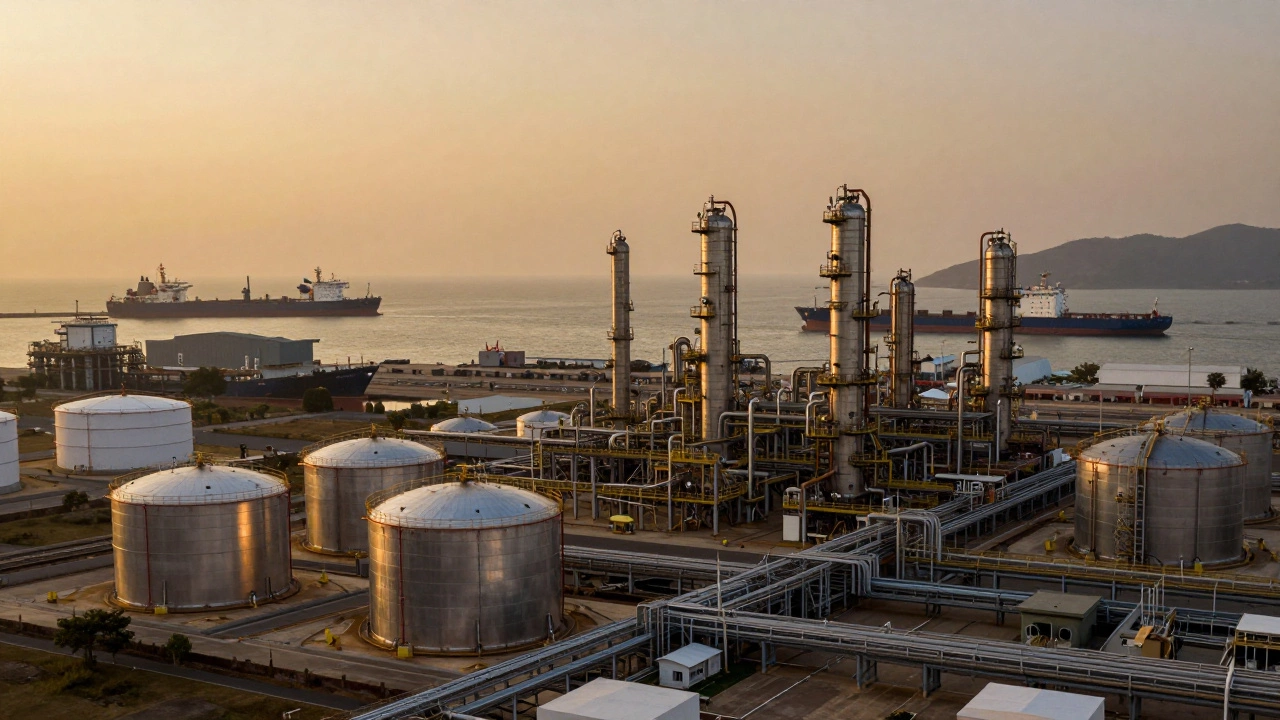
Gujarat didn't win this status by accident. Several structural advantages have created a self-reinforcing ecosystem. The primary driver is logistics. Chemical production requires massive amounts of feedstock, often imported from abroad. Gujarat has some of India’s most developed port infrastructure, including Mundra PortThe largest private port in India, offering efficient cargo handling for bulk chemicals. and Kandla PortA major customs port facilitating imports of crude oil and petrochemical products..
This proximity means lower transportation costs for companies like Reliance Industries and Essar Oil. If you were setting up a plant in the hinterlands of another state, the cost of moving raw materials inland would eat into your margins significantly. In Gujarat, the chemical complexes are built almost immediately adjacent to these entry points.
Beyond geography, policy plays a huge role. The state government has aggressively promoted "Chemical Parks." These are dedicated zones where land, power, and water are provided in bundles. Instead of negotiating individual utility connections, investors get a plug-and-play environment. This reduces the time-to-market for new projects from years to months.
Key Product Categories and Clusters
It’s not just about making any chemical; it’s about specialization. Different parts of Gujarat focus on different outputs. Here is how the production breaks down:
- Petrochemicals: Heavy crude refining happens near Jamnagar. The refineries crack oil into naphtha, which becomes the building block for plastics and fibers.
- Agrochemicals: Companies producing fertilizers and pesticides cluster around the Ankleshwar-Godhra belt. This is close to the agricultural heartland, reducing delivery times to farmers.
- Dyes and Intermediates: The Bhavnagar and Porbandar regions are famous for organic dye manufacturing, catering largely to export markets.
For example, the Dahej Special Economic Zone (SEZ) is a prime illustration. It attracts international players because it allows for 100% foreign direct investment without many of the hurdles found elsewhere. You see companies from Japan and South Korea setting up base here specifically to serve global markets while utilizing Indian labor costs.
| State | Primary Focus | Major Industrial Hub | Estimated Share (%) |
|---|---|---|---|
| Gujarat | Petrochemicals, Agrochemicals | Jamnagar, Dahej | ~40% |
| Tamil Nadu | Fine Chemicals, Solvents | Sriperumbudur | ~12% |
| Maharashtra | APIs, Polymers | Vapi, Mumbai | ~15% |
| Rajasthan | Inorganic Chemicals, Soda Ash | Laxmangarh | ~8% |
The Rise of Other Contenders
While Gujarat holds the top spot, other states are catching up fast. Tamil NaduSouth Indian state known for automotive and pharmaceutical industries, increasingly hosting fine chemical plants. has emerged as a strong second player. Chennai and nearby Sriperumbudur offer a different advantage: skilled engineering talent and closer proximity to seaports on the Bay of Bengal.
Companies focusing on specialty chemicals often prefer Tamil Nadu over Gujarat. Why? Because the complexity of their product requires highly skilled R&D staff rather than just heavy logistics support. The state has invested heavily in biotech parks and innovation centers. This creates a synergy between pharma research and chemical synthesis that Gujarat lacks slightly in terms of pure R&D density.
Maharashtra cannot be ignored either. Despite facing stricter environmental regulations in the past decade, it remains a hub for Active Pharmaceutical Ingredients (APIs). Many chemical firms operate out of Vapi and Hazira, leveraging established rail networks to distribute goods to Mumbai, the financial capital.
Logistical Challenges and Infrastructure
If you run a factory, you know that transport bottlenecks kill profits. One reason Gujarat maintains its lead is the state's robust road network connecting the coastal strips to Delhi and beyond. However, challenges remain. Water scarcity is becoming a pressing issue. Chemical manufacturing is water-intensive, requiring significant cooling and processing inputs.
In the last few years, several plants have had to pause operations or reduce capacity due to seasonal droughts affecting local aquifers. The state government has responded by promoting seawater desalination plants specifically for industrial use. This shift is crucial for long-term stability. If the water supply dries up, the chemical output drops regardless of how good the policies are.
Another factor is the power grid stability. High-voltage transmission lines are concentrated in Gujarat, meaning factories rarely face the load shedding issues seen in other regions. Continuous power is essential for processes that cannot be stopped mid-cycle, like polymerization.
Environmental Compliance and Sustainability
You cannot talk about modern chemical manufacturing without addressing pollution. By 2026, environmental norms have tightened significantly under the Green Chemistry PolicyFramework encouraging low-carbon footprint manufacturing practices and waste reduction.. Plants in Gujarat are under constant scrutiny from the Pollution Control Board. Recent crackdowns have forced older, inefficient units to shut down or upgrade to cleaner technologies.
This actually helps the large players. Smaller, non-compliant units die off, consolidating market share among the giants who can afford the expensive filtration systems. For investors, this means higher barriers to entry but safer, more stable long-term assets.
Recycling is another trend gaining traction. Many polymer producers now source post-consumer plastic as feedstock rather than fresh crude. Gujarat is piloting circular economy models where chemical waste from one plant becomes raw material for another in the same complex.
Impact on Supply Chain Dynamics
Understanding this concentration helps you plan supply chains. If you import chemicals for your own product, buying from a vendor in Gujarat usually means faster shipping and better pricing than vendors located further north. Conversely, if you are trying to sell raw materials to chemical manufacturers, locating near these clusters offers immediate sales channels.
Global trade agreements also affect these regions. Export-oriented units in Special Economic Zones benefit from tax holidays and easier customs clearance. If you are considering starting a business in this space, the location decision shouldn't just be about real estate costs; it should prioritize proximity to these existing value chains.
Future Outlook for 2026 and Beyond
Looking ahead, the dominance of Gujarat seems secure, but the nature of production will change. The industry is shifting from commodity chemicals (basic plastics and acids) to high-value engineered materials. This pivot supports the state's ambition to host mega chemical parks worth billions of dollars in CAPEX.
Newer states like Himachal Pradesh and Odisha are trying to attract similar investments by offering cheaper land rates. While this is attractive for budget-conscious startups, they still struggle to replicate the integrated logistics web that Gujarat has spent thirty years building. Unless those states invest heavily in port connectivity, Gujarat will likely retain the top position through at least 2030.
Is Gujarat the only state producing chemicals in India?
No, several states produce chemicals. While Gujarat is the largest producer, Tamil Nadu, Maharashtra, Rajasthan, and Andhra Pradesh also have significant chemical sectors contributing to national output.
What type of chemicals does Gujarat produce mostly?
Gujarat primarily produces petrochemicals, polymers, fertilizers, agrochemicals, and dyestuffs. These form the bulk of its manufacturing portfolio.
Why is Dahej important for the industry?
Dahej is home to a Special Economic Zone and a massive petrochemical cluster. It offers infrastructure ready for gas-based and heavy chemical industries with direct sea access.
Can small businesses set up chemical plants in Gujarat?
Yes, but strict environmental clearances apply. Small-scale units often find it easier to operate as service providers or packaging units within larger chemical parks rather than full manufacturing.