Global Manufacturing Leader Analyzer
Select a company to see how it compares against the competition across key manufacturing metrics derived from the article data.
Toyota Motor Corp.
Automotive & Hybrids
Revenue LeaderSamsung Electronics
Electronics & Chips
Vertical IntegrationFoxconn
Assembly & Logistics
Scale & SpeedPerformance Metrics Analysis
When you ask who the biggest manufacturer in the world is, the answer isn't just one name. It depends on whether you mean the company that moves the most physical goods, the one with the highest revenue, or the tech giant designing the chips inside your phone. For years, Walmart has held the title of the largest company globally by revenue, but it operates primarily as a retailer. If we look strictly at companies that design, build, and assemble products from raw materials, the landscape shifts dramatically.
In 2025 and heading into 2026, the battle for the top spot among pure-play manufacturers involves heavyweights like Foxconn, the primary assembler for Apple products, Samsung Electronics, a South Korean multinational conglomerate specializing in consumer electronics and semiconductors, and automotive giants like Toyota Motor Corporation, the Japanese multinational automobile manufacturer. Understanding who leads this pack requires looking beyond simple sales figures to supply chain dominance, technological integration, and geopolitical influence.
The Retail vs. Manufacturing Distinction
Before naming the top manufacturer, we need to clear up a common confusion. Many lists place Walmart or Amazon at the very top of global corporate rankings. These are indeed the largest companies by revenue, often exceeding $600 billion annually. However, they are distributors and retailers, not manufacturers. They buy finished goods and sell them to consumers.
If you include these retail giants in the definition of "manufacturer," the question becomes moot because they don't produce anything themselves. To find the true leading manufacturer, we must focus on companies that engage in transformative production: taking raw materials like silicon, steel, plastic, or lithium and turning them into complex, high-value end products. This distinction matters because it separates logistics power from industrial engineering prowess.
Foxconn: The King of Assembly
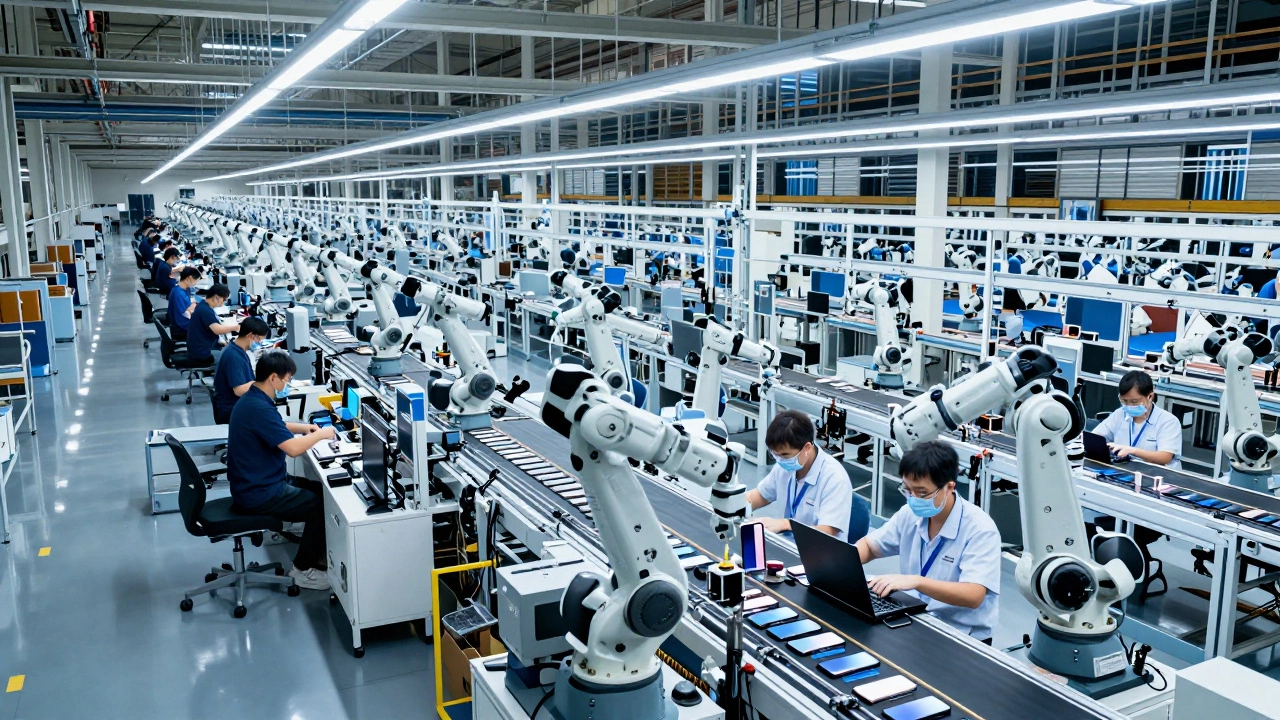
If we define "manufacturing" as the sheer volume of units assembled and the complexity of global supply chain management, Foxconn (Hon Hai Precision Industry Co.) stands alone. Headquartered in Taiwan, Foxconn is the backbone of the modern smartphone industry. It is the primary contract manufacturer for Apple Inc., assembling the vast majority of iPhones, iPads, and MacBooks.
Foxconn’s scale is staggering. At its peak, the company employed over 1 million workers, mostly in massive campuses in Zhengzhou, China. In recent years, Foxconn has diversified beyond Apple, working with Microsoft, Amazon, and various automotive firms on electric vehicle components. Its ability to mobilize hundreds of thousands of workers within weeks to meet holiday demand cycles is unmatched. While its profit margins are thin compared to the brands it serves, its operational efficiency makes it the undisputed leader in assembly-scale manufacturing.
- Key Product: Consumer electronics assembly (smartphones, laptops)
- Primary Client: Apple Inc.
- Global Footprint: Major facilities in China, Vietnam, India, and Brazil
- Strategic Shift: Expanding into electric vehicle battery packs and server infrastructure
Samsung Electronics: The Vertical Powerhouse
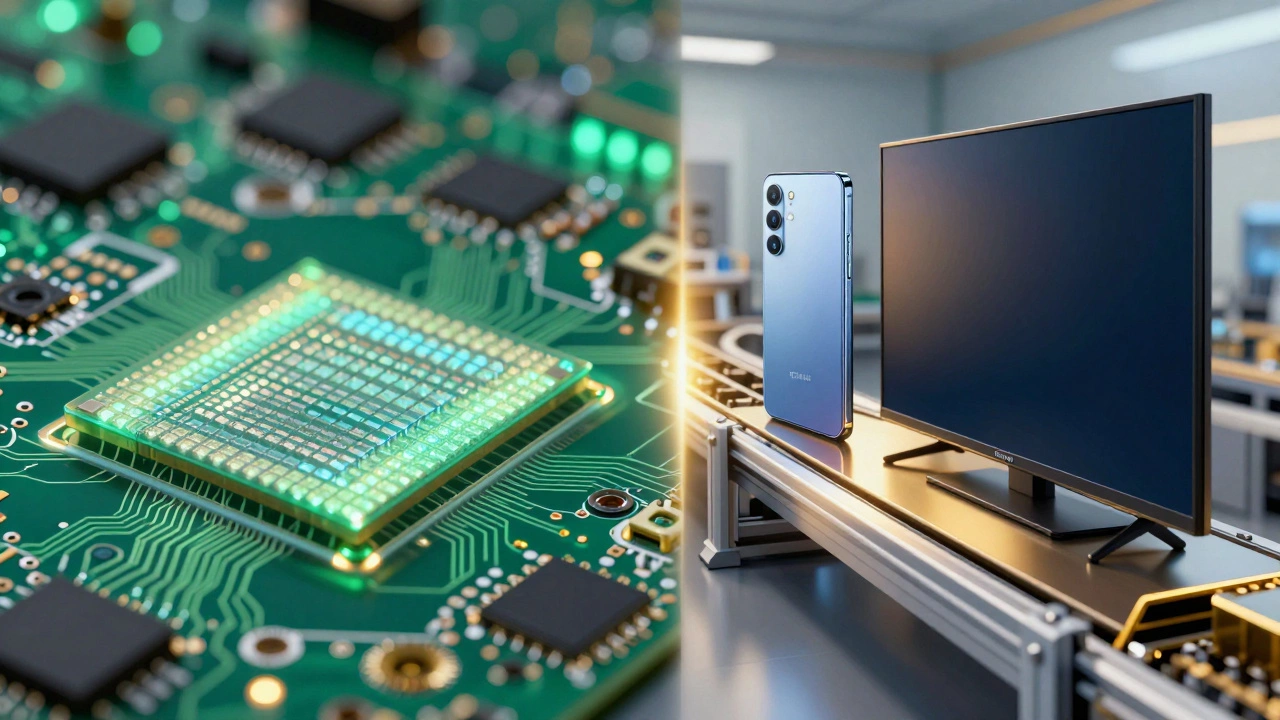
While Foxconn assembles devices, Samsung Electronics builds everything from the ground up. Based in South Korea, Samsung is unique because it controls almost every stage of the electronic device lifecycle. It manufactures its own memory chips, processors, displays, batteries, and final consumer devices like smartphones and televisions.
This vertical integration gives Samsung a competitive edge that few other manufacturers can match. When there is a global shortage of semiconductor chips, Samsung can prioritize its own smartphone production, whereas competitors like Xiaomi or OnePlus might face delays. In 2024 and 2025, Samsung remained the world's largest memory chip producer, supplying data centers and AI startups globally. Its revenue consistently ranks in the top tier among all non-retail companies, making it a strong contender for the title of the world's leading manufacturer in terms of total value created.
Toyota Motor Corporation: The Efficiency Benchmark
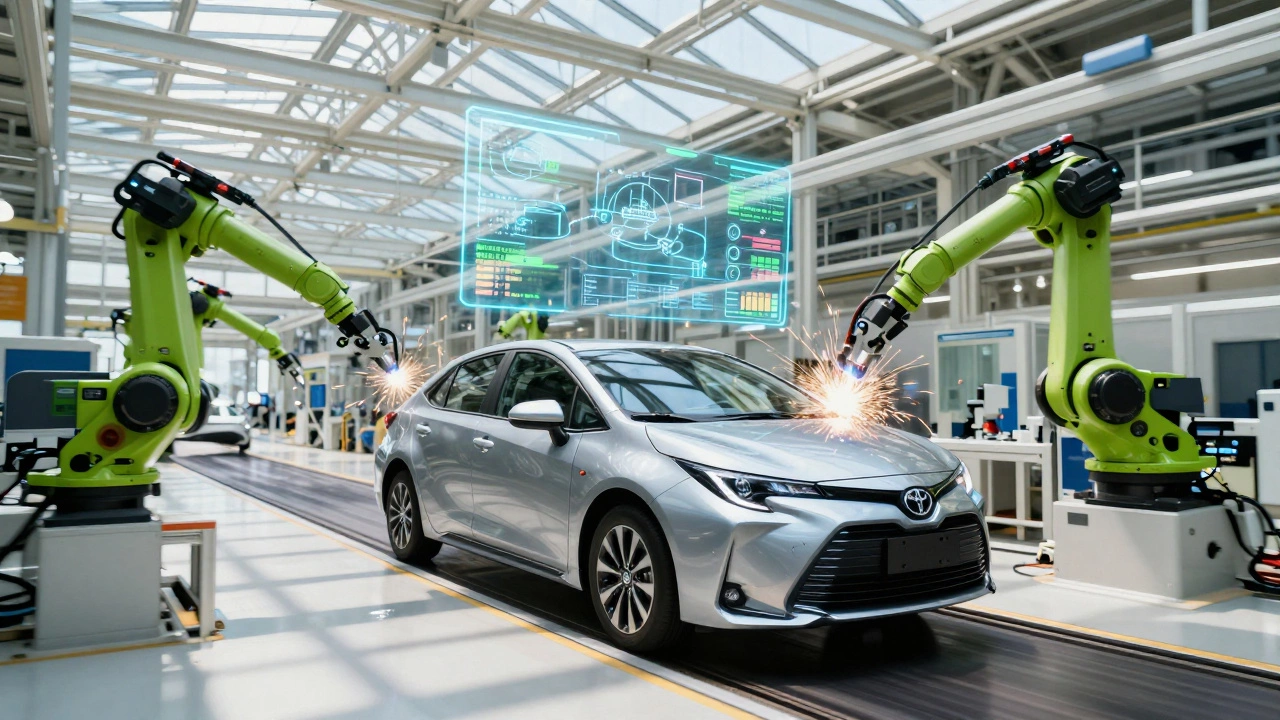
In the realm of heavy industry and automobiles, Toyota Motor Corporation remains the gold standard. For decades, Toyota has been the world's largest automaker by unit sales. The company popularized the Toyota Production System (TPS), also known as Lean Manufacturing, which revolutionized how factories operate worldwide. TPS focuses on eliminating waste and continuous improvement (kaizen).
Even as the world shifts toward electric vehicles (EVs), Toyota maintains its lead through hybrid technology and robust supply chains. While rivals like Tesla have captured headlines, Toyota produces far more vehicles annually. In 2023 and 2024, Toyota sold over 10 million vehicles globally, significantly outpacing EV-only competitors. The company is now aggressively investing in solid-state battery technology, aiming to maintain its manufacturing dominance in the next decade of mobility.
Other Major Players in Global Manufacturing
Beyond the top three, several other entities play critical roles in global manufacturing. Their contributions vary by sector, highlighting the diversity of the industrial landscape.
- Boeing Company: The American aerospace giant remains a key manufacturer of commercial airplanes. Despite past safety challenges and production halts, Boeing continues to be essential for global air travel infrastructure.
- Volkswagen Group: Europe's largest carmaker, Volkswagen, competes closely with Toyota. It has invested billions in EV platforms and software-defined vehicles, challenging Toyota's traditional efficiency model with digital-first manufacturing.
- TSMC (Taiwan Semiconductor Manufacturing Company): While not an end-product manufacturer, TSMC is the world's largest dedicated semiconductor foundry. It manufactures the advanced chips used by Apple, AMD, and NVIDIA. Without TSMC, the global tech industry would grind to a halt.
- Honeywell International: A leader in diversified technologies, Honeywell manufactures everything from airplane engines to building control systems and chemical products. Its breadth across aviation, energy, and construction sectors makes it a resilient manufacturing powerhouse.
Comparison of Top Manufacturing Leaders
| Company | Primary Sector | Key Strength | Approx. Annual Revenue (USD) |
|---|---|---|---|
| Foxconn | Electronics Assembly | Scale & Supply Chain Speed | $100B+ |
| Samsung Electronics | Consumer Electronics & Semiconductors | Vertical Integration | $180B+ |
| Toyota Motor Corp. | Automotive | Efficiency & Hybrid Tech | $270B+ |
| TSMC | Semiconductor Fabrication | Advanced Node Technology | $70B+ |
| Boeing | Aerospace | Complex Engineering | $50B+ |
Note: Revenues fluctuate based on currency exchange rates and annual performance reports. Toyota often leads in pure manufacturing revenue when excluding retail conglomerates.
The Impact of Geopolitics on Manufacturing Leadership
The title of "leading manufacturer" is no longer just about economics; it's deeply tied to geopolitics. In the early 2020s, many Western companies relied heavily on Chinese manufacturing hubs. By 2025 and 2026, a trend called "China Plus One" has taken hold. Companies like Foxconn and Samsung are expanding operations in Vietnam, India, and Mexico to mitigate trade tensions and supply chain risks.
India, in particular, is emerging as a new manufacturing hub. With government incentives under its Production Linked Incentive (PLI) scheme, companies are setting up large-scale electronics and pharmaceutical plants. This shift means that while Taiwanese and Korean firms may still lead in technology, the geographic center of manufacturing gravity is moving south and west.
Future Trends: Automation and Sustainability
As we move further into the 2020s, two factors will redefine manufacturing leadership: automation and sustainability. Robots and AI-driven quality control are reducing the need for massive human workforces. Foxconn has already replaced thousands of workers with "Foxbots." This shift favors companies with deep capital reserves for R&D, such as Samsung and Toyota.
Additionally, environmental regulations are tightening. Manufacturers must now report carbon footprints and transition to green energy. Companies that fail to adapt risk losing contracts with eco-conscious clients. Toyota's hybrid strategy and Samsung's investment in renewable energy for its fabs position them well for this regulatory shift.
Is Walmart considered a manufacturer?
No, Walmart is primarily a retailer. While it sells private-label goods, it does not manufacture them. It purchases finished products from other manufacturers and distributes them to stores and online customers.
Who is the largest manufacturer by revenue in 2025?
Among pure-play manufacturers, Toyota Motor Corporation often leads in total revenue due to the high volume of vehicle sales. Samsung Electronics follows closely, driven by both consumer devices and semiconductor sales.
Why is Foxconn so important to the global economy?
Foxconn is the primary assembler for Apple products. Its ability to produce millions of high-tech devices quickly ensures the availability of smartphones and computers worldwide. Disruptions at Foxconn can impact global tech supply chains significantly.
What is the difference between TSMC and Samsung?
TSMC is a pure-play foundry that only manufactures chips for other companies. Samsung manufactures its own chips for its own devices and also acts as a foundry for external clients. Samsung is vertically integrated, while TSMC specializes exclusively in fabrication.
How is automation changing manufacturing leadership?
Automation reduces reliance on low-cost labor, shifting advantage to companies with strong R&D budgets. Firms like Foxconn and Toyota are investing heavily in robotics to improve precision and reduce costs, making labor arbitrage less relevant than technological sophistication.