Global Manufacturing Powerhouse Simulator
China
Volume KingThe "Factory of the World." Dominates raw output, supply chain scale, and electronics assembly.
- ✓ 30% Global Share
- ✓ Electronics & Steel
United States
Innovation EngineLeader in high-value sectors like aerospace, pharma, and software-integrated manufacturing.
- ✓ 15% Global Share
- ✓ Aerospace & Pharma
Germany
Precision PowerhouseBenchmark for quality and Industry 4.0. Specializes in automotive engineering and machinery.
- ✓ 7% Global Share
- ✓ Automotive & Machinery
When you ask who makes the most stuff in the world, the answer isn't just one name. It depends on whether you count total volume, high-tech precision, or economic value added. For decades, China has been the undisputed heavyweight champion of global production volume, often called the "factory of the world." But if we look at innovation, profit margins, and advanced machinery, the landscape shifts dramatically toward the United States and Germany.
In 2026, the title of "world leader" is less about a single crown and more about a triad of powerhouses. China dominates raw output and supply chain scale. The US leads in aerospace, pharmaceuticals, and software-integrated manufacturing. Germany sets the standard for industrial automation and automotive engineering. Understanding this split is crucial for anyone trying to navigate global trade, invest in industrial stocks, or source components for their own business.
The Volume King: Why China Still Holds the Top Spot
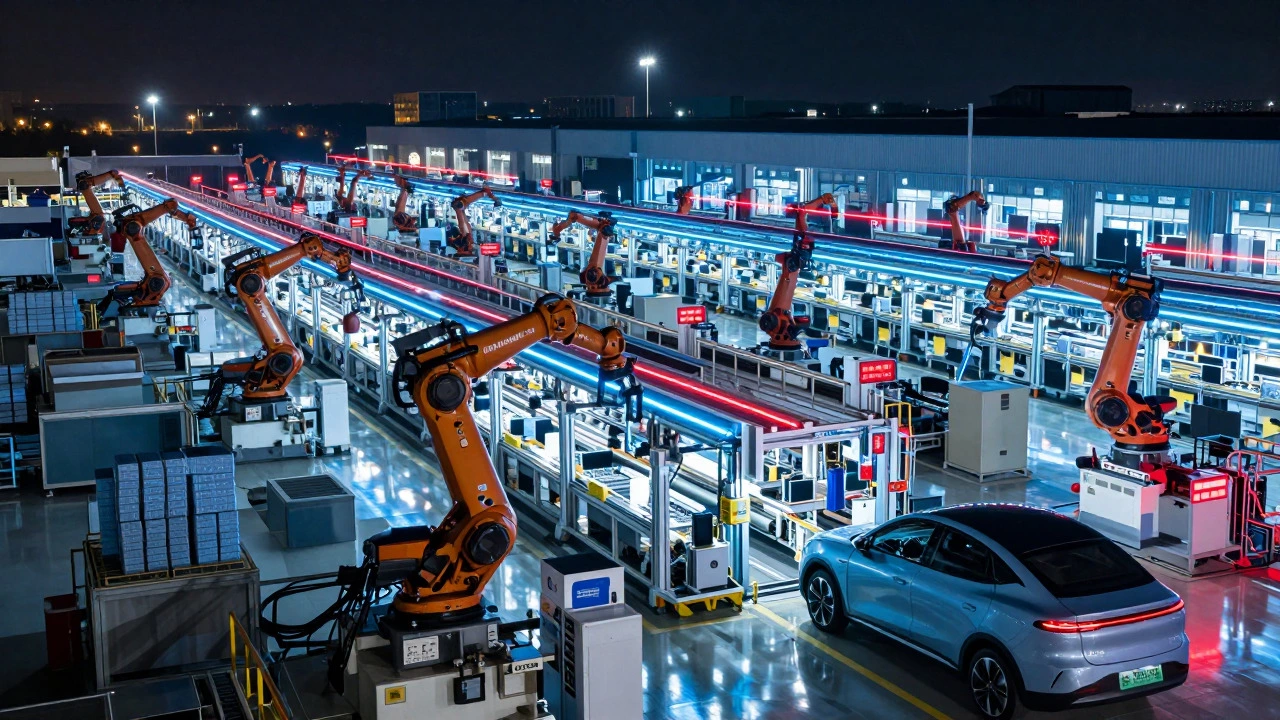
If your metric is sheer tonnage and unit count, China remains the largest manufacturer by gross output value. As of 2025-2026 data, China accounts for roughly 30% of global manufacturing output. This dominance wasn't accidental; it was built over thirty years of infrastructure investment, state subsidies, and an unparalleled labor force that transitioned from agriculture to assembly lines with remarkable speed.
What keeps China at the top today isn't just cheap labor-wages have risen significantly since the early 2000s. It's the ecosystem. If you need to build a smartphone, you can find every component supplier within a 100-mile radius of Shenzhen. This cluster effect reduces logistics costs and speeds up iteration times in ways that fragmented supply chains in Europe or North America struggle to match.
- Electronics & Hardware: China produces over 80% of the world's consumer electronics, including smartphones, laptops, and batteries.
- New Energy Vehicles (NEVs): Chinese brands like BYD have overtaken traditional leaders in EV sales volume, supported by massive domestic battery production.
- Steel & Cement: China produces more steel than the rest of the world combined, fueling its own infrastructure boom and global exports.
However, this leadership comes with challenges. An aging workforce, rising energy costs, and geopolitical tensions have forced Beijing to pivot from low-end assembly to higher-value manufacturing. The government's "Made in China 2025" initiative aims to move up the value chain, focusing on robotics, semiconductors, and AI-driven production.
The Innovation Engine: The United States' High-Value Edge
While China wins on volume, the United States leads in manufacturing value-added per worker and technological sophistication. American factories may produce fewer units of generic goods, but they make things that are harder to replicate: jet engines, cutting-edge semiconductors, biopharmaceuticals, and specialized industrial software.
The US manufacturing sector is rebounding strongly in 2026, driven by reshoring trends and federal incentives like the CHIPS and Science Act. Companies are bringing production back home not because it's cheaper, but because it's safer and faster. Proximity to the end consumer allows for rapid customization and reduced shipping risks, which became painfully obvious during recent global supply chain disruptions.
| Metric | China | United States | Germany |
|---|---|---|---|
| Global Share of Output | ~30% | ~15% | ~7% |
| Key Industries | Electronics, Textiles, Steel | Aerospace, Pharma, Semiconductors | Automotive, Machinery, Chemicals |
| Automation Level | Rapidly Increasing | High (Software-Integrated) | Very High (Industry 4.0 Pioneer) |
| Labor Cost Trend | Rising | High but Stable | High |
| Primary Advantage | Scale & Supply Chain Density | Innovation & IP Protection | Precision Engineering & Quality |
Consider the semiconductor industry. While much of the final packaging happens in Asia, the design tools, advanced lithography machines, and core architecture come from US firms like Intel, NVIDIA, and Applied Materials. This intellectual property edge ensures that even when physical production moves elsewhere, the highest profits remain in Silicon Valley and Austin.
The Precision Powerhouse: Germany's Industrial Backbone
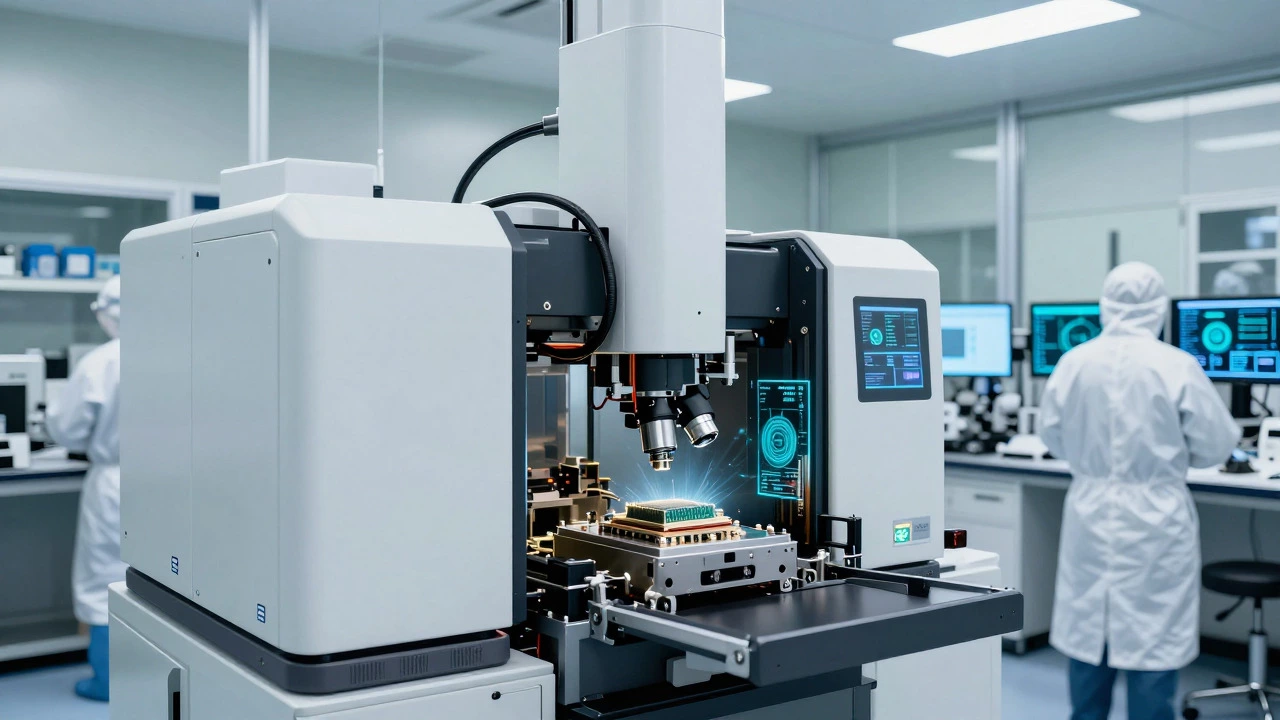
Then there is Germany, which punches well above its weight class despite having a population smaller than California. Germany is the heart of European manufacturing and a global benchmark for quality. Its strength lies in "Mittelstand" companies-small to medium-sized enterprises that dominate niche markets in industrial machinery, automotive parts, and chemical processing.
German manufacturers are pioneers of Industry 4.0, integrating IoT sensors, real-time data analytics, and autonomous robots into production lines. A factory in Stuttgart doesn't just assemble cars; it collects terabytes of performance data that feed back into R&D, creating a continuous improvement loop. This focus on efficiency and durability means German-made machinery often lasts twice as long as competitors' equipment, commanding premium prices globally.
The automotive sector is the crown jewel here. Brands like Volkswagen, BMW, and Mercedes-Benz aren't just selling vehicles; they're exporting complex ecosystems of engineering standards. Even as the world shifts to electric vehicles, German suppliers like Bosch and Continental remain indispensable partners to automakers worldwide, providing the braking systems, sensors, and powertrain controls that keep modern cars running.
The Rising Challengers: India, Vietnam, and Mexico
The manufacturing map isn't static. In 2026, three countries are aggressively challenging the established order by offering alternatives to China's dominance.
India is leveraging its massive young population and digital infrastructure to become a major player in electronics and pharmaceuticals. Government initiatives like "Make in India" have attracted giants like Apple to shift iPhone production to Indian soil. With lower labor costs and English-speaking technical talent, India is positioning itself as the next big hub for labor-intensive industries looking to diversify away from East Asia.
Vietnam has become the go-to destination for companies seeking "China + 1" strategies. By improving port infrastructure and signing favorable trade agreements, Vietnam has seen a surge in foreign direct investment in textiles, footwear, and increasingly, electronics assembly. It’s not replacing China yet, but it’s capturing a significant slice of the overflow demand.
Mexico benefits from proximity to the US market. Under the USMCA trade agreement, Mexican manufacturing has boomed, particularly in automobiles and appliances. Nearshoring-moving production closer to the end consumer-is reducing reliance on trans-Pacific shipping lanes, making Mexico a critical node in North American supply chains.
How to Define "Leader" in Modern Manufacturing
To truly understand who leads, you have to define what "manufacturing" means in 2026. It’s no longer just about screwing bolts together. It’s about data, sustainability, and resilience.
- Total Output Value: If you measure by dollars produced, China wins. It simply moves more material and finishes more units.
- Productivity Per Worker: If you measure efficiency, the US and Germany lead. Their workers generate more economic value per hour due to automation and higher skill levels.
- Technological Sophistication: If you measure complexity, the US leads in software-defined hardware, while Germany leads in mechanical precision.
- Sustainability: This is the new frontier. Countries leading in green hydrogen, carbon-capture integration, and circular economy practices will hold the moral and regulatory high ground in the coming decade.
For businesses, this means there is no single "best" place to manufacture. A startup building custom medical devices might prefer US-based prototyping for speed and IP security. A fashion brand might choose Vietnam for cost-effective garment production. An automotive supplier might partner with Germany for high-precision components.
The Future of Global Manufacturing Leadership
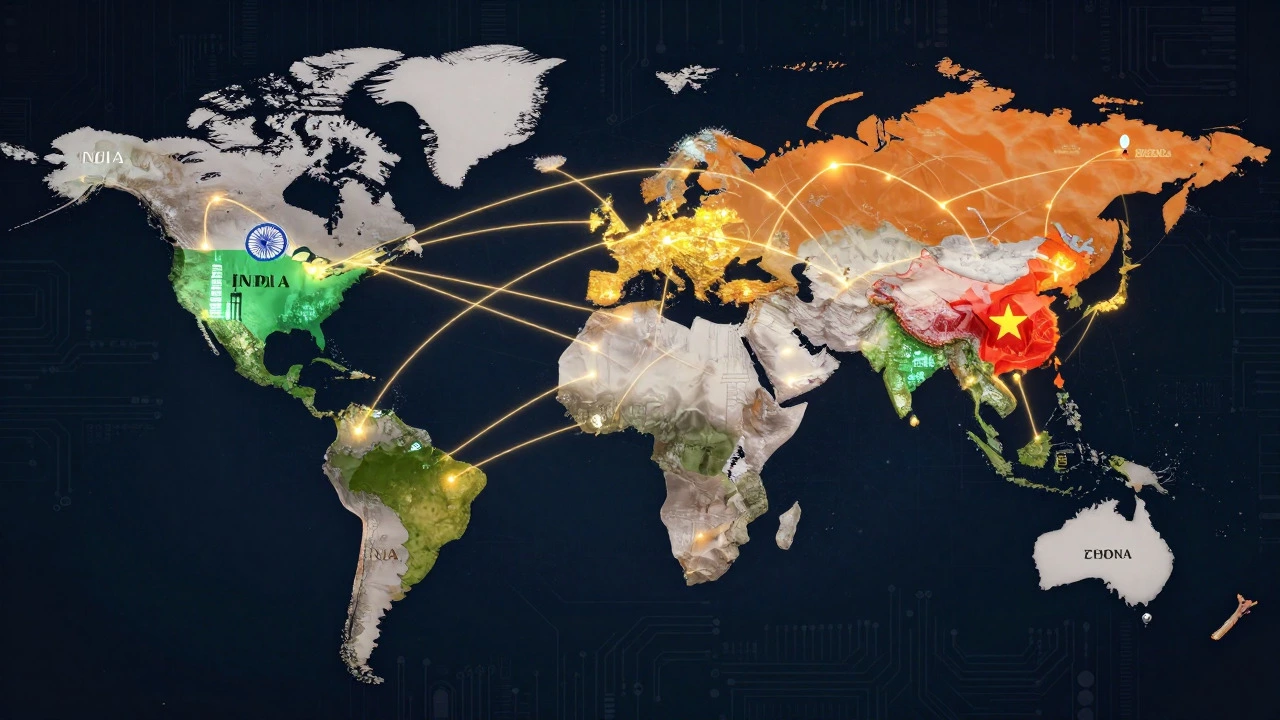
Looking ahead, the gap between these leaders is narrowing in some areas and widening in others. Automation is reducing the advantage of cheap labor, meaning countries with strong education systems and stable electricity grids will gain ground regardless of wage levels. Meanwhile, geopolitical fragmentation is pushing regions to build self-sufficient industrial bases, leading to regionalized manufacturing hubs rather than a single global factory.
By 2030, we may see a multipolar manufacturing world where no single country holds absolute dominance. Instead, we'll have interconnected networks: US-designed, Chinese-assembled, German-engineered, and Indian-supported. The "leader" won't be a nation, but the ability to orchestrate these global capabilities efficiently.
Is China still the biggest manufacturer in the world?
Yes, as of 2026, China remains the largest manufacturer by total output value, accounting for approximately 30% of global production. However, its growth rate is slowing, and it is shifting focus from low-cost assembly to high-tech industries like semiconductors and electric vehicles.
Which country has the most advanced manufacturing technology?
The United States and Germany are considered the leaders in advanced manufacturing technology. The US excels in software integration, aerospace, and biotech, while Germany is renowned for industrial automation, robotics, and precision engineering under the Industry 4.0 framework.
Why are companies moving manufacturing out of China?
Companies are diversifying due to rising labor costs in China, geopolitical tensions, and supply chain vulnerabilities. Many are adopting a "China + 1" strategy, setting up secondary operations in countries like Vietnam, India, and Mexico to reduce risk and improve logistics flexibility.
What is the role of automation in determining manufacturing leadership?
Automation reduces reliance on cheap labor, allowing countries with higher wages like the US and Germany to remain competitive. It increases productivity, improves quality consistency, and enables mass customization, making it a key factor in modern manufacturing competitiveness.
How does nearshoring affect global manufacturing dynamics?
Nearshoring involves moving production closer to the end market to reduce shipping times and costs. This trend is boosting manufacturing in Mexico for the US market and in Eastern Europe for Western Europe, challenging the dominance of distant Asian manufacturing hubs.