Global Electronics Manufacturing Simulator (2026)
Select a country to analyze its specific role in the 2026 electronics landscape.
China
The IncumbentIndia
Rising ChallengerVietnam
DiversificationTaiwan
Chip KingUSA
Design LeaderMexico
NearshoringCountry Name
RoleDescription goes here.
Key Metrics (2026 Projection)
Strategic Focus
The Bottom Line
Summary text
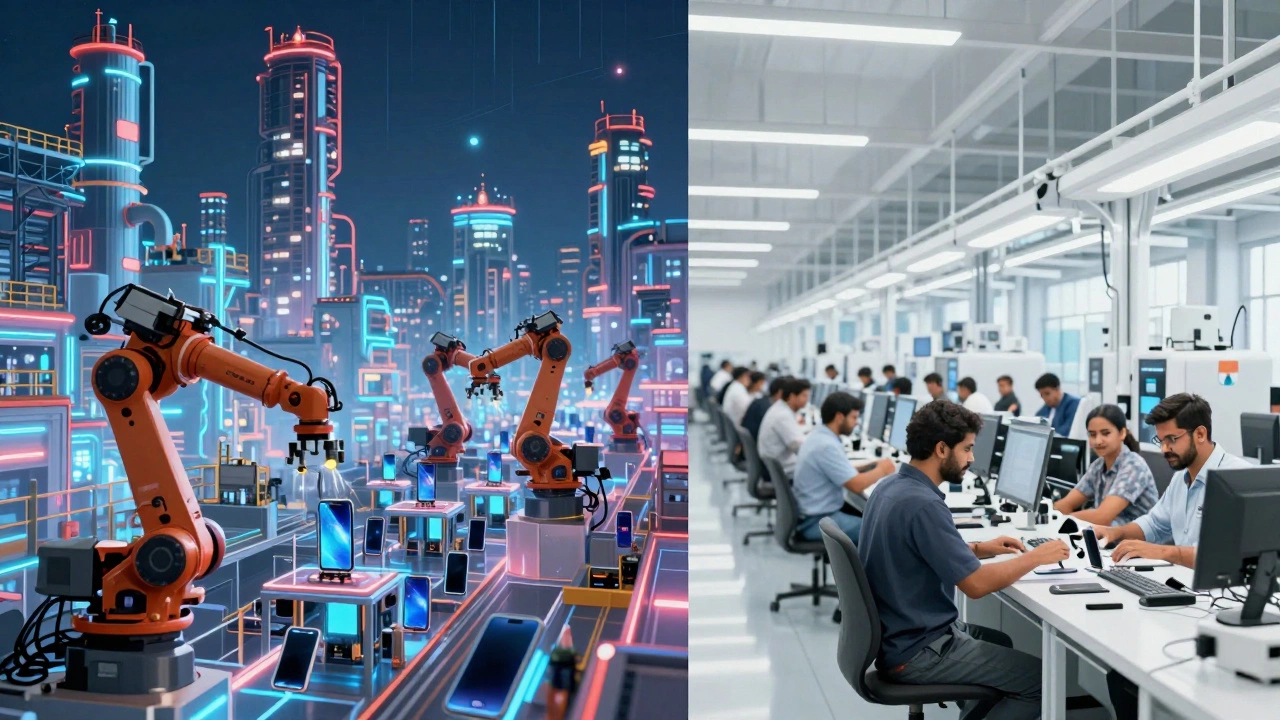
For decades, the answer was simple. If you asked who made the world’s phones, laptops, and TVs, everyone pointed to one place: China. But by mid-2026, that answer is becoming complicated. The global electronics landscape isn’t just about who has the biggest factories anymore; it’s about who controls the chips, who gets the subsidies, and where the next billion consumers live.
If you are looking at the sheer volume of goods shipped out of a country, China still holds the crown. However, if you look at growth rates, strategic shifts, and the rise of new hubs, the story changes dramatically. India is no longer just a potential player; it is an active contender reshaping the supply chain. Meanwhile, Vietnam, Mexico, and even the United States are carving out specific niches. This article breaks down exactly who is leading in which segment of the electronics industry right now.
The Incumbent Giant: Why China Still Dominates Volume
Let’s get the obvious out of the way first. China remains the undisputed king of total electronics output. In 2025 and early 2026, Chinese factories produced roughly 30% to 40% of the world’s consumer electronics. From the tiny sensors in your smartwatch to the massive servers powering AI models, the assembly lines in Shenzhen and Dongguan are humming louder than ever.
Why hasn’t this dominance collapsed despite rising labor costs and geopolitical tensions? It comes down to infrastructure and ecosystem density. In China, you can find every component needed for a smartphone within a 100-kilometer radius. You don’t just have assemblers; you have the makers of screens, batteries, casings, and connectors all in one cluster. This speed-to-market advantage is hard to replicate overnight.
However, China is facing headwinds. Labor shortages are real, with wages doubling over the last decade. More importantly, Western restrictions on advanced semiconductor exports have forced Chinese tech giants like Huawei and Xiaomi to innovate internally or pivot to mature-node chips. While they lead in volume, their grip on the most cutting-edge technology is being tested.
The Rising Challenger: India’s Electronics Boom
Now, let’s talk about the elephant in the room for many investors and manufacturers: India. Over the past three years, India has transformed from a minor assembler into a global powerhouse for mobile phone manufacturing. By 2026, India is the second-largest producer of smartphones in the world, right behind China.
This shift didn’t happen by accident. It was driven by aggressive government policy, specifically the Production Linked Incentive (PLI) scheme. This program offers cash incentives to companies based on how much value they add domestically. Big names like Apple, Samsung, and Foxconn moved significant production lines to Tamil Nadu and Karnataka to tap into these benefits and access India’s massive domestic market of 1.4 billion people.
Here is the concrete reality: In 2023, India exported $20 billion worth of mobile phones. By 2025, that number had surged past $40 billion. Apple now manufactures nearly 20% of its iPhones in India, up from less than 1% five years ago. This isn’t just about assembling final products; local suppliers are starting to make chargers, earbuds, and even basic circuit boards.
But there is a catch. While India leads in *assembly*, it still imports most high-value components like displays and processors from China and South Korea. The goal for 2026-2030 is to deepen this local supply chain. Can India move beyond screwing parts together to actually making the parts? That is the next big hurdle.
The Diversification Play: Vietnam and Mexico
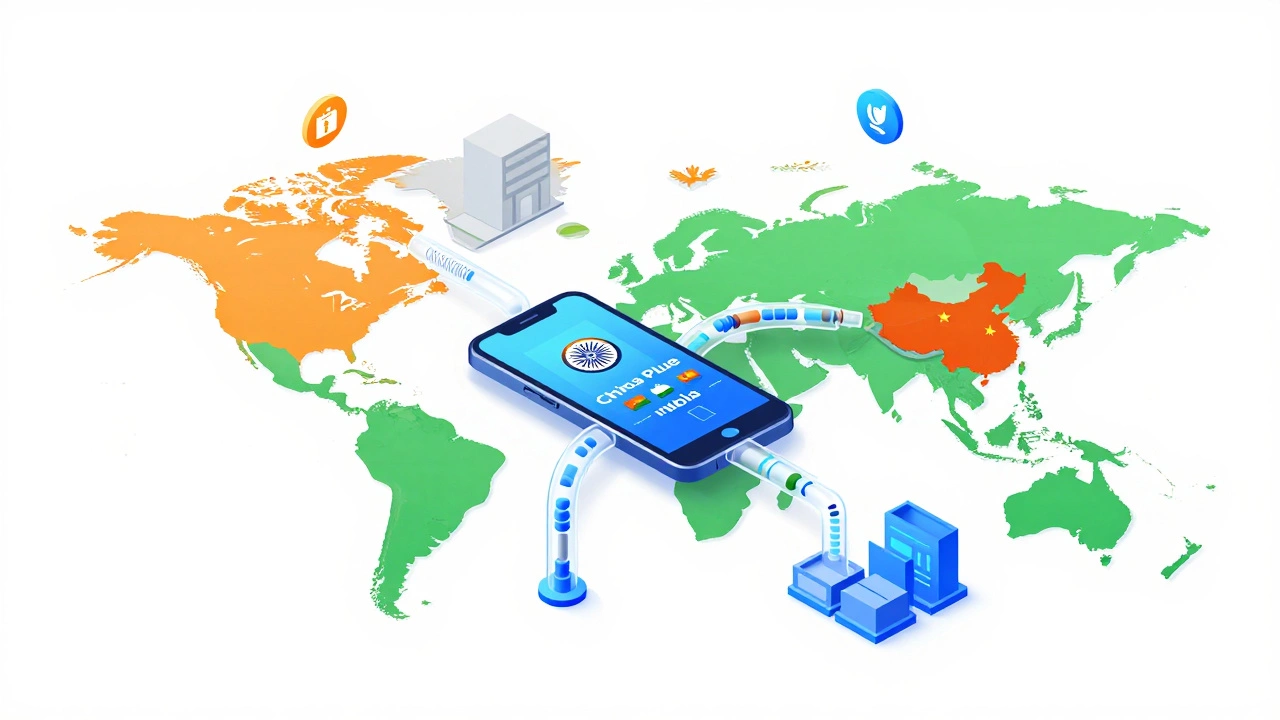
While India grabs headlines, other countries are quietly capturing specific slices of the electronics pie. This is part of a strategy known as "China Plus One," where companies keep some operations in China but diversify risk by setting up parallel facilities elsewhere.
Vietnam has become the go-to destination for consumer electronics assembly, particularly for brands like Samsung and Intel. Vietnam benefits from free trade agreements with the EU and the US, allowing duty-free exports. In 2025, Vietnam’s electronics exports exceeded $150 billion, heavily driven by smartphones and computers. However, similar to India, Vietnam relies heavily on imported inputs. Its strength lies in efficient logistics and a stable political environment.
Meanwhile, Mexico is winning the race for nearshoring. For US-based electronics firms, shipping finished goods from Mexico takes days, not weeks. This is crucial for automotive electronics and industrial hardware. As electric vehicles and smart home devices grow, Mexico’s proximity to the North American market makes it indispensable. Companies like Tesla and various semiconductor packaging firms have expanded their footprint there significantly in 2025.
The Chip War: Who Controls the Core?
You cannot talk about electronics leadership without talking about semiconductors. The chip is the brain of every electronic device. Here, the map looks very different.
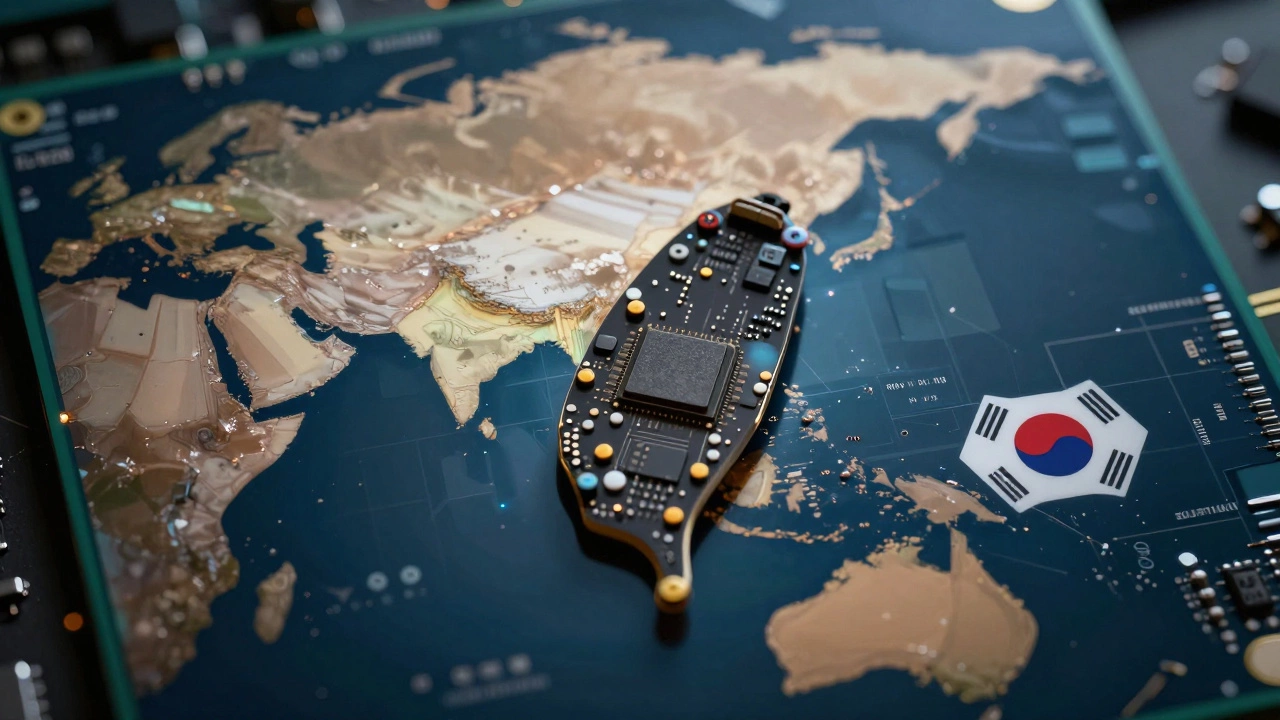
Taiwan, through TSMC, remains the absolute leader in advanced chip manufacturing. If you buy an iPhone or a high-end gaming PC in 2026, the processor inside was likely designed in the US or Europe but manufactured in Taiwan. No other country currently matches TSMC’s capability in producing sub-3nm chips.
The United States is aggressively trying to reclaim its position in fabrication. Thanks to the CHIPS and Science Act, billions in subsidies have built new fabs in Arizona, Ohio, and New York. By 2026, these plants are coming online, reducing reliance on Asia for critical military and AI chips. However, building a full ecosystem-from sand to silicon-takes decades. The US leads in design software (EDA) and equipment, but physical manufacturing is still catching up.
South Korea, led by Samsung and SK Hynix, dominates memory chips (DRAM and NAND). These are essential for storing data in everything from cloud servers to your laptop. If you are looking at who leads in storage technology, Seoul is the capital.
Comparison Table: Global Electronics Leaders in 2026
| Country | Primary Strength | Key Sectors | 2025 Export Value (Approx.) | Main Challenge |
|---|---|---|---|---|
| China | Complete Supply Chain Ecosystem | Consumer Electronics, Batteries, EVs | $900B+ | Geopolitical friction, aging workforce |
| India | Rapid Growth & Domestic Market | Smartphones, Consumer Goods | $80B+ | Lack of deep component manufacturing |
| Vietnam | Trade Agreements & Logistics | Smartphones, Computers | $150B+ | Reliance on imported inputs |
| Taiwan | Advanced Semiconductor Fabrication | Logic Chips, Memory | $100B+ (Semis only) | Geopolitical vulnerability |
| United States | Chip Design & Equipment | EDA Software, Aerospace Electronics | $120B+ (High-tech) | High labor costs, slow fab construction |
The Future Outlook: Where Will the Industry Go?
Looking ahead from mid-2026, the trend is clear: fragmentation. We will no longer see a single country dominating every aspect of electronics. Instead, we will see regional hubs.
In Asia, India and Vietnam will continue to absorb low-to-mid complexity assembly work, moving up the value chain slowly. China will focus on high-end manufacturing, green energy tech, and mature-node chips. In the West, the US and Europe will prioritize security-critical electronics, automotive chips, and aerospace systems, accepting higher costs for supply chain resilience.
For businesses, this means complexity. You might design a product in California, source chips from Taiwan, assemble it in India, and sell it in Europe. The "leader" in electronics is no longer a single nation but a network of specialized partners. Understanding this web is more valuable than knowing which flag flies over the largest factory.
Is India replacing China in electronics manufacturing?
Not entirely, but it is replacing a significant portion of low-cost assembly work. India has become the second-largest smartphone manufacturer globally, largely due to the PLI scheme. However, China still dominates the supply of components and complex electronics. Think of it as a shift rather than a replacement: India is taking over final assembly for many brands, while China retains control over the intermediate parts.
Which country makes the best semiconductors?
Taiwan is the leader in manufacturing advanced logic chips, primarily through TSMC. South Korea leads in memory chips (DRAM and NAND) via Samsung and SK Hynix. The United States leads in chip design and the machinery used to build them. So, "best" depends on whether you mean designing, making, or storing data.
What is the PLI scheme in India?
The Production Linked Incentive (PLI) is a government program that provides financial rewards to manufacturers based on the incremental sales of goods produced in India. It aims to boost domestic manufacturing, reduce import dependency, and attract foreign investment. It has been highly effective in the electronics sector, bringing in major players like Apple and Samsung.
Why are companies moving manufacturing to Vietnam?
Companies move to Vietnam for several reasons: favorable free trade agreements (like CPTPP and RCEP), lower labor costs compared to China, and political stability. It serves as a key hub for the "China Plus One" strategy, allowing brands to diversify risk while maintaining efficient export routes to Europe and the US.
Can the US become self-sufficient in chip manufacturing?
The US is making significant progress with the CHIPS Act, funding new fabrication plants in states like Arizona and Ohio. However, full self-sufficiency is unlikely in the short term due to the lack of a skilled workforce and established supply chains. The goal is strategic autonomy for critical sectors (defense, AI) rather than competing on cost for consumer goods.