India Car Ownership Cost Calculator
The article highlights that while production is high, sales are slowing because the "math doesn't add up." This tool helps you visualize why buyers are hesitant by calculating the monthly burden of a new car against your income.
Your Financial Situation
Ownership Analysis
₹0
Enter details to see if this fits your budget.
Why this matters:
As per the article, when EMIs consume 40%+ of disposable income, buyers delay upgrades. High insurance and maintenance further reduce affordability.
Quick Scenario Comparison
| Scenario | Monthly Commitment* | Verdict |
|---|
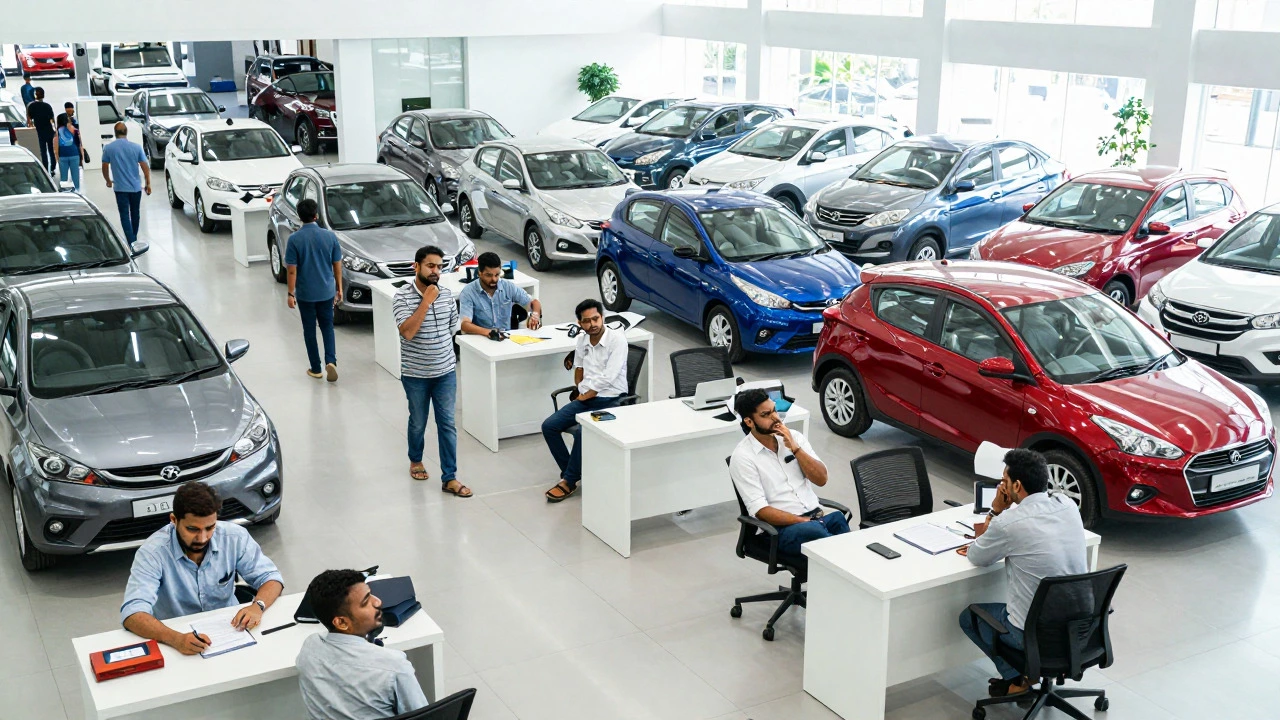
Walk into a showroom in Mumbai or Delhi today, and you might notice something odd: the sales guys are actually sitting down. For years, Indian showrooms were chaotic places where you had to fight for attention. Now, with automobile manufacturing India facing a strange paradox of record production but slowing retail demand, the vibe has shifted. It’s not that people don’t want cars. It’s that the math just doesn’t add up anymore.
If you’re wondering why your neighbor hasn’t upgraded their ten-year-old hatchback despite having the cash, it’s likely due to a perfect storm of high interest rates, rising insurance costs, and a massive shift in how we think about mobility. Let’s break down exactly what’s happening in the market right now, without the corporate jargon.
The Interest Rate Hangover
Let’s start with the elephant in the room: money is expensive. In 2023 and 2024, the Reserve Bank of India kept repo rates high to combat inflation. While rates have stabilized slightly by August 2026, the damage to consumer sentiment lingers. When loan tenures stretch longer and monthly EMIs eat up 40% of a household’s disposable income, people pause. They delay upgrades. They fix the old car instead of buying a new one.
Maruti Suzuki, which holds roughly 40-45% of the passenger vehicle market in India, reported flat growth in entry-level segments last quarter. This isn’t because people hate the Swift or the Alto. It’s because a ₹7 lakh EMI feels very different when your salary hasn’t grown by 10% in two years. The psychological barrier of debt is higher than ever.
Think about it this way: if you can rent a premium SUV on weekends for ₹5,000, why commit to a ₹25,000 monthly EMI plus maintenance and parking fees for a car you drive only five days a week? The value proposition of ownership has cracked under financial pressure.
The Insurance Shockwave
Here’s a cost nobody talks about enough until they get the renewal bill: motor insurance premiums. Due to regulatory changes aimed at reducing claim settlement delays and improving coverage standards, premiums jumped significantly between 2024 and 2025. For many middle-class buyers, insurance now costs nearly as much as the fuel bill for a month.
- Zero Depreciation Cover: Once a niche add-on, it’s now standard expectation, driving up base premiums.
- Parts Costs: As cars get more tech-heavy (sensors, cameras, ADAS), repair costs skyrocket, forcing insurers to raise prices.
- No-Claim Bonus Erosion: With minor scratches becoming costly repairs, fewer people qualify for discounts.
This recurring cost makes the total cost of ownership (TCO) look scary. A buyer calculating TCO over five years realizes that keeping an older, simpler car is financially smarter than buying a new, complex one. This is a major reason why used car markets are booming while new car sales stagnate.

The Electric Vehicle Confusion
Everyone expected the EV revolution to take off like a rocket. Instead, it’s sputtering along. Why aren’t Indians flocking to electric vehicles? It’s not just range anxiety anymore; it’s charging infrastructure reliability and resale uncertainty.
| Factor | Internal Combustion Engine (ICE) | Electric Vehicle (EV) |
|---|---|---|
| Upfront Cost | Lower (₹8L - ₹15L for mid-segment) | Higher (₹12L - ₹20L+ for comparable size) |
| Fuel/Energy Cost | High & Volatile (Petrol/Diesel) | Low (if home charging available) |
| Resale Value | Predictable & Stable | Uncertain (Battery degradation fears) |
| Infrastructure | Universal Fuel Stations | Inconsistent Public Charging |
For apartment dwellers in cities like Bangalore or Pune, installing a private charger is a bureaucratic nightmare involving housing society approvals. Without reliable home charging, public chargers become a gamble. You spend 45 minutes waiting for a charge that takes 20 minutes to complete. That time cost kills the appeal for daily commuters who value speed above all else.
Furthermore, brands like Tata Motors and Mahindra dominate the EV space, but their supply chains still struggle to keep pace with demand during festive seasons, leading to long waiting periods. When you wait three months for a car, you might just buy the petrol version sitting on the lot next door.
Urban Congestion and Parking Woes
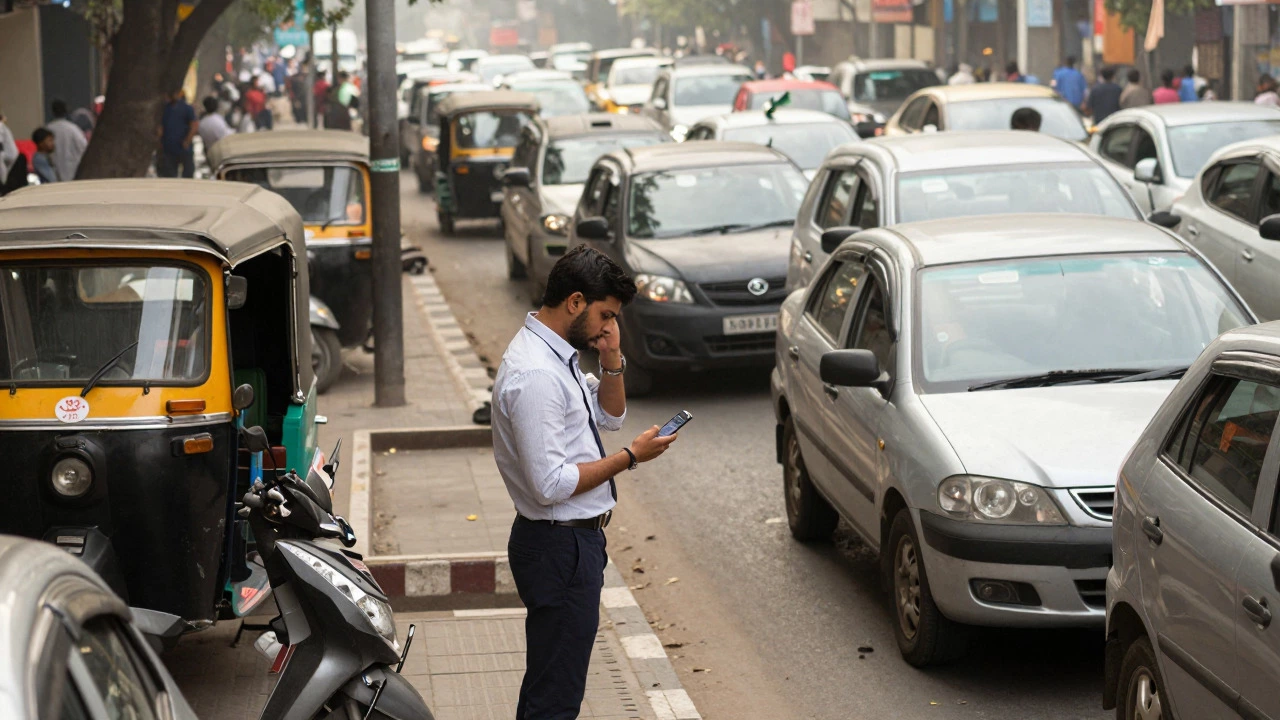
Have you tried finding a parking spot in South Mumbai or Old Delhi recently? It’s harder than finding a spouse. Cities across India are growing faster than their road networks. Traffic congestion has reached a breaking point in metros. The average commute time in Delhi has increased by 25% over the last decade.
When a car spends 90% of its life parked and 10% stuck in traffic, it stops being a status symbol and starts feeling like a liability. Young professionals are increasingly opting for two-wheelers or ride-hailing services for daily commutes, reserving cars for weekend trips. This behavioral shift hits the entry-level sedan and hatchback segment hardest-the bread and butter of Honda and Hyundai.
The Rise of the 'Premium' Mindset
Paradoxically, while mass-market sales dip, luxury and premium SUV sales remain robust. Why? Because for the upper-middle class, a big SUV is still a visible marker of success. But for the aspirational middle class, the dream has changed. They’d rather invest in experiences-travel, education, health-than depreciating metal assets.
This bifurcation means manufacturers are struggling. They built factories for volume, expecting millions of first-time buyers. But those first-time buyers are hesitant. They are looking at the Kia Sonet or Toyota Urban Cruiser Hyryder and thinking, "Do I really need this right now?" The answer, often, is no.
What Can Manufacturers Do?
It’s not all doom and gloom. There are clear paths forward for automakers willing to adapt.
- Simplify Ownership: Offer subscription models where insurance, maintenance, and financing are bundled into one transparent monthly fee.
- Fix the Resale Market: OEM-certified used car programs need to be stronger to give buyers confidence that their investment won’t vanish.
- Target Rural Markets: Urban saturation is real. Rural India still has low per-capita vehicle ownership. Affordable, rugged utility vehicles could unlock this latent demand.
The key takeaway? Cars aren't selling because the traditional model of "buy, own, maintain" is becoming economically inefficient for the average Indian household. Until manufacturers and policymakers address the hidden costs of ownership, sales figures will remain sluggish.
Are car sales dropping across all segments in India?
No, the decline is concentrated in the entry-level and mid-segment hatchbacks and sedans. Luxury SUVs and premium electric vehicles are seeing steady or growing demand, indicating a polarization of the market where the wealthy buy more, and the middle class buys less.
How do high insurance premiums affect new car purchases?
High premiums increase the total cost of ownership, making new cars less attractive compared to maintaining older vehicles. Many buyers now factor in a 15-20% higher annual running cost when deciding whether to upgrade, often choosing to hold onto existing cars for another 2-3 years.
Is the lack of EV charging stations the main reason for slow EV adoption?
While charging infrastructure is a hurdle, inconsistent reliability and long wait times at public stations are bigger deterrents than sheer quantity. Additionally, the lack of home charging options for apartment residents makes EV ownership inconvenient for a large portion of urban buyers.
Will falling interest rates boost car sales in 2026?
Interest rate cuts help, but they are not a magic bullet. Consumer confidence, job security, and perceived value matter more. If economic stability improves and manufacturers offer better incentives, sales may recover, but the era of double-digit growth driven solely by cheap credit is likely over.
Which car brands are most affected by the current slowdown?
Brands heavily reliant on volume sales in the ₹5-10 lakh segment, such as Maruti Suzuki and Hyundai, face the most pressure. Premium brands like Mercedes-Benz and BMW are less affected as their customer base is less sensitive to economic fluctuations.