India Chemical Sector Investment Calculator
Investment Analysis Results
The Indian chemical industry is experiencing unprecedented growth driven by government incentives, global supply chain shifts, and rising domestic demand for specialty products. You might have noticed headlines about massive factory expansions or new export records. But why is this happening right now? It isn't just luck. A perfect storm of policy support, cost advantages, and changing global habits is fueling a boom that looks set to continue through 2030.
If you are looking at investment opportunities, considering a career shift, or trying to understand market dynamics, you need to look beyond the surface-level hype. The real story lies in how India is moving from being a bulk commodity producer to a hub for high-value specialty chemicals. Let's break down exactly what is driving this surge and what it means for the future.
The Policy Push: PLI Schemes and Infrastructure
Government policy has been the single biggest catalyst for recent growth. The Production Linked Incentive (PLI) Scheme for Specialty Chemicals changed the game. Launched to boost domestic manufacturing, it offers financial incentives based on incremental sales. This wasn't just a small tweak; it was a strategic move to reduce import dependence and create a self-reliant ecosystem.
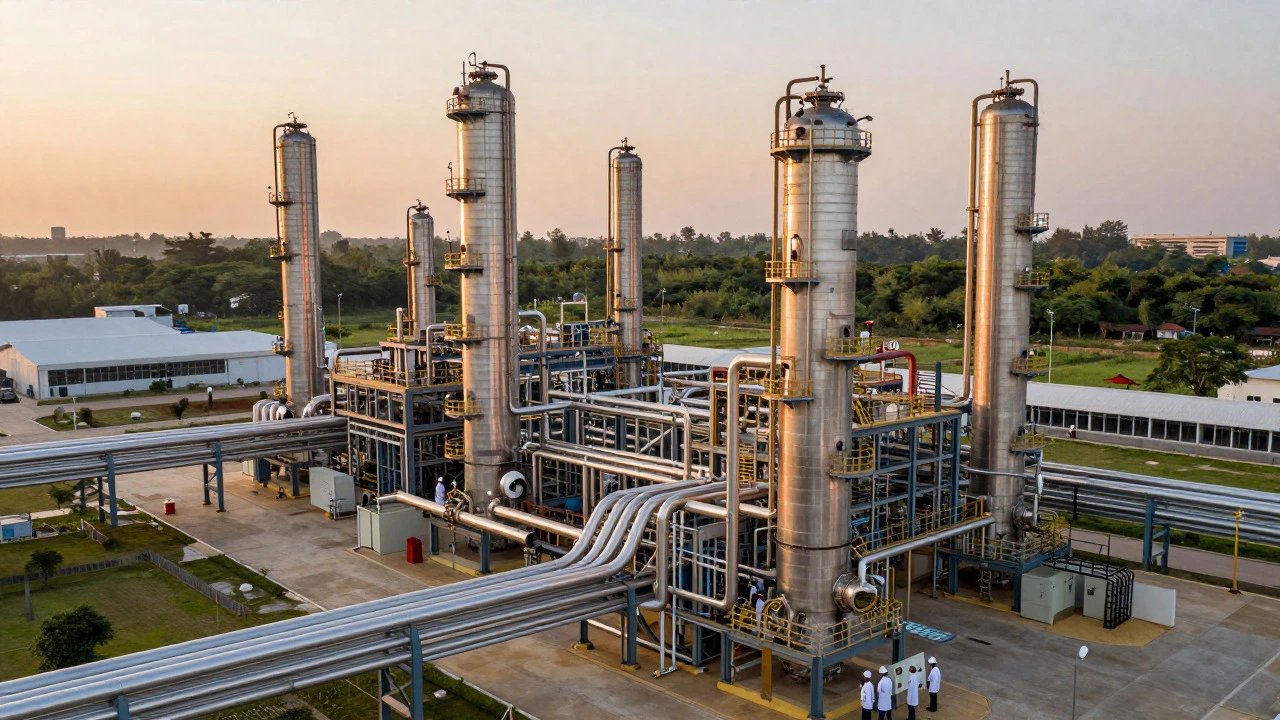
Before these schemes, many manufacturers hesitated to invest in large-scale plants due to regulatory hurdles and infrastructure gaps. Now, with clearer guidelines and direct financial benefits, capital expenditure has skyrocketed. Major players like Reliance Industries and BASF are expanding their footprints significantly. The government’s focus on creating dedicated chemical parks also helps. These parks provide common effluent treatment plants and reliable power, solving two major pain points for chemical manufacturers.
Additionally, the push for "Make in India" has streamlined approvals. What used to take years for environmental clearances now happens in months in designated zones. This speed allows companies to bring products to market faster, giving them a competitive edge over slower-moving competitors in other regions.
China Plus One: The Global Supply Chain Shift
You can’t talk about India’s chemical boom without mentioning China. For decades, China dominated the global chemical market. But geopolitical tensions, trade wars, and the desire for supply chain resilience have pushed multinational corporations to diversify. This strategy is known as "China Plus One."
India is the primary beneficiary of this shift. Why? Because it offers a similar cost structure but with lower political risk for Western buyers. Companies are moving their sourcing contracts to India to avoid tariffs and potential disruptions. This is especially true for active pharmaceutical ingredients (APIs) and agrochemicals, where India already had a strong base.
Consider the timeline. During the pandemic, global supply chains broke down. Countries realized they couldn't rely on a single source for critical materials. India stepped in not just as a backup, but as a primary supplier. This trust, once built, is hard to lose. Multinationals are now setting up joint ventures with Indian firms to secure long-term supply agreements.

Rise of Specialty Chemicals
The old narrative was that India only made cheap, bulk commodities like caustic soda or sulfuric acid. That is changing fast. The real money and growth are in specialty chemicals. These are high-performance products used in electronics, automotive, healthcare, and personal care.
Specialty chemicals command higher margins because they require advanced R&D and precise manufacturing processes. India has a deep pool of chemical engineers and scientists who can handle complex formulations. This human capital advantage is crucial. While labor costs are low, the skill level is high, allowing Indian firms to compete on quality, not just price.
For example, the demand for electronic grade chemicals for semiconductor manufacturing is exploding. Indian companies are partnering with global tech giants to produce these niche products. Similarly, in the food and beverage sector, natural preservatives and flavors are seeing huge demand. Indian manufacturers are leveraging local raw materials to create these specialized inputs, reducing reliance on imported ingredients.
Green Chemistry and Sustainability
Sustainability is no longer a buzzword; it is a business requirement. Global regulators are tightening rules on carbon emissions and waste disposal. Indian chemical companies are responding by investing in green chemistry technologies.
This involves using renewable energy sources, recycling water, and developing biodegradable products. Companies that adapt early gain a significant advantage in exports to Europe and North America, where environmental standards are strict. The European Union’s Carbon Border Adjustment Mechanism (CBAM) is a prime example. It taxes imports based on their carbon footprint. Indian exporters who can prove low-carbon production will face fewer barriers.
Moreover, there is a growing domestic market for eco-friendly products. Consumers are becoming more aware of plastic pollution and toxic residues. This drives demand for bio-plastics, non-toxic paints, and sustainable textiles. Indian manufacturers are innovating to meet this demand, turning a regulatory challenge into a growth opportunity.
Raw Material Advantage and Cost Competitiveness
India has abundant access to key raw materials like coal, limestone, and agricultural residues. This reduces input costs compared to countries that must import everything. Additionally, the country’s large domestic market provides a stable base for volume production.
Cost competitiveness remains a strong suit. Labor costs in India are significantly lower than in China or Europe. When combined with efficient logistics improvements-such as better port connectivity and inland waterways-the total landed cost for Indian chemicals becomes highly attractive. This makes Indian products viable even when freight rates fluctuate.
| Driver | Impact | Example/Benefit |
|---|---|---|
| PLI Schemes | Boosts investment | Financial incentives for incremental sales |
| China Plus One | Diversifies supply chains | Multinationals shifting sourcing to India |
| Specialty Chemicals | Higher margins | Growth in electronics and pharma inputs |
| Green Chemistry | Regulatory compliance | Access to EU markets under CBAM |
| Raw Materials | Lower input costs | Abundant coal and agricultural residues |
Challenges to Watch
Despite the boom, challenges remain. Regulatory complexity can still slow down projects if not managed well. Environmental compliance costs are rising, which may squeeze margins for smaller players. Additionally, competition from other emerging economies like Vietnam and Indonesia is increasing.
To stay ahead, companies need to focus on innovation and efficiency. Investing in automation and digital tools can help manage costs and improve quality control. Building strong relationships with global customers is also key to securing long-term contracts.
Is the chemical sector in India good for investment?
Yes, the sector shows strong growth potential due to government support, global supply chain shifts, and rising demand for specialty chemicals. However, investors should consider regulatory risks and environmental compliance costs.
What are the main benefits of the PLI scheme for chemicals?
The PLI scheme provides financial incentives based on incremental sales, encouraging domestic manufacturing and reducing import dependence. It helps companies expand capacity and invest in new technologies.
How does India compare to China in chemical manufacturing?
India offers lower labor costs and a growing skilled workforce, making it an attractive alternative for companies seeking supply chain diversification. While China has larger scale, India is gaining ground in specialty chemicals and sustainability.
What role does green chemistry play in India's chemical industry?
Green chemistry helps Indian manufacturers comply with strict global environmental regulations, such as the EU's CBAM. It also opens up new markets for eco-friendly products, driving innovation and sustainable growth.
Are there any risks associated with investing in Indian chemical companies?
Risks include regulatory changes, environmental compliance costs, and competition from other emerging economies. Companies must navigate these challenges through innovation and efficient operations.