Indian Textile Industry Boom Estimator
Business Configuration
Based on article analysis of high-value vs basic segments.
Vertical integration reduces lead times and costs.
Production Linked Incentive (PLI) boosts margins by 3-5%.
Critical for Western exports (GOTS, OEKO-TEX).
Proximity to ports/highways reduces logistics costs.
Boom Potential Score
Profitability Outlook
StrongMargins enhanced by low input costs and incentives.
Competitive Edge
ModerateBalanced against global rivals like Vietnam/Bangladesh.
Risk Level
Low-MediumSome infrastructure or compliance hurdles remain.
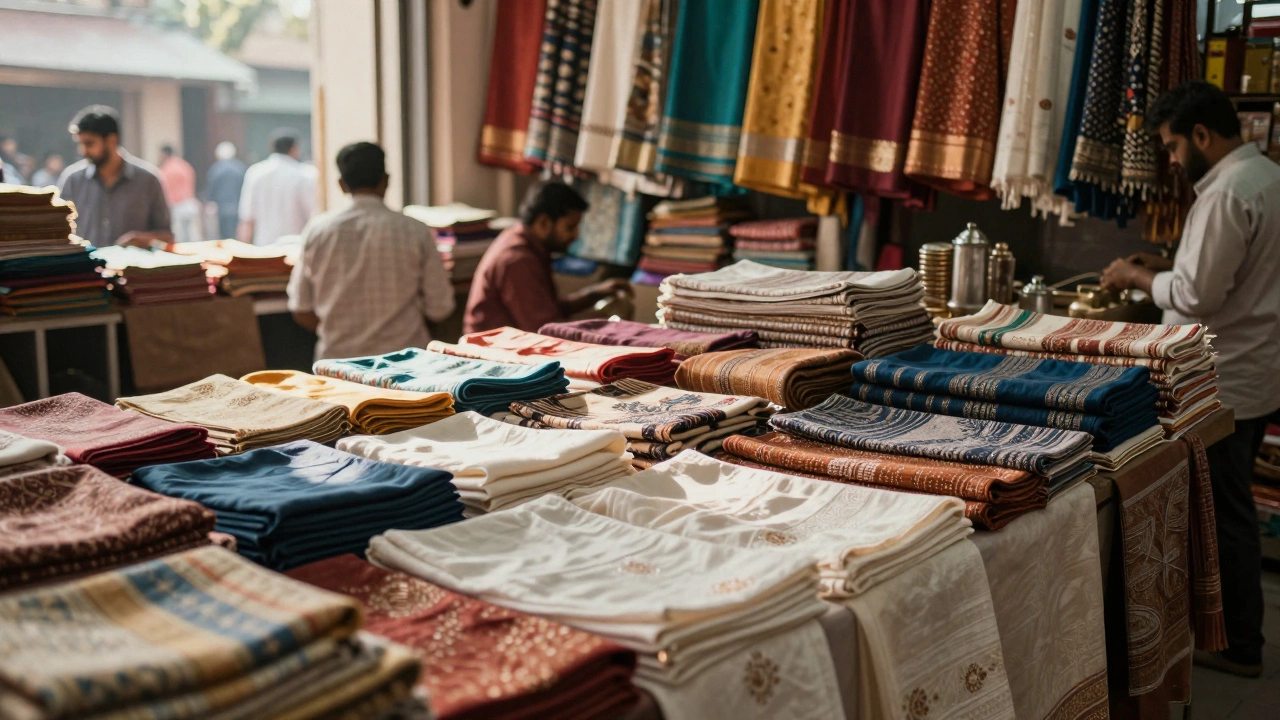
Walk into any major garment market in Delhi or Mumbai today, and you’ll notice a shift. The shelves aren't just stocked with local weaves anymore; they are filled with high-quality, competitively priced alternatives to what used to come exclusively from Bangladesh or Vietnam. But is this just a temporary blip, or are we witnessing the start of a massive structural boom in the Indian textile industry, a sector that contributes significantly to India's GDP and employs millions of workers across rural and urban landscapes? As we move through 2026, the question isn't whether the industry will grow-it’s how fast it can scale before global competitors catch up.
The short answer is yes, but with caveats. India has the raw materials, the labor force, and the government backing. What it has struggled with for decades is efficiency and infrastructure. That gap is closing rapidly. If you are an investor, a manufacturer, or someone looking to enter this space, understanding the mechanics behind this potential boom is crucial. Let’s break down the real drivers, the hidden bottlenecks, and what the data actually says about the next five years.
The Raw Material Advantage: Cotton and Beyond
You cannot talk about textiles without talking about cotton. India is one of the world’s largest producers of cotton, alongside China and the United States. This isn’t just a nice-to-have statistic; it’s a fundamental competitive edge. When you control the input, you control the cost structure. In recent years, fluctuations in global cotton prices have hit manufacturers in countries like Bangladesh hard because they rely heavily on imports. Indian manufacturers, however, often source directly from farmers in states like Gujarat, Maharashtra, and Telangana.
This vertical integration is becoming more pronounced. We are seeing a rise in integrated mills that handle everything from ginning (separating fiber from seed) to spinning, weaving, and finishing under one roof. This reduces lead times and minimizes logistics costs. For example, a company in Surat can now produce finished fabric weeks faster than a competitor in Dhaka who waits for imported yarn. Speed matters in fashion. Fast fashion brands want agility, and India is starting to deliver it.
But it’s not just cotton. There is a growing focus on technical textiles-fabrics used in healthcare, agriculture, and construction. These high-value products require less volume but offer higher margins. The government’s push towards self-reliance in medical supplies post-pandemic gave this sub-sector a massive kickstart. Hospitals now prefer locally sourced surgical gowns and masks made from non-woven fabrics produced right here. This diversification means the industry won’t collapse if cotton prices spike.
Policy Tailwinds: PLI and Production-Linked Incentives
If raw materials are the fuel, policy is the engine. The most significant game-changer in the last few years has been the Production Linked Incentive (PLI) scheme. Launched by the central government, this program offers cash incentives based on the value of incremental sales over a base period. It sounds bureaucratic, but the impact is tangible.
Under the PLI scheme, eligible companies receive incentives ranging from 3% to 5% of their net sales. This might not sound like much, but in an industry where profit margins can be razor-thin, these percentages make the difference between expanding capacity and staying stagnant. By mid-2026, several large players have already announced multi-billion-dollar expansions specifically tied to these incentives. They are building new automated spinning units and modernizing loom sheds.
Furthermore, the government has been aggressive in reducing import duties on certain machinery while lowering taxes on final apparel exports. This dual approach encourages manufacturers to upgrade their technology (making them more efficient) while making their end-products cheaper for foreign buyers. It’s a smart play. It addresses both the supply-side inefficiency and the demand-side competitiveness.
| Country | Primary Strength | Major Weakness | Export Focus |
|---|---|---|---|
| India | Cotton production, skilled labor, diverse product range | Infrastructure gaps, compliance complexity | Apparel, home textiles, technical fabrics |
| Bangladesh | Low labor costs, established export ecosystem | Dependence on imported raw materials, energy issues | Basic knitwear, woven garments |
| Vietnam | Strong FDI presence, trade agreements | Rising wages, limited domestic raw material base | Footwear, synthetic fabrics |
| China | Complete supply chain, massive scale | High labor costs, geopolitical tensions | High-end synthetics, complex garments |
The Infrastructure Bottleneck: Roads, Ports, and Power
Let’s get real for a moment. No amount of policy support can fix bad roads. For years, the biggest complaint from textile manufacturers in India was logistics. Moving goods from a factory in Tirupur to the port in Chennai could take days due to congestion, poor road conditions, and inefficient customs clearance. Every day of delay eats into margins.
However, 2026 looks different. The National Infrastructure Pipeline has delivered some visible results. New dedicated freight corridors are easing the burden on congested rail lines. Ports like Mundra and Nhava Sheva have upgraded their handling capabilities, reducing turnaround time for containers. More importantly, the implementation of the Goods and Services Tax (GST) has streamlined interstate movement of goods. You no longer need to deal with multiple state-level checks and taxes. This has effectively shrunk the country for business purposes.
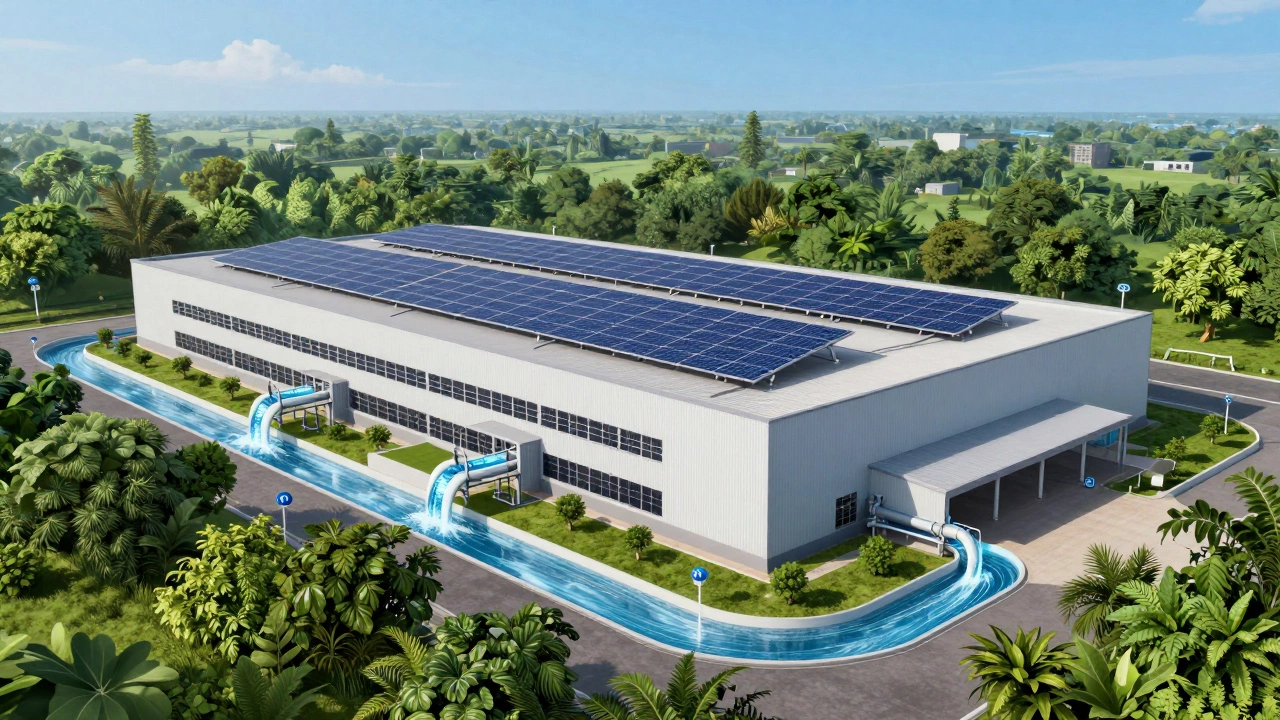
Power reliability is another critical factor. Textile manufacturing is energy-intensive. Spinning machines run 24/7. In the past, frequent power outages forced factories to rely on expensive diesel generators. Today, many industrial clusters have access to stable grid power, and there is a growing shift towards renewable energy sources. Solar parks in Rajasthan and Gujarat are providing cheaper, cleaner energy to nearby textile hubs. This not only cuts costs but also helps meet the strict environmental standards demanded by European and American buyers.
Labor Dynamics: Skill vs. Cost
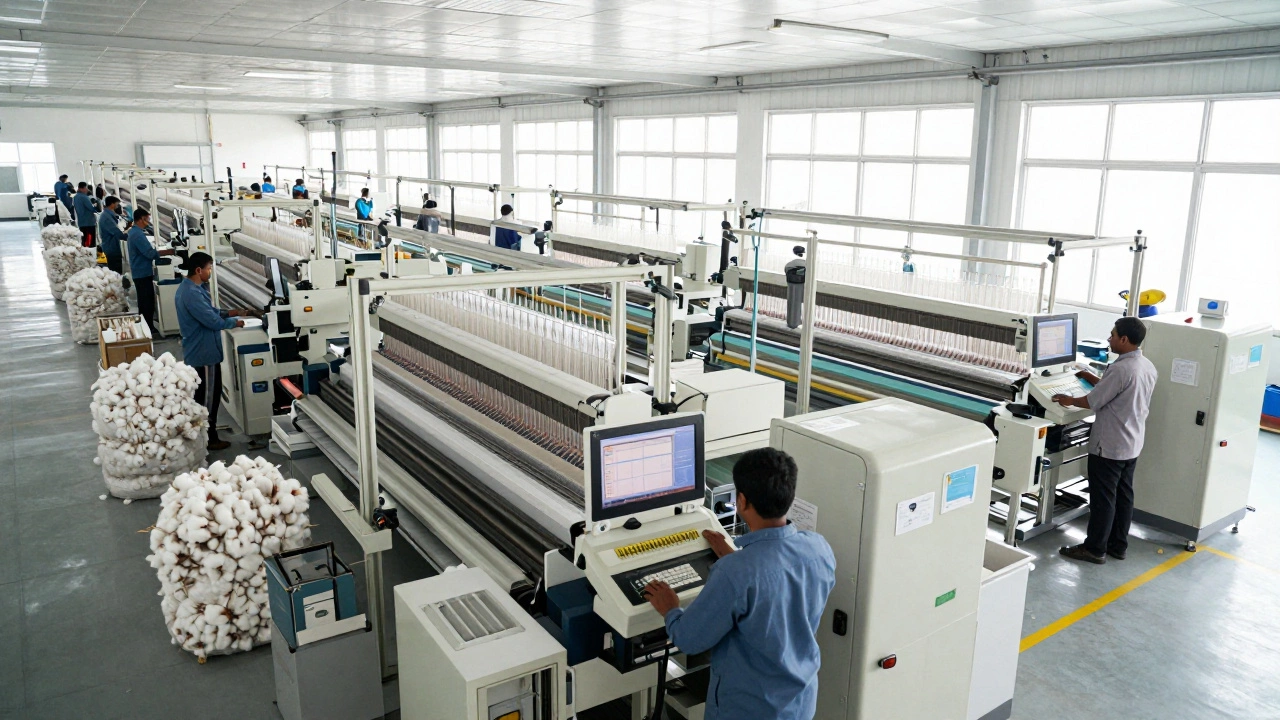
India has a young population, which is a demographic dividend. But having people is not the same as having skilled workers. The textile industry relies on a mix of highly skilled technicians for operating modern machinery and semi-skilled labor for assembly and finishing. There has been a chronic shortage of trained operators for advanced looms and knitting machines.
To address this, the government and private sector have partnered on skill development initiatives. Programs like the National Skill Development Corporation (NSDC) have trained hundreds of thousands of workers in specific textile skills. While the quality of training varies, the overall pool of employable talent is improving. Younger workers are more tech-savvy and adaptable to digital tools like computerized embroidery and automated cutting systems.
Wage rates in India remain competitive compared to China and even Vietnam, though they are higher than Bangladesh. However, productivity per worker in India is catching up. With better machinery and training, an Indian worker can now produce more output in less time. This narrows the cost advantage of lower-wage countries. Brands are realizing that paying slightly more for higher quality and faster delivery from India is worth it.
Sustainability: The New Currency
In 2026, sustainability is no longer a buzzword; it’s a license to operate. Major global retailers like H&M, Zara, and Walmart have set ambitious targets for reducing carbon footprints and using sustainable materials. They are auditing their suppliers rigorously. If you can’t prove your fabric is ethically sourced and environmentally friendly, you don’t get the contract.
India is positioning itself well here. The country has a strong tradition of natural dyes and handloom techniques, which are inherently sustainable. But it’s the industrial side that’s changing fast. Many large mills have adopted water recycling plants, treating wastewater before releasing it. They are switching to organic cotton and recycled polyester. Certifications like GOTS (Global Organic Textile Standard) and OEKO-TEX are becoming standard requirements rather than optional extras.
This shift creates a barrier to entry for smaller, unorganized players who can’t afford the investment in green technology. But for established manufacturers, it’s a huge opportunity. They can charge a premium for certified sustainable products. Western consumers are willing to pay more for eco-friendly clothing, and Indian exporters are tapping into this trend.
Challenges That Could Derail the Boom
It wouldn’t be realistic to paint a rosy picture without acknowledging the risks. One major challenge is compliance. India’s regulatory environment is still complex. Labor laws, tax filings, and environmental clearances can be a maze for small and medium enterprises (SMEs). While digitalization has helped, bureaucracy remains a hurdle. Delays in getting approvals can stall projects and increase costs.
Another issue is fragmentation. The Indian textile industry is largely dominated by SMEs. While this provides flexibility, it also makes it harder to achieve economies of scale. Large multinational brands prefer dealing with fewer, larger suppliers who can guarantee consistent quality and volume. Consolidation is happening, but slowly. Mergers and acquisitions are increasing, but cultural differences between family-run businesses and corporate entities can complicate integrations.
Global economic slowdowns also pose a threat. If consumer spending in Europe and North America drops, demand for apparel will fall. India is heavily export-dependent in this sector. A recession in key markets would directly impact Indian manufacturers. Diversifying into domestic consumption is vital, but the middle-class buying power in India is still growing, not yet at the level of mature markets.
What Does This Mean for Investors and Entrepreneurs?
If you’re considering entering the textile space in India, now is a strategic time-but pick your niche carefully. Don’t try to compete on low-cost basic t-shirts against Bangladesh. Instead, look at high-value segments: technical textiles, designer wear, or sustainable fabrics. These areas have higher barriers to entry but also higher rewards.
For investors, look for companies that are vertically integrated and have strong ESG (Environmental, Social, and Governance) credentials. Those with PLI benefits locked in are likely to see improved cash flows. Also, keep an eye on regions with good infrastructure connectivity. Clusters near ports or major highways will have a logistical advantage.
The boom isn’t guaranteed overnight. It requires continuous improvement in efficiency, quality, and compliance. But the foundations are solid. With the right strategy, the Indian textile industry is poised to become a dominant global player again, reclaiming its historical position as the land of fine fabrics.
Is the Indian textile industry profitable in 2026?
Yes, profitability has improved significantly due to lower input costs, government incentives like PLI, and better operational efficiency. Margins are healthier than in previous years, especially for companies focusing on high-value products and exports.
How does India compare to Bangladesh in textiles?
Bangladesh has lower labor costs and is strong in basic garments. India offers better quality, faster turnaround times, and a wider variety of fabrics including technical textiles. India is also less dependent on imported raw materials.
What is the PLI scheme in the textile sector?
The Production Linked Incentive (PLI) scheme provides financial incentives to manufacturers based on their incremental sales. It aims to boost domestic production, attract investment, and enhance global competitiveness in textiles and apparel.
Are technical textiles growing in India?
Yes, technical textiles are one of the fastest-growing segments. Used in healthcare, agriculture, and construction, these fabrics offer higher margins and are supported by government initiatives to promote innovation and self-reliance.
What are the main challenges facing Indian textile manufacturers?
Key challenges include regulatory compliance complexities, infrastructure gaps in some regions, skill shortages for advanced machinery, and competition from low-cost countries like Bangladesh and Vietnam.