CPU: What It Is, How It Powers Indian Manufacturing, and Why It Matters
When you think of CPU, the central processing unit that acts as the brain of any digital device. Also known as a microprocessor, it’s the core component that makes everything from smartphones to factory machines work. In India’s growing manufacturing scene, the CPU isn’t just inside your phone—it’s inside the machines making your phone. It’s in the robotic arms assembling solar inverters in Tamil Nadu, the control systems running plastic injection molds in Gujarat, and the smart sensors monitoring quality on medical device lines in Bangalore. Without CPUs, none of this happens.
Manufacturing today isn’t about big machines and loud factories alone. It’s about smart factories—places where machines talk to each other, adjust in real time, and learn from data. That’s all powered by CPUs. A small manufacturer using a CNC machine? That machine runs on a CPU. A startup building EV electronics? Their circuit boards depend on microcontrollers, which are tiny CPUs. Even the software tracking inventory or managing supply chains? That’s all running on servers with powerful CPUs. The CPU is the invisible engine behind India’s push to become a global electronics hub. And it’s not just about importing chips anymore—India is now designing and assembling components that include these processors, thanks to policies like Make in India and production-linked incentives.
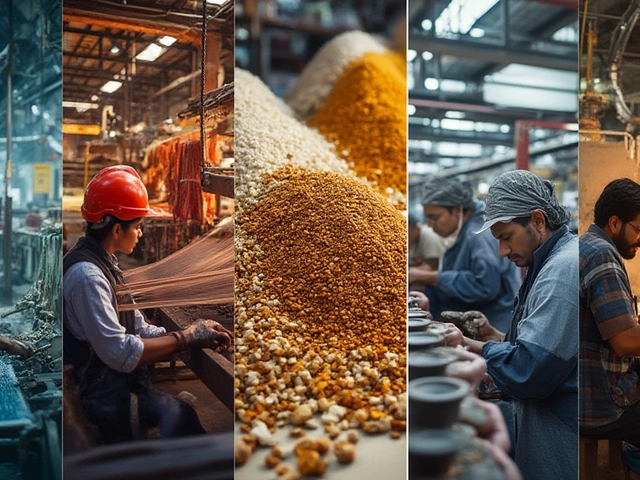
Related to this are the systems that use CPUs: industrial automation, embedded systems, and real-time control units. These aren’t abstract tech terms—they’re the tools small factories use to compete. A company making food processing units might use a CPU to regulate temperature and timing. A textile mill using automated looms? That’s a CPU managing speed and pattern changes. Even government schemes that fund manufacturing upgrades often require proof you’re using digital control systems—meaning you need to understand what a CPU does, not just buy one.
What you’ll find below are real stories from Indian manufacturers who didn’t wait for big tech to come to them. They figured out how to use CPUs to cut waste, improve quality, and win contracts. Some started with one machine. Others built entire production lines around smart controls. You’ll see how startups got funding by proving they understood the tech behind their products—not just the product itself. And you’ll learn why knowing the difference between a CPU and a microcontroller isn’t just for engineers—it’s for anyone trying to build something that lasts in today’s market.