Semiconductor Chips: How They Power India's Electronics Manufacturing Boom
When you hold a smartphone, a solar inverter, or a medical monitor made in India, you’re holding a semiconductor chip, a tiny piece of silicon that processes data and controls every function in modern electronics. Also known as microchips or integrated circuits, these are the invisible engines behind the country’s push to become a global electronics hub. Without them, nothing works—not the TVs, not the EVs, not even the basic gadgets you use every day. India doesn’t make many of these chips yet, but it’s buying them by the billions and starting to build the factories, skills, and policies to change that.
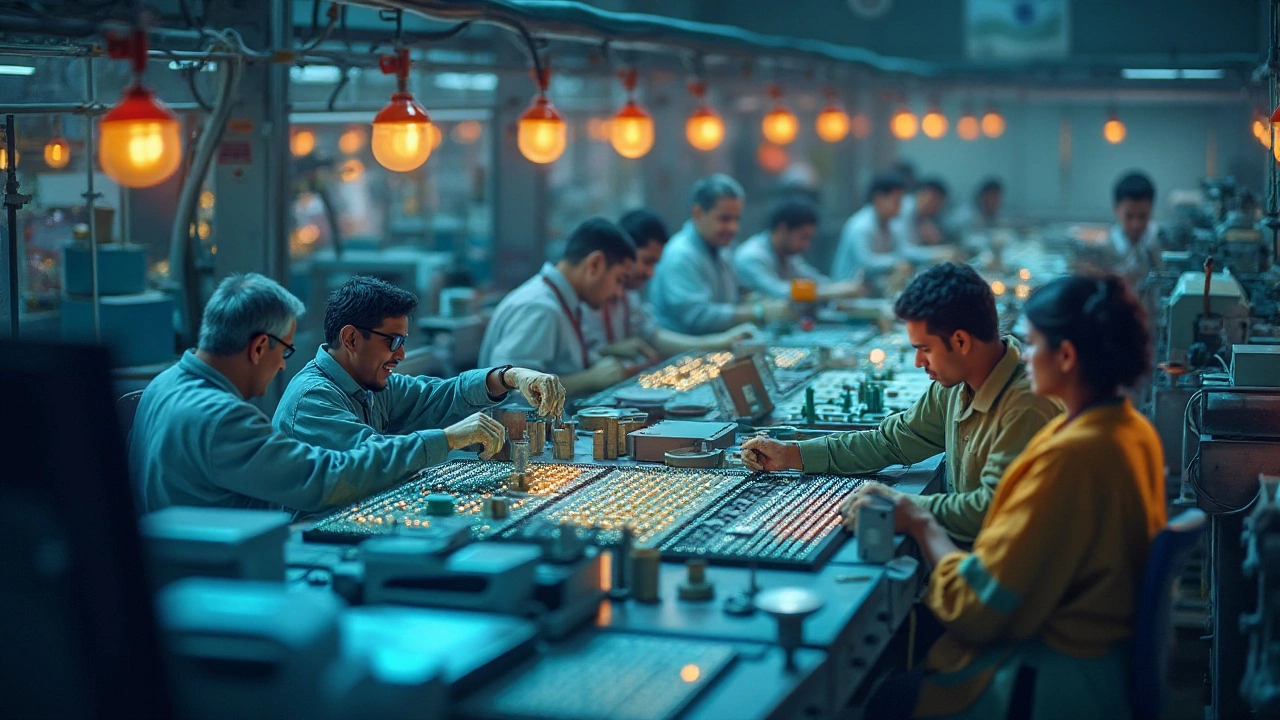
The electronics manufacturing industry, the sector producing smartphones, medical devices, and home appliances locally in India depends entirely on these chips. Right now, most come from Taiwan, South Korea, or China. But with India’s production of smartphones and solar inverters growing fast, the pressure to make chips here is rising. The government’s production-linked incentive (PLI) schemes are now funding companies to set up chip assembly, testing, and packaging plants. It’s not about making the raw silicon from scratch yet—that’s still too expensive and complex—but it’s about handling the final steps and building the supply chain around them. This is where small manufacturers and startups come in, linking local design teams with global chip suppliers.
Behind every chip in an Indian-made product is a story of cost, timing, and strategy. A startup building a smart home device needs chips that are cheap, available, and reliable. A factory making medical devices needs chips that meet strict quality standards. And a company exporting TVs needs to know how long it’ll take to get replacements if a shipment gets stuck. That’s why the posts below cover everything from how to pitch your product to a manufacturer who’s sourcing chips, to which states in India are best at handling electronics supply chains, to how profit margins shift when chip prices go up. You’ll find real examples of companies navigating this space—not theory, not hype, but what’s actually happening on the ground.
Whether you’re a founder trying to source parts, a student learning how electronics are made, or an investor watching India’s tech rise, understanding semiconductor chips isn’t optional anymore. It’s the foundation. And what you’ll see in the posts ahead is how India is slowly, steadily, building its own piece of that foundation—one chip at a time.