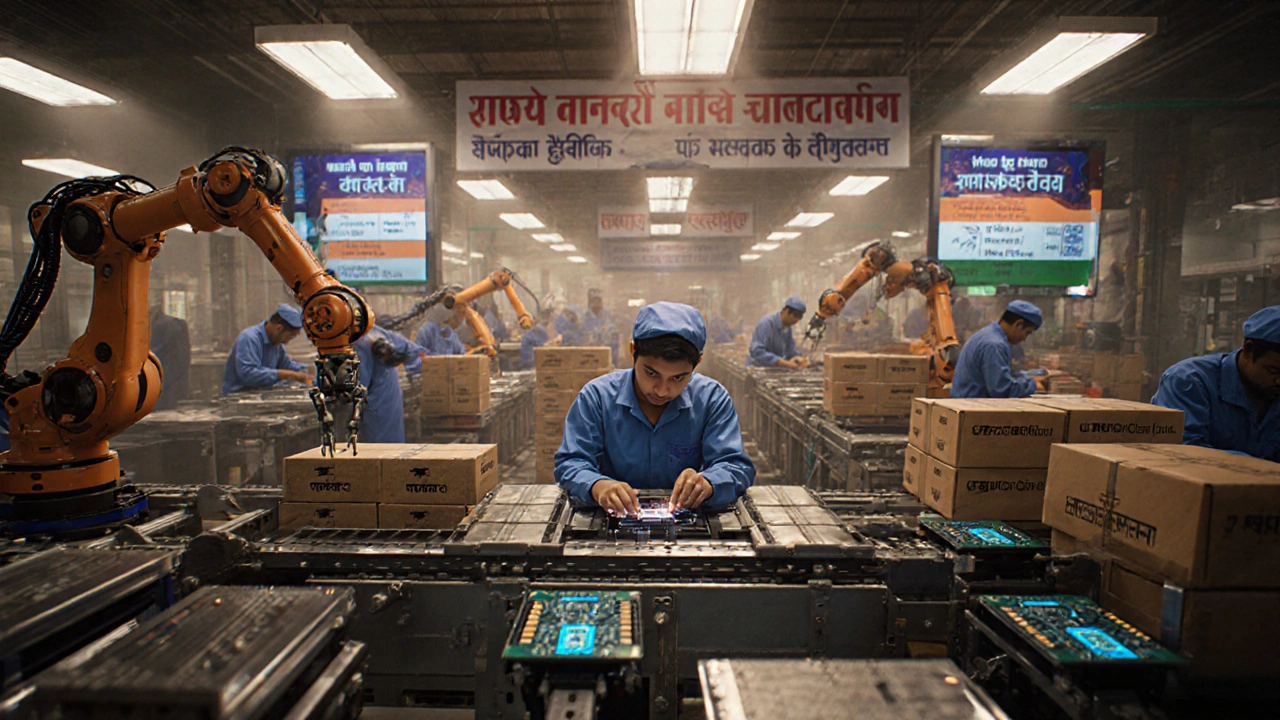
Made in India Electronics: What It Really Means and Who’s Leading the Charge
When you hear made in India electronics, products designed and assembled within India’s growing manufacturing ecosystem, often supported by government incentives and local supply chains. Also known as Make in India electronics, it’s no longer just a slogan—it’s a reality backed by $12 billion in annual exports and a network of factories that now rival global hubs. This isn’t about cheap labor or assembly lines. It’s about engineers in Tamil Nadu building circuit boards for global brands, startups in Karnataka prototyping smart devices, and small factories in Telangana producing medical electronics under strict quality controls.
The shift started when India pushed for local production of everything from smartphones to solar inverters. Companies like Samsung India, a top electronics exporter in India that now manufactures over 90% of its phones locally, proved it could be done at scale. But the real story is in the smaller players: the family-run workshops in Chennai making power adapters, the co-ops in Pune assembling IoT sensors, and the tech incubators in Hyderabad turning ideas into export-ready products. These aren’t just factories—they’re innovation nodes tied to local talent, government training programs, and faster logistics thanks to ports in Chennai and Nhava Sheva.
What makes electronics manufacturing India, the ecosystem of design, production, and export of electronic goods within India, from consumer gadgets to industrial components different now? It’s not just cost. It’s reliability. After global supply chains broke down in 2020, buyers started looking for alternatives. India responded by building clusters—zones where component suppliers, test labs, and assembly lines all sit within 50 kilometers. That’s why Tamil Nadu leads exports: it’s not just one big plant, it’s a whole ecosystem working together. And it’s not just smartphones. You’ll find Indian-made medical monitors, electric vehicle chargers, and even satellite communication gear now shipping overseas.
If you’re wondering whether "made in India" means low quality, look at the numbers. In 2024, India exported more electronics than ever before, with over 60% of those products meeting international certification standards. That’s not luck. It’s training. It’s policy. It’s manufacturers who stopped waiting for handouts and started building systems that work. The posts below show you exactly how this happened—who’s doing it, how they got started, what tools they use, and what’s next. You’ll find real stories from factory floors, not marketing brochures. Whether you’re an investor, a maker, or just curious, what you’re about to read is the unfiltered truth behind India’s electronics rise.