Unit Operations in Manufacturing: What They Are and Why They Matter
When you think about how things get made—whether it’s a smartphone, a bag of chips, or a medical device—you’re really thinking about unit operations, basic physical or chemical steps used to transform raw materials into finished products. Also known as processing steps, these are the repeatable, measurable actions that form the backbone of every factory, big or small. They’re not fancy. They don’t make headlines. But without them, nothing gets produced.
Unit operations include things like batch processing, making products in fixed quantities, one batch at a time, often used for small-scale or custom manufacturing, and continuous processing, running materials through a system non-stop, ideal for high-volume production like soda bottles or steel sheets. You’ll find them in food plants, chemical factories, electronics assembly lines, and even pharmaceutical labs. The same principle applies whether you’re drying fruit or soldering circuit boards: break the job down into simple, controllable steps.
Why does this matter for small manufacturers? Because mastering unit operations means you can scale without chaos. You can train workers faster. You can spot where things go wrong. You can prove your process works to investors or regulators. The 5 M’s of manufacturing—Manpower, Machines, Materials, Methods, and Measurement—are built around optimizing these steps. And if you’ve ever read about food processing units or how a startup gets its first production run, you’re seeing unit operations in action.
Some unit operations are obvious—cutting, mixing, heating. Others are hidden, like quality measurement or airflow control in clean rooms. The best manufacturers don’t just do these steps—they measure them, tweak them, and improve them over time. That’s how you go from making 10 units a day to 1,000 without hiring 100 more people.
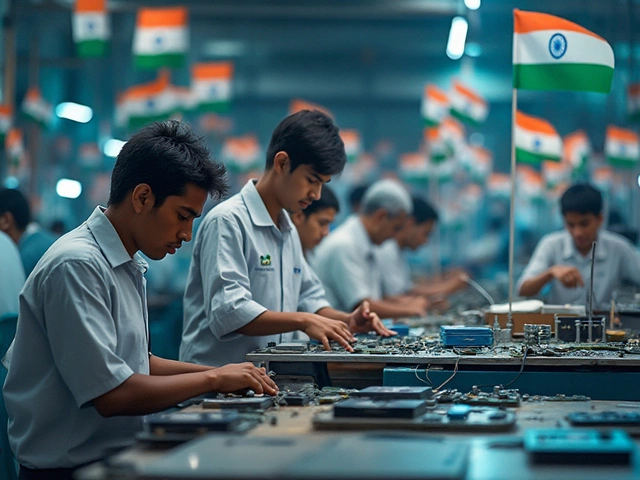
Below, you’ll find real examples from Indian factories—how a food processor chose between batch and continuous lines, how a startup cut waste by rethinking a drying step, and why some of the biggest electronics makers in Tamil Nadu rely on tightly controlled unit operations to hit export targets. No theory. No fluff. Just how it actually works on the ground.